Tarot Journal
Reversed Tarot Cards: How to Read Them Without Fear
Reversed Tarot cards do not have to mean disaster or the exact opposite of an upright card. Use a consistent method to read blocked, inward, delayed, or excessive energy.
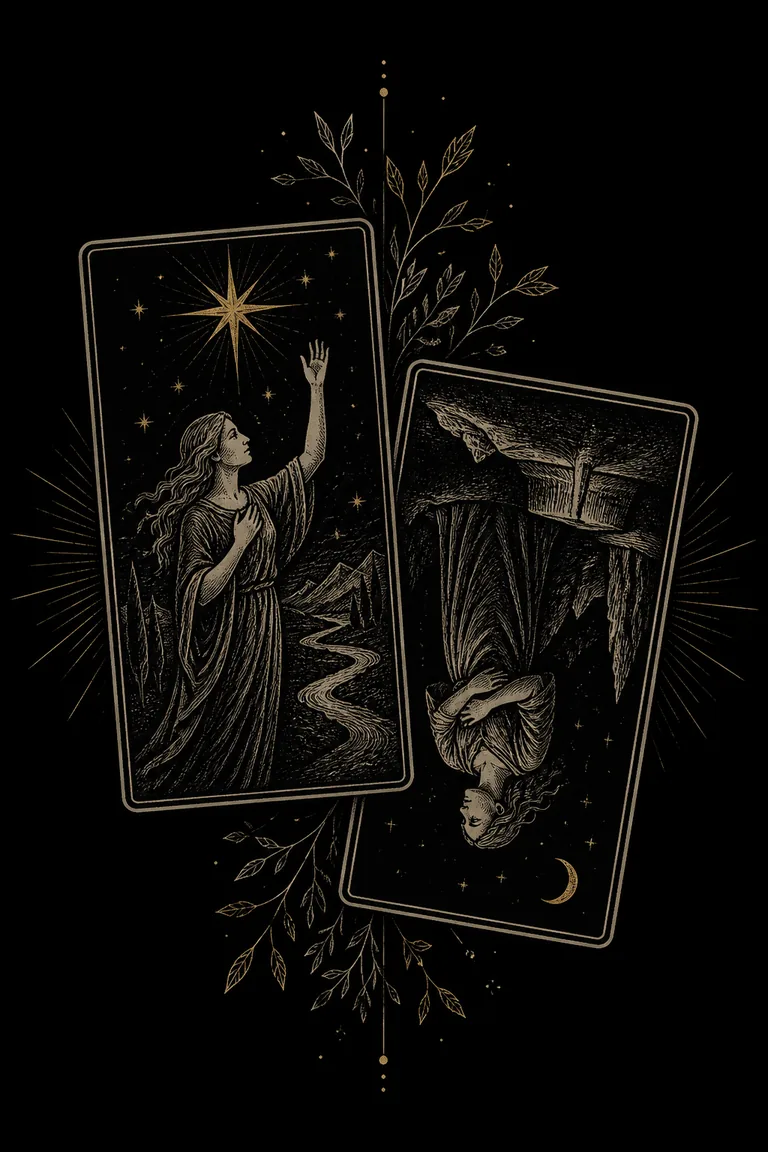
A reversed Tarot card appears upside down in a spread. Some readers treat it as a separate meaning, while others read only upright cards. Both approaches can produce thoughtful readings. What matters is choosing a method before the shuffle and applying it consistently.
The most useful reversals add direction to a card rather than turning it into a warning. They can show energy moving inward, meeting resistance, arriving late, or becoming excessive. The question, spread position, and neighboring cards decide which interpretation fits.
Take the next insight with you
Explore personalized Tarot guidance in Veritas, available for iOS and Android.
 Scan with your phone
What do reversed Tarot cards mean?
A reversal modifies the card’s normal range. It does not erase the upright meaning. The Chariot still concerns direction and will, but reversed it may describe scattered effort or momentum that cannot yet find a lane. The Four of Swords still concerns rest, but reversed it may show restlessness or a return after recovery.
Reversals are not automatically negative. An upright pattern can be unhealthy, and a reversal can interrupt it. The Devil reversed may show someone noticing an attachment and beginning to loosen it. Context matters more than card orientation alone.
Five reliable ways to read a reversal
Blocked
The card’s action wants to happen but meets resistance. Ask what obstacle, belief, resource, or missing conversation prevents expression.
Internal
The energy is private or psychological. A public action may first need reflection, acceptance, or an inward decision.
Delayed
The pattern is real but its timing is incomplete. Identify what must mature rather than predicting a fixed date.
Excessive
A useful quality has gone too far. Confidence becomes dominance, caution becomes avoidance, or generosity ignores capacity.
Redirected
Energy is changing course. The reversal may release an old pattern or ask for a different expression of the same need.
Practice reversals inside a complete reading
Open Veritas, ask one focused question, and compare the card’s upright foundation with the reversal lens that best fits its position.
A three-step method for any reversed card
- Name the upright core
Describe the card in one neutral sentence before changing it. For Strength, that core might be patient courage and a measured relationship with instinct.
- Choose one lens
Test blocked, internal, delayed, excessive, or redirected energy. Do not stack every possible reversal meaning into one answer.
- Return to the position
In an obstacle position, Strength reversed might show self-doubt. In advice, it could ask for gentler self-command rather than forced confidence.
Examples across the deck
The Hermit reversed can describe useful solitude becoming isolation, or wisdom turning inward before it can be shared. The Ace of Cups reversed may show feeling that has not found expression, emotional depletion, or a need to receive care before offering more.
The Eight of Pentacles reversed may show inconsistent practice, perfectionism, or work that no longer develops skill. The Knight of Swords reversed can show a strong argument delivered without enough listening. These readings begin with the upright function, then identify how it is being handled.
How surrounding cards refine the meaning
A reversed card beside supportive cards may describe a temporary adjustment. The Star reversed between the Six of Swords and Three of Pentacles could show hope rebuilding through transition and cooperation. Beside repeated conflict cards, it may point to discouragement that needs direct attention.
Suit and number patterns also matter. Several reversed Cups may suggest feelings held inward. Several reversed Wands may show frustrated initiative. One reversal in an otherwise upright spread often deserves attention as the place where movement changes direction.
How to shuffle with reversals
To include reversals, divide the deck, rotate one portion 180 degrees, and recombine it. A few rotations are enough. Avoid deliberately forcing half the deck upside down unless you want that probability. Decide before drawing whether orientation will count.
When upright-only reading is better
Beginners may learn faster with upright cards because every card already contains constructive and difficult expressions. Upright-only reading is also useful when spread positions supply the contrast, such as resource, obstacle, and advice. Reversals are an optional layer, not a test of seriousness.
Common reversal mistakes
Avoid treating every reversal as “no,” predicting catastrophe, or reciting an opposite keyword without checking the question. Also avoid changing systems midway because one card feels uncomfortable. A clear method leaves room for nuance without making the reading impossible to evaluate.
Tarot is a reflective symbolic practice, not a scientifically validated forecasting tool. Reversed cards do not establish another person’s secret motives and should not replace medical, legal, financial, or mental health guidance. Use them to frame choices you can examine.