Tarot Journal
Tarot and Astrology Correspondences: A Practical Guide
Tarot and astrology correspondences map cards to elements, planets, zodiac signs, and decans within a named tradition, adding one auditable layer to a reading.
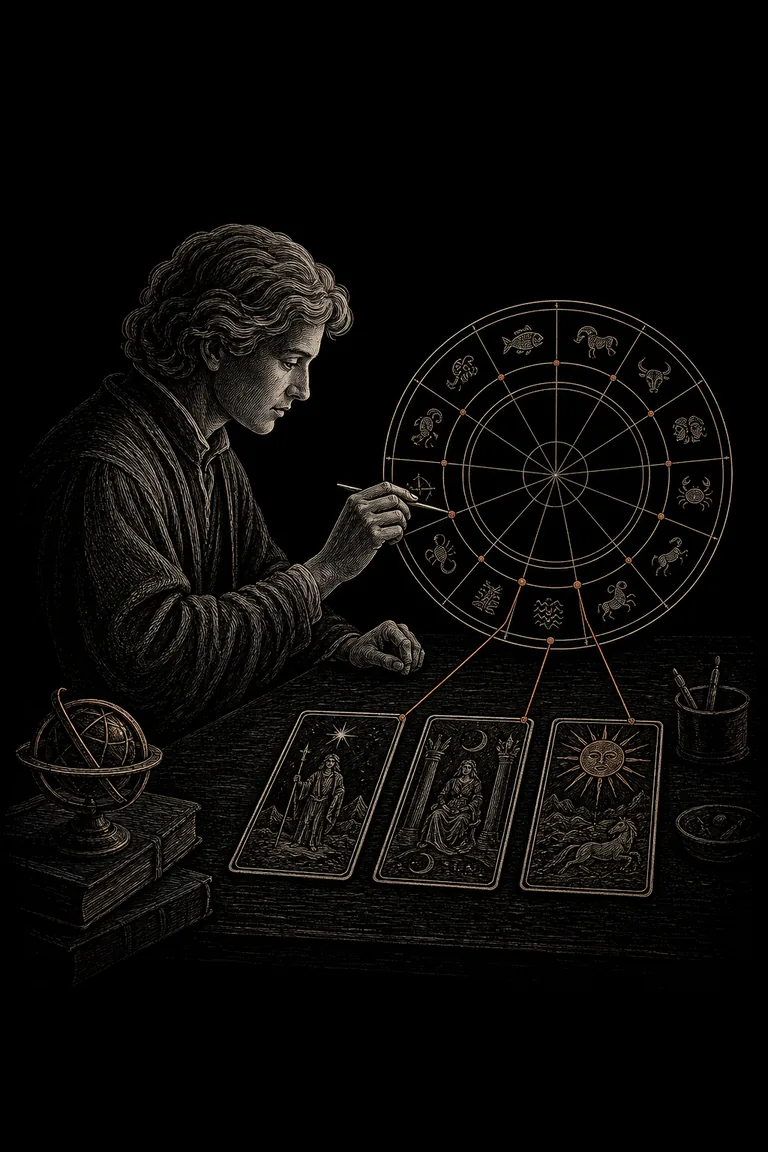
Tarot astrology correspondences are a structured set of associations, not a claim that every deck has one universal celestial code. The most influential modern map comes from the Hermetic Order of the Golden Dawn. It links the four suits with elements, Major Arcana with signs, planets, or elemental principles, and the numbered Minor Arcana with the thirty-six zodiac decans.
Use correspondences after reading the card image, spread position, question, and ordinary Tarot meaning. Name the source system, add only the astrological layer that changes the interpretation, and record any deck-specific variation. This keeps the method useful without turning a reference table into automatic proof or prediction.
Take the next insight with you
Explore personalized Tarot guidance in Veritas, available for iOS and Android.
 Scan with your phone
Tarot astrology correspondences at a glance
What a Tarot correspondence is
A correspondence is a declared symbolic association between two systems. It can help a reader notice shared structure, such as fiery initiative in Wands and Aries, or Saturnian limits in a card assigned to a Saturn-ruled decan. It does not mean the systems developed as one timeless language. Historical sources, deck design, and later occult schools all affect the map.
Why the source tradition matters
The Golden Dawn system shaped both the Rider-Waite-Smith and Thoth lineages, but the decks do not present every assignment in the same way. Modern authors also add Uranus, Neptune, and Pluto to Major Arcana cards even though the core Golden Dawn attributions use classical planets plus elemental principles. Write the source beside the reading so a later review can reproduce it.
The four suits and elements
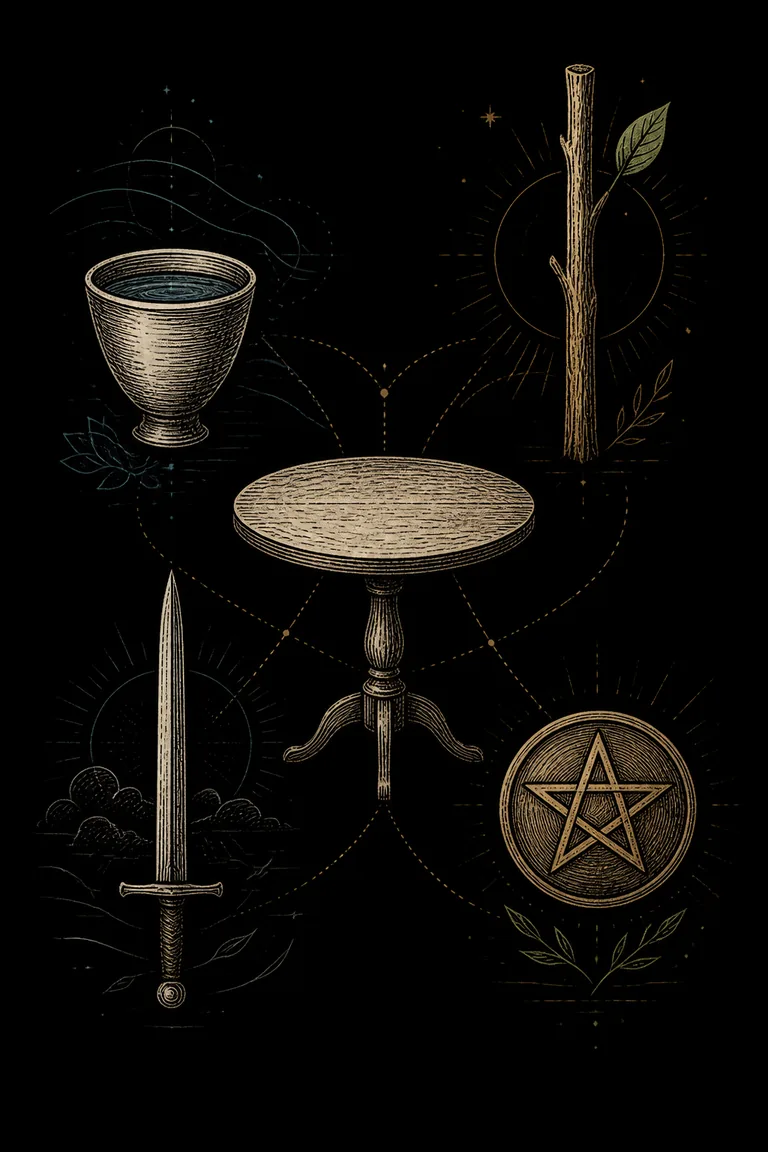
Elemental correspondence is the simplest layer and usually the safest place to begin. A spread dominated by one suit may show where attention is concentrated, not whether that element is objectively good or bad. Mixed suits can cooperate, strain, or describe separate parts of a situation. If you use elemental dignities, declare the interaction rule rather than improvising it after seeing the cards.
Major Arcana sign and planet map
In the Golden Dawn family, the Magician corresponds to Mercury, the High Priestess to the Moon, the Empress to Venus, the Wheel of Fortune to Jupiter, the Tower to Mars, the Sun to the Sun, and the World to Saturn. The Emperor through Death include the zodiac sequence Aries through Scorpio, while Temperance through the Moon continue Sagittarius through Pisces, with planetary and elemental cards occupying the remaining places.
The Fool is attributed to Air, the Hanged Man to Water, and Judgement to Fire or Spirit depending on how the source presents the elemental triad. Rider-Waite-Smith places Strength at VIII and Justice at XI, while some older or different lineages number them differently. Use card names and declared lineage, not Roman numerals alone, when transferring a table between decks.
Numbered Minor Arcana and the decans
The thirty-six cards from Two through Ten match the thirty-six decans, each a ten-degree portion of a zodiac sign. The assignments follow zodiac order and a repeating Chaldean planetary sequence. This gives each pip card a sign range and a planetary ruler, such as the Three of Swords as Saturn in Libra or the Eight of Pentacles as the Sun in Virgo within the Golden Dawn table.
How to use a decan without false precision
A decan can sharpen the kind of tension, resource, or task implied by a card. It cannot prove that an event will happen when the Sun or another planet crosses those ten degrees. Calendar dates shift slightly, planets move at different speeds, and a symbolic attribution is not an astronomical cause. If timing is part of the reading, state the exact timing rule and preserve a broad, testable window.
Court card correspondences need extra care
Golden Dawn courts use Knight, Queen, Prince, and Princess with Fire, Water, Air, and Earth rank elements. Rider-Waite-Smith uses King, Queen, Knight, and Page, so authors disagree about which modern rank inherits which elemental and zodiacal range. Never copy a Thoth court table into a Rider-Waite-Smith reading by matching the printed rank word without checking the source.
A three-layer method for a reading
- Read the card in position
Describe the image, ordinary meaning, question, and spread role before opening a correspondence table.
- Name the source
Record the deck, lineage, table, rank mapping, zodiac, and any modern substitutions.
- Add one celestial layer
Choose the element, planet, sign, or decan that materially changes the reading.
- Write the difference
State what the correspondence adds that the card meaning did not already provide.
- Test and review
Translate the interpretation into a question, action, or observation that later evidence can support or revise.
Worked example: Three of Swords in a team spread
Suppose the Three of Swords appears in a position called communication obstacle. The card already points toward painful language, divided judgment, or a truth that is difficult to integrate. Its Saturn-in-Libra correspondence adds a narrower question: are standards, duties, or formal agreements restricting a fair exchange? The useful next step is to inspect the decision rule and written expectations, not to predict betrayal.
When a correspondence adds nothing
If the astrological label merely repeats the card keyword, leave it out. A reader does not need to mention every element, sign, planet, decan, Hebrew letter, direction, color, and season in one interpretation. More associations can make a reading less accountable because almost any later event can be matched to something in the list. Choose the smallest layer that clarifies the actual question.
Keep the correspondence trail visible
Use Veritas to save the deck, card order, spread positions, source tradition, exact correspondence used, what it added, the practical question, and the later review.
Audit a correspondence table
Check whether the table names a source, distinguishes Rider-Waite-Smith and Thoth courts, explains Strength and Justice numbering, separates classical assignments from modern outer-planet substitutions, and shows how decan rulers were derived. A polished chart with no lineage can hide contradictions. Keep a stable reference rather than switching tables to obtain a preferred meaning.
Common mistakes
Common errors include treating one occult school as universal, confusing zodiac signs with houses, assigning every court card to a named person, using a decan as a guaranteed date, and letting an astrological keyword override the spread position. Another mistake is circular proof: the card validates the transit because the table links them, then the transit is used to prove the card must be correct.
Limits and responsible use
Tarot astrology correspondences are interpretive tools, not scientifically validated predictors. They cannot reveal another person's private feelings, diagnose illness, prove infidelity, determine consent, recover reliable memories, identify danger, or replace legal, medical, financial, mental health, or safety advice. Use them to generate precise questions while allowing records, experts, direct communication, and lived evidence to disagree.