Tarot Journal
Tarot Shadow Card: How to Read the Bottom Card
A Tarot shadow card is the card at the bottom of the deck after a draw. Some readers use it as a secondary lens, but it should never replace the question or spread positions.
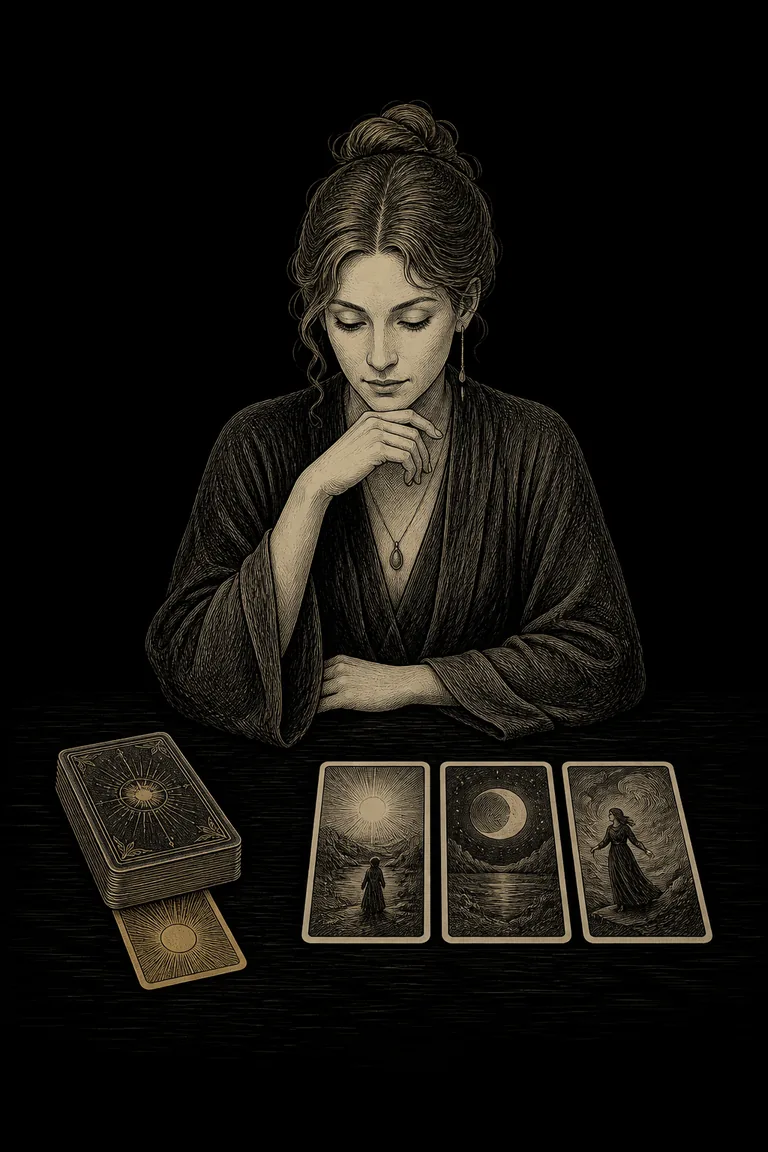
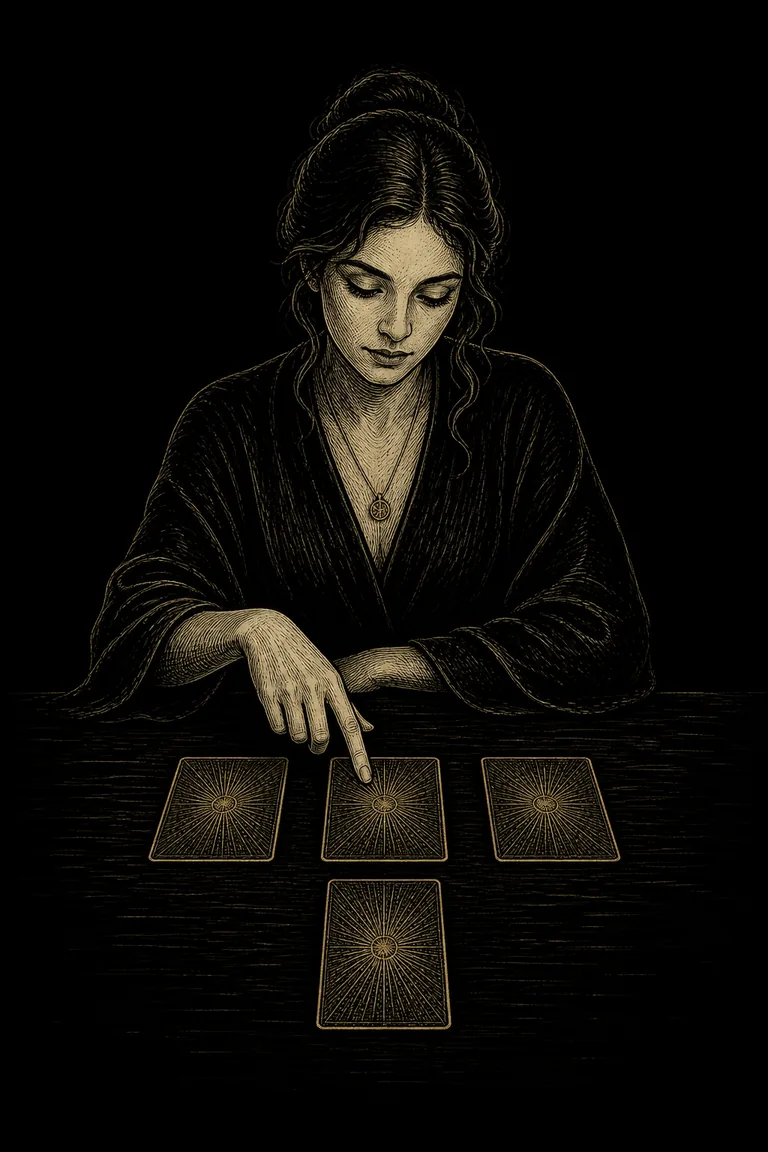
The Tarot shadow card is usually the bottom card of the deck after the reader has shuffled and drawn the spread. It may be called the bottom card, base card, underlying card, or energy beneath the reading. Readers who use it treat it as optional context: a background concern, unspoken influence, or theme worth comparing with the cards that actually occupy positions.
There is no universal rule that says you must reveal it. The clearest method is to decide before shuffling whether the bottom card has a job, interpret the spread first, and add this card only if it sharpens rather than rewrites the answer. That boundary keeps a shadow card from becoming an extra outcome, a secret prediction, or a way to keep drawing until the reading feels right.
Take the next insight with you
Explore personalized Tarot guidance in Veritas, available for iOS and Android.
 Scan with your phone
What is a shadow card in Tarot?
After the spread cards have been dealt, the card remaining at the bottom of the deck can be revealed as the shadow card. Its meaning is not standardized across Tarot traditions. One reader may call it the underlying influence, another the deck energy, and another may ignore it entirely. If you use it, write a one-sentence definition before the reading so its role cannot drift when an unexpected card appears.
Shadow card versus shadow work
The phrase shadow card does not automatically mean psychological shadow work. Shadow work is a broader reflective practice concerning disowned, avoided, or less conscious material. A bottom card can be assigned that lens, but it may also represent context, atmosphere, or a background assumption. Do not label a difficult card as a hidden trauma, diagnosis, or secret motive. The chosen reading rule matters more than the dramatic name.
How it differs from a clarifier or significator
A clarifier is drawn after the spread to answer one precisely named ambiguity. A significator is selected before the draw to represent a person, role, project, or focus. The shadow card is already part of the shuffled deck and sits at its bottom after dealing. It should not clarify every confusing position or prove who someone is. Each device has a different source, timing, and interpretive job.
When the bottom card can be useful
Use it when the spread is concise, the main answer is already readable, and a background lens could help connect the positions. It can be useful in a repeated daily practice if you always record it in the same way. A three-card spread about preparing for a meeting might show preparation, conduct, and follow-up, while the bottom card names an assumption influencing all three. The spread still supplies the actionable answer.
When to leave it face down
Skip the shadow card when the spread already feels crowded, the question is emotionally charged, or you are tempted to use one more card to reverse an unwelcome message. Leave it face down if you did not decide on its role before shuffling. A clean reading with three defined positions is more useful than four cards whose hierarchy changes during interpretation. More material does not automatically create more clarity.
Define the reading before revealing more
Open Veritas, write the question and spread positions, then decide whether the bottom card will have one specific secondary role.
A reliable interpretation order
- Read the question
State what the spread is meant to explore and what it cannot determine.
- Read every position
Interpret the drawn cards through their assigned jobs before looking under the deck.
- Reveal the bottom card
Apply only the definition chosen before shuffling, such as background concern or operating assumption.
- Test the addition
Keep the lens if it explains a concrete connection; omit it if it merely repeats or contradicts the spread.
Worked example: a project decision
Imagine a three-position spread asks what is working, what needs adjustment, and the next practical step. The Three of Pentacles, Seven of Cups, and Knight of Pentacles may point to useful collaboration, too many competing options, and a steady test plan. If the bottom card is the Four of Pentacles, it might name a background attachment to control or scarce resources. It adds a question about what is being protected; it does not cancel the test plan.
Worked example: a relationship conversation
Suppose the positions are what to express, what to hear, and what boundary to maintain. The cards show honest feeling, patient listening, and a clear limit. A Moon shadow card may suggest uncertainty or projection in the background. That does not prove deception or reveal the other person's private thoughts. It invites the reader to distinguish verified information from fear before the conversation.
Should you read the shadow card reversed?
If you normally preserve reversed orientation, decide before the shuffle whether the bottom card can be reversed. Some readers turn the deck over in a way that changes apparent orientation, so the method can be ambiguous. You may keep the card in the deck's original orientation or read it upright for consistency. Record the rule. Do not rotate it after seeing the image to obtain a preferred meaning.
Reading for yourself and for other people
In a self-reading, the shadow card can easily attract whatever concern already occupies your attention. Write the spread interpretation before revealing it so you can see what actually changed. In a reading for someone else, explain that the card is optional and secondary. Never use it to announce hidden guilt, infidelity, illness, pregnancy, trauma, or another high-stakes fact that the reading cannot verify.
A useful journaling format
Record five items: the question, spread positions, drawn cards, the predeclared shadow-card role, and the specific sentence it adds. Finish with one observable action or review date. When you return later, ask whether the bottom card improved understanding or simply made the reading more dramatic. Repeated notes reveal whether the technique earns a stable place in your practice.
Keep the spread evidence in charge
Use Veritas to save the position-by-position reading first, then add one sentence for the shadow card and review whether it proved useful.
Common shadow-card mistakes
Common mistakes include revealing the card only when the spread disappoints you, treating it as a guaranteed secret, letting it overrule defined positions, confusing it with a clarifier, and checking several cards from the bottom. Use one stopping rule: one optional bottom card, interpreted once, after the spread. If it does not add clear context, leave it out of the conclusion.