Astrology Journal
Nodal Tridecile in Astrology: Timing and Calculation
A nodal tridecile occurs when the transiting lunar node is 108 degrees from its natal longitude; a reproducible calculation keeps both orientations, the 72-degree cross-axis relation, and every exact pass.
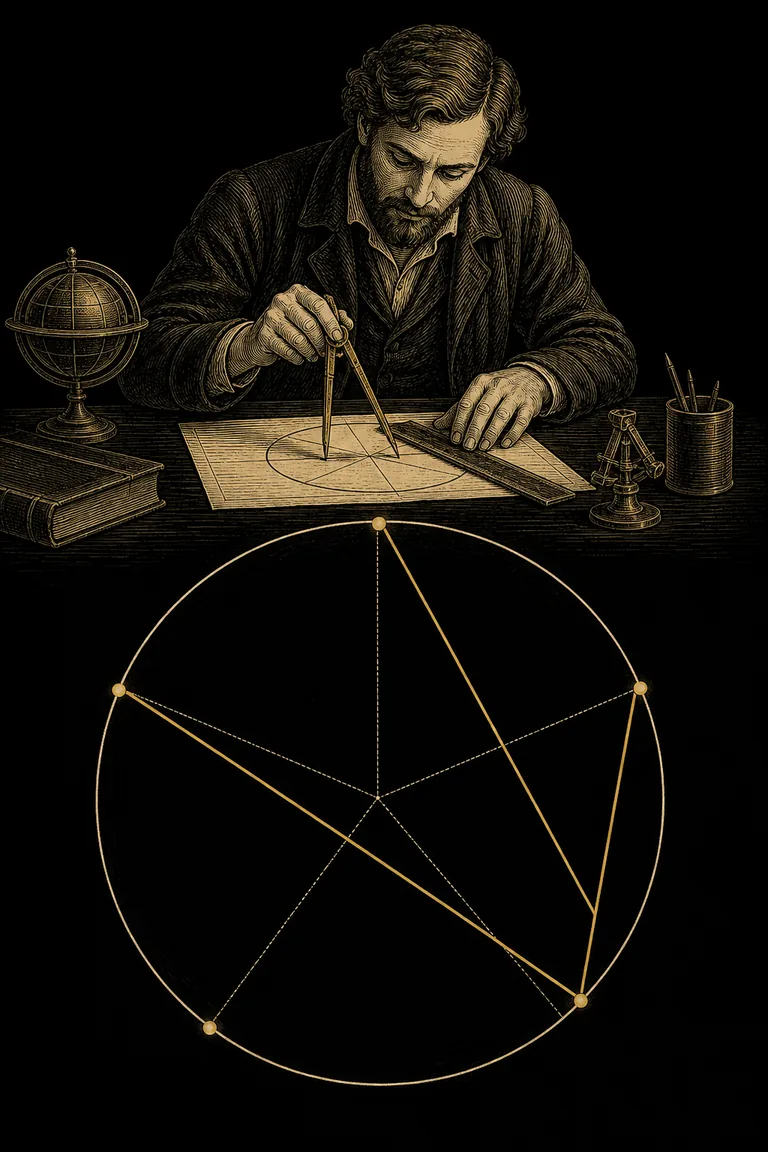
A nodal tridecile compares the transiting North Node with the natal North Node at three tenths of a circle, exactly 108 degrees. There are two targets: natal longitude minus 108 degrees and natal longitude plus 108 degrees. They have the same shortest separation but occur near different parts of the roughly 18.6-year nodal cycle, so the orientation must be recorded rather than hidden behind one aspect label.
At either target, the transiting North Node is also 72 degrees from the natal South Node. That cross-axis quintile relation is a consequence of one nodal axis, not an additional confirmation. Use one ephemeris, the same mean or true node convention for natal and transit positions, circular longitude, a declared orb, and every true-node crossing. A tridecile is a minor symbolic aspect, not proof of talent, destiny, health, relationship change, or a caused event.
Take the next insight with you
Explore personalized Astrology guidance in Veritas, available for iOS and Android.
 Scan with your phone
Nodal tridecile at a glance
What a tridecile measures
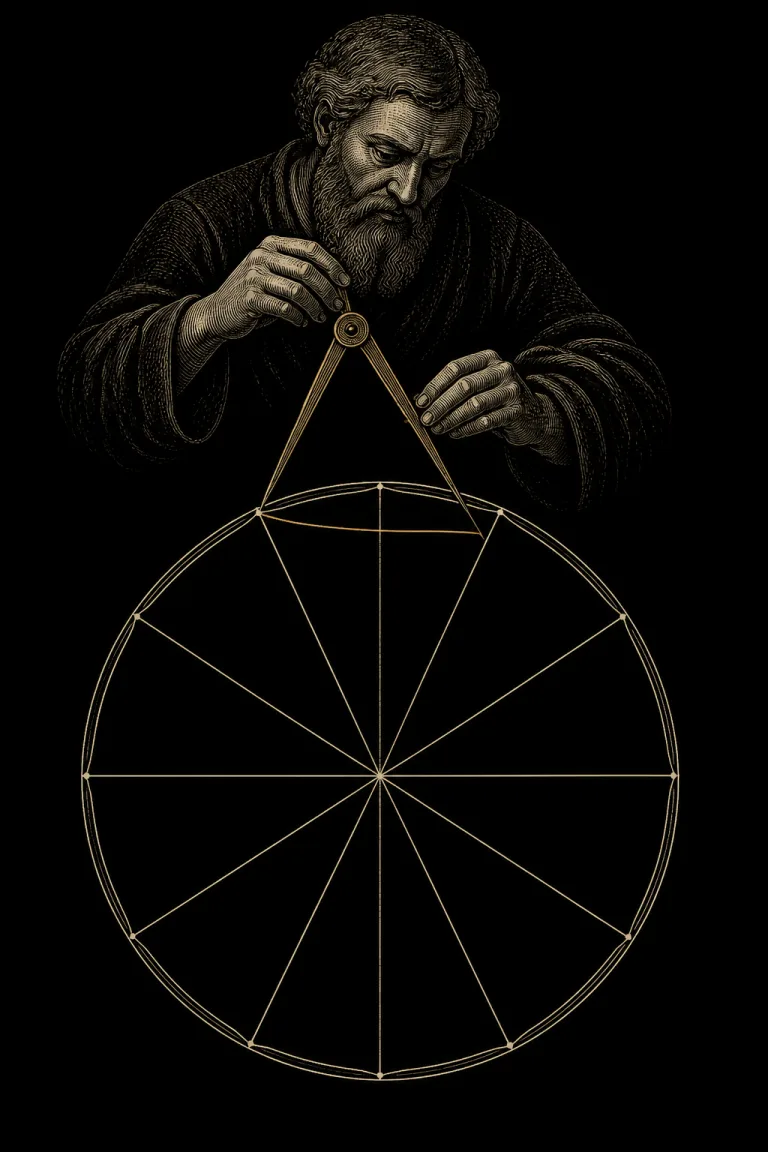
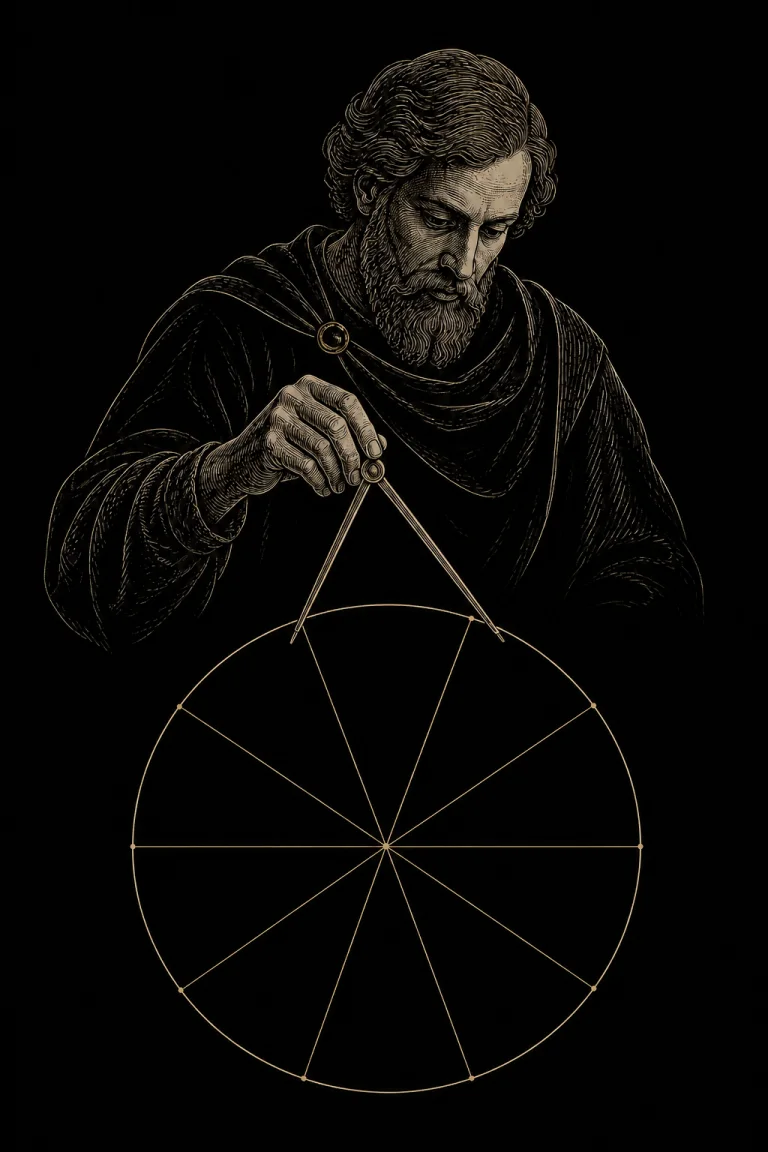
A circle divided into ten equal sectors creates steps of 36 degrees. Three such steps equal 108 degrees, so the tridecile belongs to the tenth-harmonic family alongside the 36-degree decile. It is also called tredecile or sesquiquintile in some references and software. Because names and default orbs vary, record the exact 108-degree angle, orientation, and orb rather than relying on the label alone.
Three-tenths aspect angle
360° ÷ 10 = 36°
3 × 36° = 108°
Cross-axis separation = 180° - 108° = 72°
Tridecile, tredecile, and sesquiquintile
Tridecile is a common modern spelling for the three-decile angle. Tredecile appears in historical and dictionary sources, while sesquiquintile describes one and a half quintiles. All can point to 108 degrees, but a program may use similar labels differently or omit the aspect. Treat the degree value as authoritative for your workflow and note the software name only as metadata.
The two tridecile orientations
Normalize natal North Node minus 108 degrees and plus 108 degrees into the 0-to-360-degree circle. With the usual retrograde mean-node motion, the minus target is generally reached after three tenths of a cycle. The plus target requires seven tenths of retrograde travel because moving backward 252 degrees reaches the same longitude as moving forward 108 degrees. A shortest-distance report cannot identify which phase produced the contact.
The simultaneous 72-degree relation
Natal South Node is exactly opposite natal North Node. When transiting North Node is 108 degrees from natal North Node, its shortest distance from natal South Node is 72 degrees. This is the quintile angle. Record the relation to show that you checked the full axis, but do not count it as a second transit or claim two separate messages. One moving nodal axis produces both relationships at the same timestamp.
Approximate cycle windows
Three tenths of an 18.6-year cycle is about 5.58 years, while seven tenths is about 13.02 years. Approximate centers recur near ages 5.6, 13.0, 24.2, 31.6, 42.8, 50.2, 61.4, 68.8, 80.0, and 87.4. These are broad search windows from an average cycle, not universal exact dates or developmental milestones. Ephemeris values, node convention, and local motion determine the real crossings.
Mean node versus true node
The mean node smooths the lunar node's oscillation and travels retrograde continuously. The true node can slow, station, and briefly move direct. Use the same convention for natal and transiting longitudes. When programs disagree, compare mean or true setting, tropical or sidereal zodiac, timestamp, UTC conversion, coordinate precision, reference frame, ephemeris version, and orb before interpreting anything.
How to calculate a nodal tridecile
- Save the natal longitude
Record exact natal North Node longitude, mean or true convention, zodiac, reference frame, birth timestamp, and ephemeris.
- Calculate both targets
Normalize natal North Node minus 108 degrees and plus 108 degrees into the 0-to-360-degree circle.
- Name the orientation
State which target is under review and note the simultaneous 72-degree relation to natal South Node.
- Open a search interval
Begin near the matching 5.58-year or 13.02-year cycle offset instead of asserting one exact age.
- Bracket and refine
Find timestamps on opposite sides of zero signed circular distance and refine the root with an ephemeris.
- Keep every crossing
True-node reversals can produce several exact passes, so preserve each timestamp, motion state, and declared orb.
Circular-longitude example
Suppose natal mean North Node is 22°10' Taurus, equal to 52°10' zodiac longitude. The first retrograde tridecile target is 4°10' Aquarius, or 304°10'. If the transiting mean node is 5°04' Aquarius and moving retrograde at 3 arcminutes per day, 54 arcminutes remain. The rough estimate is eighteen days later, but an ephemeris must refine the timestamp because speed varies.
Illustrative estimate before ephemeris refinement
First target = normalize(52°10' - 108°) = 304°10' = 4°10' Aquarius
Remaining retrograde distance = 5°04' - 4°10' = 54 arcminutes
54 arcminutes ÷ 3 arcminutes per day = 18 days
Signed distance prevents wrap errors
Ordinary subtraction fails near 0° Aries. Normalize transiting longitude minus target longitude into a signed interval such as minus 180 degrees to plus 180 degrees. An exact crossing occurs when that signed distance changes sign and reaches zero after root refinement. This also preserves orientation, whereas absolute angular separation erases whether the node met the minus-108 or plus-108 target.
Choose and declare an orb
Minor aspects are sensitive to orb choices, and no single tridecile orb is universally accepted. A narrow research orb keeps the timing window interpretable. State the threshold in degrees or arcminutes, distinguish applying from separating only after checking motion, and report the exact angular error. Do not change the orb after seeing a desired date. The aspect guide explains why geometry, orb, and interpretation should remain separate.
True-node loops can create several passes
The true node's short direct intervals can cross one target, reverse, and cross it again. Preserve every exact timestamp in the same search window and label motion state. Do not select only the crossing closest to a memorable event. The stationary-motion guide provides a useful audit pattern even though the lunar node is a calculated point rather than a planet.
Birth-time and longitude uncertainty
The lunar node moves slowly, so modest birth-time uncertainty often changes natal longitude less than it changes the Moon or angles. That does not make the input exact. Save the known time quality, test plausible bounds, and report how much the target shifts. If the birth date itself is uncertain, use the workflow in birth chart without a birth time and avoid false timestamp precision.
A grounded interpretation workflow
If you use the tridecile symbolically, begin with the natal houses and placements actually involved, then write one bounded question about pattern, craft, choice, or coordination. Separate verified events from remembered impressions. Compare the tridecile window with the nodal decile, nodal quintile, and nodal biquintile only when their exact dates are independently calculated. Similar harmonic language does not make the phases interchangeable.
Keep a reproducible nodal record
Use Veritas to save natal and transiting longitudes, mean or true node convention, zodiac, both 108-degree targets, the simultaneous 72-degree cross-axis relation, orb, every exact crossing, motion state, verified facts, and what later review changed.
Comparison with return and opposition phases
A nodal return is a 0-degree North-to-North relationship and a nodal opposition is 180 degrees. The tridecile occurs at 108-degree shortest separation in two orientations, not halfway between those milestones. Use the nodal opposition guide and nodal return method for their own geometry. Do not use approximate ages to rename one phase as another.
Common calculation mistakes
Common errors include calculating only one 108-degree target, confusing tridecile with decile, using 72 or 144 degrees as the primary angle, mixing mean and true nodes, adding the South-Node relation as a second event, using ordinary subtraction across 0° Aries, changing the orb after inspection, discarding repeated true-node passes, and publishing rounded ages as exact dates. Another error is treating a software label as proof that every setting matches.
Limits and responsible use
Astrology is a symbolic interpretive practice, not scientific proof that a 108-degree nodal relationship causes events or reveals destiny. A calculated timestamp cannot diagnose health, establish compatibility, prove talent, predict danger, or replace financial, legal, medical, or safety guidance. Use the <a href="/astrology">Astrology journal hub</a> to learn methods, keep the arithmetic auditable, and judge the exercise by whether it improves a real and reviewable question.