Astrology Journal
Nodal Undecile in Astrology: Timing and Calculation
A nodal undecile occurs when the transiting lunar node is one eleventh of a circle from its natal longitude; a reproducible calculation preserves full precision, both orientations, the cross-axis relation, and every exact pass.
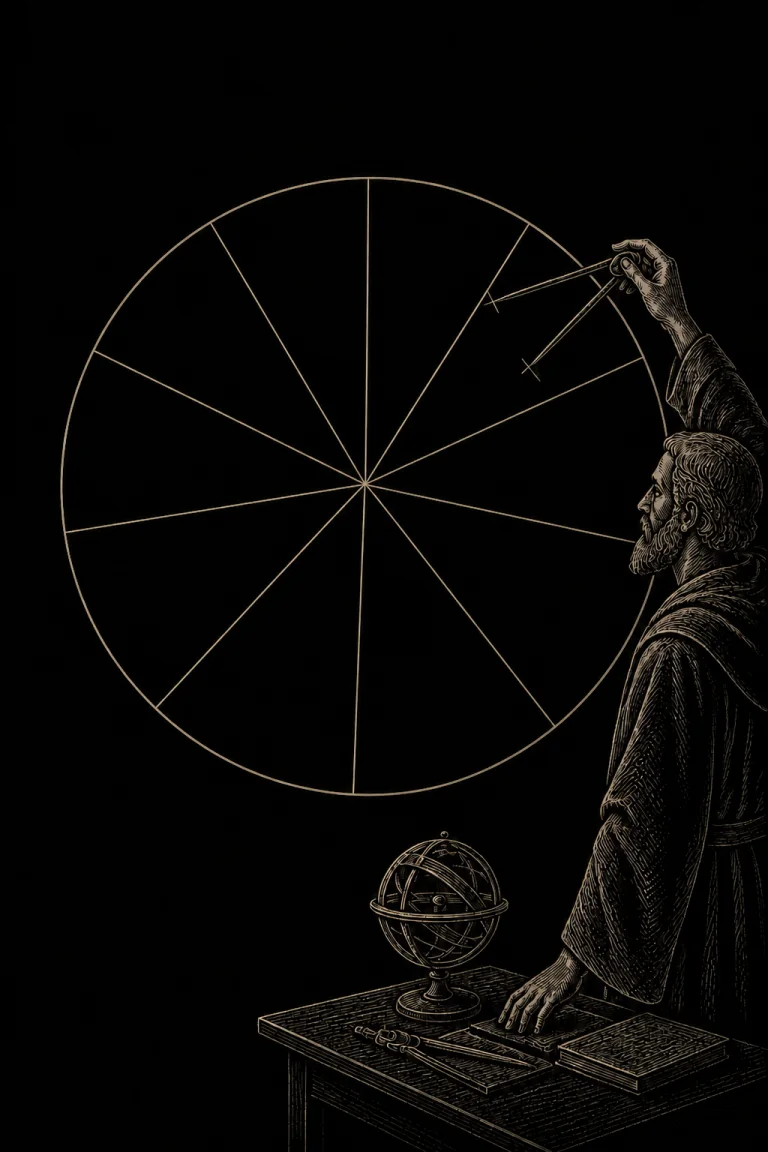
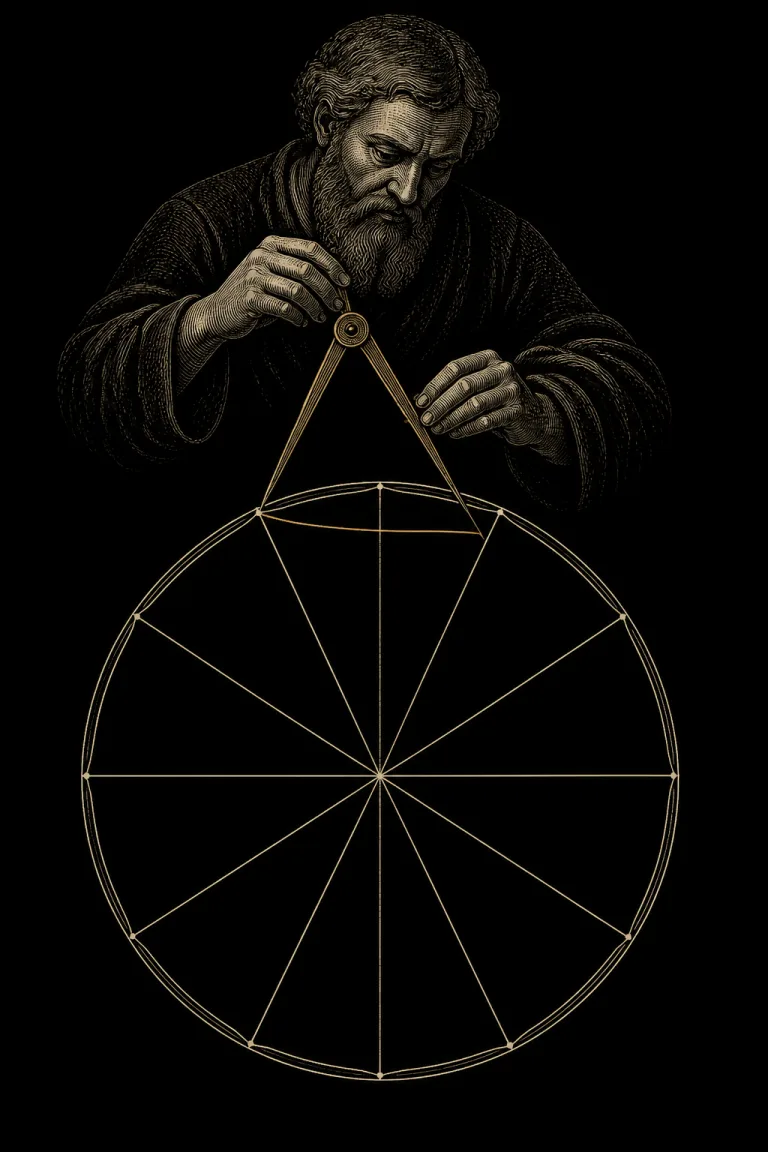
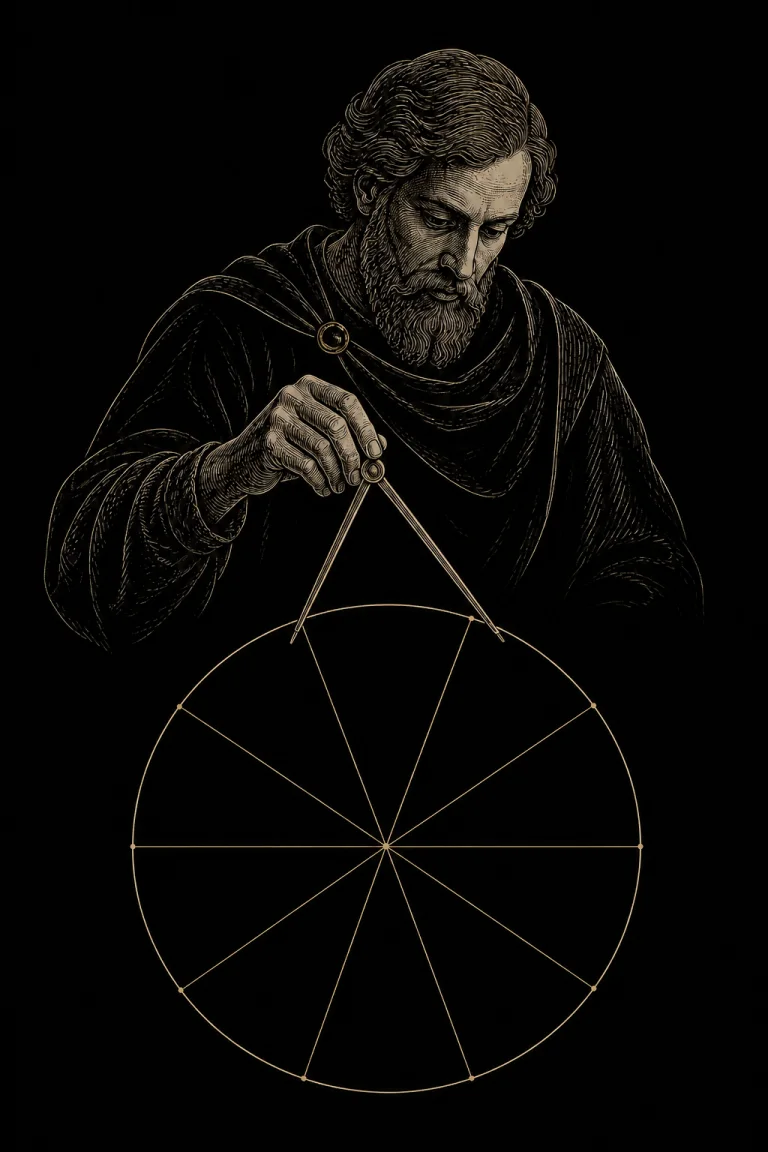
A nodal undecile compares the transiting North Node with the natal North Node at one eleventh of a circle. The exact angle is 360 degrees divided by 11, or 32.727272 repeating degrees, approximately 32°43'38". There are two targets: natal longitude minus the full-precision angle and natal longitude plus it. They share one shortest separation but occur near opposite ends of the roughly 18.6-year nodal cycle.
At either target, the transiting North Node is also about 147°16'22" from the natal South Node. That cross-axis relation belongs to one nodal axis, not a second confirmation. Use the same mean or true node convention for natal and transit positions, retain decimals until final display, declare an orb, and save every true-node crossing. The undecile is a minor symbolic aspect, not evidence of destiny, crisis, talent, health, or a caused event.
Take the next insight with you
Explore personalized Astrology guidance in Veritas, available for iOS and Android.
 Scan with your phone
Nodal undecile at a glance
What an undecile measures
Dividing a circle into eleven equal sectors creates the undecile. Unlike familiar aspects with terminating degree values, its decimal repeats, so any degree-minute-second display is rounded. Some astrologers call this the eleventh-harmonic aspect or undecimal aspect, and software support varies. Record the numeric angle and tolerance rather than trusting a label alone. The general astrology aspects guide explains angular separation and orb conventions.
One-eleventh aspect angle
360° ÷ 11 = 32.727272...°
Display value ≈ 32°43'38"
Cross-axis separation ≈ 180° - 32°43'38" = 147°16'22"
Why full precision matters
Rounding the angle to 33 degrees before calculating a target introduces an error of about 16 arcminutes. That may be larger than a narrow orb and can shift an exact timestamp. Store 360/11 as a fraction or enough decimal places for the ephemeris precision. Round only the final displayed longitude and state the rounding convention. Different displays can disagree by one arcsecond without representing a meaningful computational conflict.
The two undecile orientations
Normalize natal North Node minus 360/11 and plus 360/11 into the 0-to-360-degree circle. With ordinary retrograde mean-node motion, the minus target is generally reached after 1/11 of a cycle. The plus target requires 10/11 of retrograde travel because moving backward through ten sectors reaches the same longitude as moving forward through one. A shortest-distance result alone cannot show which phase produced the contact.
The simultaneous cross-axis relation
Natal South Node lies exactly 180 degrees from natal North Node. Subtracting the undecile angle leaves approximately 147.272727 degrees, or 147°16'22" when rounded. Record this relationship to prove that the full axis was checked, but do not count it as a separate transit. One moving nodal axis creates both relationships at the same timestamp. The North Node and South Node guide explains the shared-axis model.
Approximate cycle windows
One eleventh of an 18.6-year cycle is about 1.69 years, while ten elevenths is about 16.91 years. Broad centers therefore recur near ages 1.7, 16.9, 20.3, 35.5, 38.9, 54.1, 57.5, 72.7, 76.1, and 91.3. These values are search windows from an average cycle, not exact dates, age-based predictions, or developmental milestones. Ephemeris longitude determines each real crossing.
Mean node versus true node
The mean node smooths oscillation and moves retrograde continuously. The true node can slow, station, and briefly move direct. Use the same convention for natal and transiting values. When results differ, compare node setting, tropical or sidereal zodiac, timestamp, UTC conversion, coordinate precision, ephemeris version, and orb. The stationary planets guide provides a useful general framework for multiple crossings and apparent changes of direction.
How to calculate a nodal undecile
- Save the natal longitude
Record exact natal North Node longitude, mean or true convention, zodiac, timestamp, and ephemeris source.
- Keep the fraction
Represent the aspect as 360 divided by 11 or 32.727272 repeating degrees until final display.
- Calculate both targets
Normalize natal longitude minus the angle and plus the angle into the 0-to-360-degree circle.
- Name the orientation
State which target is being crossed and note the simultaneous 147.272727-degree relation to natal South Node.
- Search every pass
Scan a bracket around the expected cycle phase and refine each crossing, especially when using the true node.
- Apply one declared orb
Report applying, exact, and separating states consistently without presenting the window as a guaranteed event.
Worked circular example
Suppose natal North Node is 8°15' Taurus, or 38.25 degrees of circular longitude. Subtracting 360/11 gives about 5.522727 degrees, or roughly 5°31' Aries. Adding it gives about 70.977273 degrees, or roughly 10°59' Gemini. Keep the decimal targets in the calculation even if the report displays rounded zodiac positions. At either target, verify the relation to natal South Node before saving the result.
Signed distance preserves direction
A shortest angular distance from 0 to 180 degrees confirms closeness to the undecile but discards orientation. Save a directed difference as well as the absolute error from the chosen target. For example, normalize transit minus natal into a signed interval such as minus 180 to plus 180 degrees. This distinguishes the plus and minus targets and helps label applying or separating motion when the node changes direction.
Choosing an orb
There is no universal orb for an eleventh-harmonic nodal aspect. A narrow research orb such as 0.25 or 0.5 degree keeps the timing window specific, but the choice remains methodological rather than factual. State it before examining events. Do not widen the orb until a desired date fits. Compare the same rule across cases and keep exact geometry separate from the broader period you choose to review.
True-node loops and multiple passes
A true node can cross a target, reverse, and cross again. Save every exact timestamp and label whether the directed motion is retrograde or direct. Do not collapse several crossings into one date or choose the pass that best matches a story. A reproducible record includes search interval, step size, interpolation method, ephemeris, node convention, target, and orb.
Birth-time uncertainty
The lunar node moves slowly enough that modest birth-time uncertainty usually changes its longitude less than it changes angles or houses. It is not zero, and timezone or date errors can matter. If the birth time is unknown, calculate a range across plausible times and report the target uncertainty. Do not invent houses or angles. See the birth chart without birth time guide for responsible scope.
A grounded review window
If you use the undecile symbolically, choose one bounded topic and compare records from before, during, and after the declared orb window. Useful questions concern a repeated decision, feedback loop, practice, or relationship to uncertainty. Record ordinary causes and contradictory evidence. The timing does not establish that the node produced an event, and an absence of events is a valid result rather than a failed prediction.
Undecile compared with nearby nodal phases
The nodal decile uses exactly 36 degrees, while the nodal novile uses 40 degrees. The undecile at about 32.73 degrees is not an approximate version of either one. The nodal tridecile belongs to the tenth harmonic at 108 degrees. Keep angle, harmonic family, phase, and target separate so nearby dates do not become interchangeable.
Keep an undecile calculation record
Use Veritas to save natal and transit longitudes, full-precision targets, node convention, orientation, cross-axis relation, orb, every pass, verified events, alternative explanations, and what the review changed.
Common calculation errors
Common errors include rounding to 33 degrees before target calculation, solving only one orientation, confusing 1/11 of a cycle with one calendar year, mixing mean and true nodes, counting the South-Node relation as a second signal, ignoring direct true-node motion, widening the orb after seeing dates, and treating approximate ages as exact. Another error is using a software label without confirming its numeric definition.
Limits and responsible use
A nodal undecile is an astrological timing technique, not scientific evidence of causation and not a forecast of fate, health, fertility, danger, relationship change, career results, or spiritual status. Use the <a href="/astrology">Astrology journal hub</a> for transparent methods. Base medical, legal, financial, safety, and relationship decisions on direct evidence and qualified guidance rather than a minor aspect date.