Astrology Journal
North Node Conjunct Ascendant Transit: Timing and Meaning
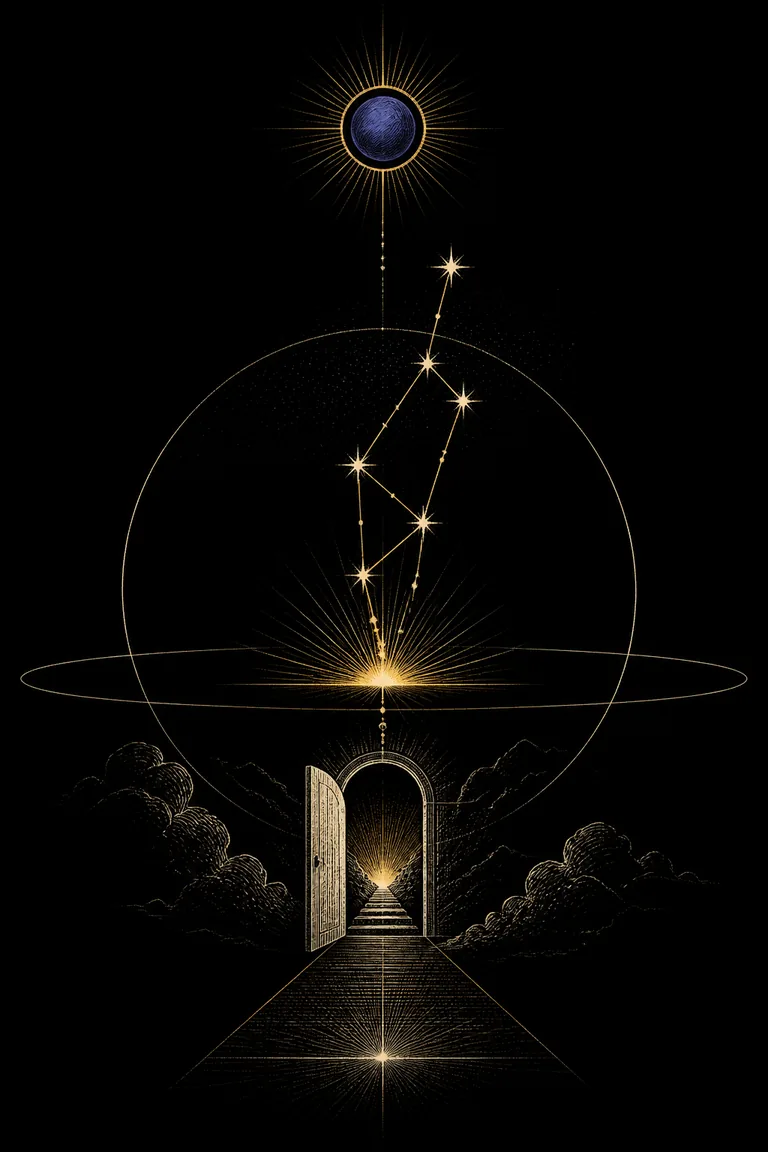
North Node conjunct Ascendant transit is a time-sensitive longitude contact to the eastern horizon angle, accompanied by South Node conjunct Descendant on the opposite side.
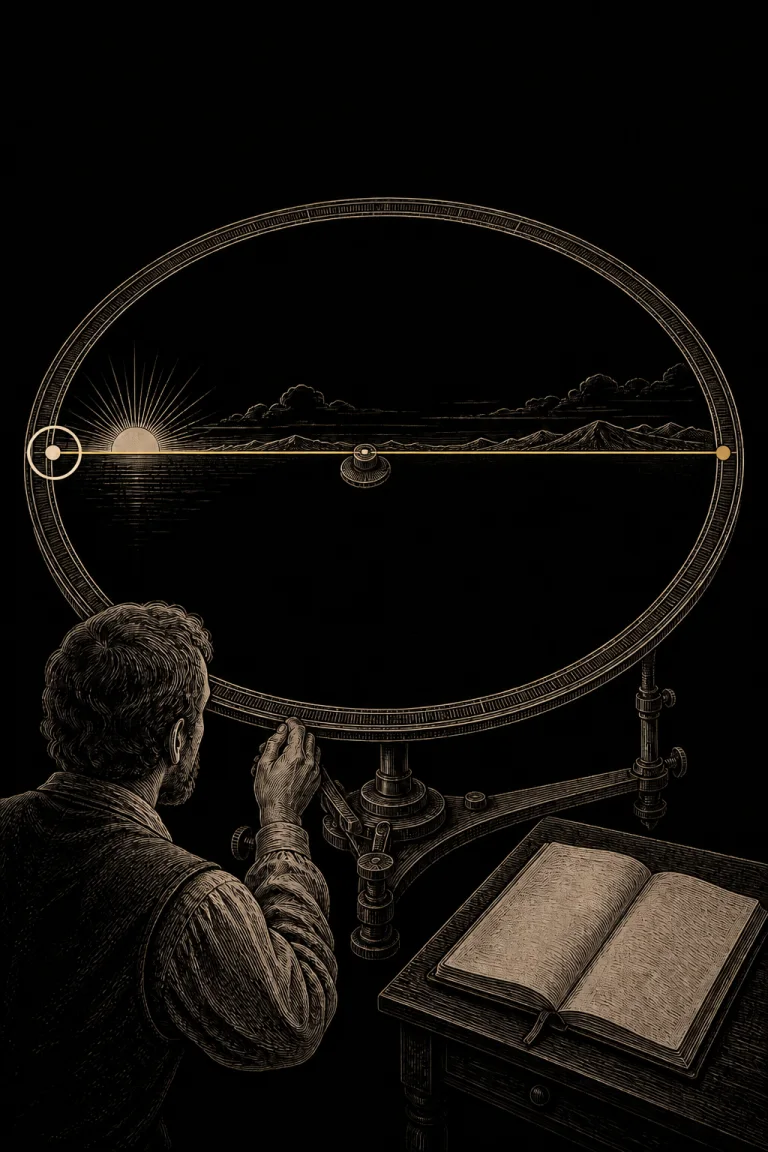
North Node conjunct Ascendant transit occurs when the selected moving North Node reaches the natal Ascendant longitude. At the same moment, the moving South Node reaches the natal Descendant because both pairs are exact opposites. This is an axis-to-axis alignment, not an isolated point. Accurate timing depends on a reliable birth time, birthplace, chart settings, node convention, and a search that preserves every exact pass.
Astrologers may use this contact to reflect on approach, visibility, autonomy, first impressions, participation, and relationship negotiation. It does not create a destined identity, guarantee public attention, prove that someone is a soulmate, or require a new beginning. Calculate the geometry first, disclose uncertainty, and compare symbolic themes with observed choices and real-world evidence.
Take the next insight with you
Explore personalized Astrology guidance in Veritas, available for iOS and Android.
 Scan with your phone
North Node conjunct Ascendant transit at a glance
The full horizon-axis geometry
Let N(t) be the chosen transiting North Node longitude and A the natal Ascendant longitude. Solve wrap180(N(t) - A) = 0. Since the South Node is N(t) + 180 degrees and the Descendant is A + 180 degrees, the same solution produces South Node conjunct Descendant. The lunar nodes guide explains the nodal axis, while the Descendant guide keeps the western angle distinct from the seventh house as a whole.
Birth time is a primary input, not a minor detail
The Ascendant moves through the zodiac quickly and changes with location. A modest clock error can shift its degree enough to move the exact transit date materially, while a larger error can change the rising sign. Verify the source of the recorded time, daylight-saving or historical offset, coordinates, and whether the time was rounded. If the time is unknown, do not calculate a precise nodal conjunction to the Ascendant. Use the birth chart without birth time guide instead.
Validate the natal Ascendant before timing the transit
- Audit birth data
Record date, civil time, source quality, time zone, daylight-saving rule, coordinates, and any uncertainty or rectification claim.
- Freeze chart settings
Record tropical or sidereal zodiac, ayanamsha if relevant, geocentric framework, ephemeris, and software version.
- Confirm the angle
Calculate Ascendant and Descendant with the same settings and verify that they differ by exactly 180 degrees.
- Choose one node model
Select mean or true North Node before searching and label that choice in every result.
- Find every crossing
Scan a broad window, bracket each zero of circular longitude difference, refine it, and inspect close turns for repeated passes.
- Verify the full axis
At each timestamp, confirm North Node on Ascendant and South Node on Descendant within the stated tolerance.
Mean and true node dates are not interchangeable
The mean node smooths short-period oscillation, while the true node includes it and may reverse direction briefly. Both are conventions used by astrologers. They can yield different exact dates and a different number of crossings. Run each model separately if comparison is useful. Do not switch from one to the other after reading events, and never present a blended date as a more accurate compromise.
Why every exact pass matters
True-node oscillation can take the contact across the Ascendant more than once. Preserve all valid roots and treat them as one transit series rather than assigning a compulsory plot to first, middle, and final contacts. One pass is not automatically an introduction, the next a crisis, and the last a resolution. Such a sequence becomes meaningful only when a prospective record shows distinct decisions or events.
Choose and disclose the orb
An orb defines the interpretive window around exactitude. Select it before reviewing the life story, distinguish entry, exact contact, and exit, and disclose the tolerance used by your software. Angles are sensitive points, but that does not make an unlimited orb more informative. Wider windows include more unrelated events and make retrospective fitting easier. The transits guide provides a general timing protocol.
Ascendant themes: approach and visibility
The Ascendant describes the eastern horizon degree and often frames how a person enters situations, meets immediate conditions, and becomes visible within a chart. During this transit, useful questions include: What role am I choosing to enter? What do others actually encounter? Which presentation supports the task? What remains private? These are review prompts, not evidence that a new identity has been assigned from outside.
South Node on the Descendant keeps relationships in view
Because the South Node simultaneously meets the Descendant, individual approach and negotiated relationship space belong to the same geometry. Review agreements, reciprocity, representation, dependence, projection, refusal, and exit conditions. A familiar relationship pattern may be a useful symbolic hypothesis, but the contact does not identify a destined partner, prove incompatibility, require separation, or reveal another person's feelings. Consent and direct communication remain primary.
Autonomy does not mean acting alone
An Ascendant emphasis can be reduced to slogans about choosing yourself, while a Descendant emphasis can be reduced to leaving others behind. The full axis is more demanding. Ask who can decide, who is affected, which commitments already exist, how disagreement works, and what support is available. Autonomy includes informed choice and boundaries; it does not erase responsibility or make unilateral action automatically correct.
Work, public roles, and first impressions
At work, the transit can structure a review of onboarding, representation, client contact, leadership visibility, role entry, and partnership boundaries. Record the actual brief, decision owner, evaluation criteria, resources, and feedback. The Ascendant is not the Midheaven, and visibility is not the same as status. This contact cannot guarantee a promotion, launch, contract, audience, or successful rebrand.
Body and health claims require restraint
Traditional and modern astrology sometimes connect the Ascendant with embodiment or physical presentation. Do not use a nodal contact to diagnose illness, predict injury, prescribe treatment, or promise recovery or transformation. Symptoms need evidence-based medical assessment. Appearance choices, exercise, food, and care plans should follow consent, safety, qualified guidance, and the person's actual needs rather than a transit deadline.
Chart ruler, houses, and natal aspects
The chart ruler, planets close to the natal angles, and natal aspects can add context, but each introduces a separate calculation. Verify degrees and orbs rather than importing every meaning associated with the rising sign. House claims remain only as reliable as the birth time. More factors do not make the transit more certain; they create more hypotheses that need clearer evidence and narrower language.
Worked timing protocol
Suppose a documented birth time produces a tropical Ascendant at 14 degrees 18 minutes of a sign. Freeze that longitude and its opposite Descendant. Search the mean North Node across a broad window, refine every zero of circular difference, and verify the South Node at the Descendant. Repeat separately with the true node if needed. For each pass, record observable changes in participation, visibility, boundaries, agreements, and feedback without treating coincidence as proof of causation.
Build an angle-transit record
Use Veritas to save the birth source, Ascendant and Descendant degrees, chart settings, node model, every exact pass, orb, observed choices, agreements, consent, counterevidence, and review dates.
How this differs from North Node conjunct Pluto
The North Node conjunct Pluto transit targets a natal planet and emphasizes audits of power, pressure, ownership, and consequence. The Ascendant contact targets a location-and-time-sensitive horizon angle and emphasizes approach, visibility, autonomy, and relationship negotiation. Both require consistent node settings and every pass, but only the angular contact simultaneously places the South Node on the natal Descendant.
Common mistakes and responsible limits
Common mistakes include using an estimated birth time as exact, mixing node models, reporting one pass, ignoring the Descendant contact, widening the orb after an event, and treating visibility as destiny. North Node conjunct Ascendant transit is a symbolic timing technique, not scientific prediction, identity assignment, diagnosis, proof of a soulmate, or certainty about recognition, reunion, separation, health, or behavior. Visit the <a href="/astrology">Astrology journal hub</a> and aspect guide for related methods.