Astrology Journal
North Node Conjunct Cupido Transit: Timing and Meaning
North Node conjunct Cupido transit is a settings-dependent contact between a transiting lunar node and natal asteroid 763 Cupido, not the hypothetical Uranian factor with the same name.
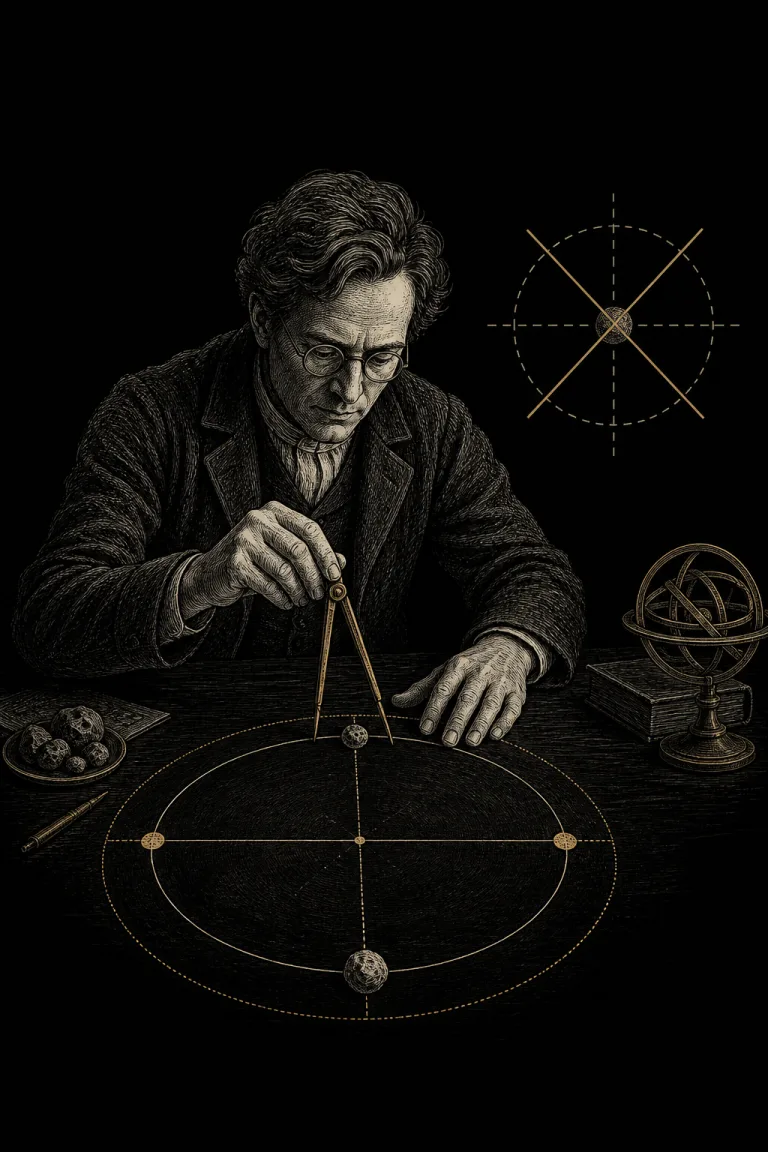
North Node conjunct Cupido transit occurs when the selected transiting North Node longitude reaches the natal longitude of physical asteroid 763 Cupido. Astrologers may use the interval to review attraction, approach, social coordination, invitations, creative exchange, and the practical conditions around connection. Reproducible timing requires the object number, zodiac, ephemeris, node model, orb, birth data, time zone, and every exact pass.
Asteroid 763 Cupido is not Uranian Cupido, the hypothetical Hamburg School factor that software may label Cupido or h40. Their longitudes and methods are different. The transiting South Node is simultaneously opposite natal asteroid Cupido, so the full nodal axis belongs in the analysis. This transit cannot prove attraction, consent, compatibility, reunion, marriage, group acceptance, or destiny.
Take the next insight with you
Explore personalized Astrology guidance in Veritas, available for iOS and Android.
 Scan with your phone
North Node conjunct Cupido transit at a glance
Confirm physical asteroid 763 Cupido
This article calculates asteroid number 763. Confirm that the natal chart or ephemeris explicitly identifies 763 Cupido and provides a longitude for that physical small body. Do not rely on a label that only says Cupido. Record the number beside the position. The Cupido guide explains the two meanings in more detail.
Asteroid Cupido and Uranian Cupido are different
Uranian Cupido belongs to the eight hypothetical factors used by the Hamburg School and may appear in software as h40. It is not an observed asteroid and does not share the longitude of asteroid 763. Never combine the two positions, substitute one for the other, or select whichever produces a preferred transit date. If a study uses Uranian Cupido, it needs a separate brief, method, and label.
Choose mean or true node before searching dates
Astrology software may offer a mean North Node, which smooths short-term motion, and a true North Node, which includes oscillation. Either can support a consistent symbolic practice, but exact dates may differ. Choose one before searching, save the setting, and keep it for the full interval. The nodal axis guide explains the distinction.
Match zodiac and ephemeris settings
Natal asteroid Cupido and the transiting node must use the same zodiac framework and compatible ephemeris data. Record tropical or sidereal zodiac and the ayanamsha when relevant. Save the software version, calculation time zone, and object identifier. A longitude copied from one framework cannot be compared silently with a node from another.
Calculate the conjunction before interpreting it
A conjunction is a small angular separation around zero degrees. Normalize the circular difference between the two longitudes and apply an orb chosen in advance. For an optional asteroid, a narrow orb often keeps the observation specific. Record the actual minimum separation instead of rounding positions until they appear exact. The aspect guide reviews the geometry.
Record every exact pass
Nodal motion can produce multiple exact contacts, especially with the true-node model. Search the complete interval and record entry into the chosen orb, every exact pass, minimum separation, exit, and any return. Do not publish one convenient date as the whole transit. Several passes create observation points, not proof that events must repeat.
Preserve the South Node opposition
The South Node remains 180 degrees from the North Node. A North Node conjunction to natal asteroid Cupido therefore places the transiting South Node opposite it. Read one axis: an experiment in approach or connection alongside a review of familiar attraction scripts, inherited social expectations, or old ways of seeking approval. Neither pole is automatically positive or negative.
Birth time changes houses and angles
The asteroid longitude may often be estimated from a birth date, but house placement and contacts to angles depend on birth time and location. Without a reliable time, lead with longitude and aspects to stable factors. Mark houses uncertain or omit them. The guide to a birth chart without birth time explains the boundary.
Natal context defines the question
Review natal asteroid Cupido by sign, house confidence, and tight aspects, then consider Venus, Mars, the Moon, relevant house rulers, and the wider chart only as needed. A transit to one small body is a narrow symbolic observation. It does not override a natal chart, direct behavior, or the stated question.
Attraction does not establish consent
Cupido symbolism may prompt reflection on interest, invitation, chemistry, social appeal, or creative exchange. None of these grants access to another person. Attraction is not consent to contact, intimacy, disclosure, commitment, publicity, or continued pursuit. Direct agreement, privacy, power differences, safety, and the right to change an answer remain primary.
A six-step interpretation method
- Verify the object
Confirm natal physical asteroid 763 Cupido and exclude Uranian Cupido or factor h40.
- Freeze node settings
Choose mean or true node, zodiac, ephemeris, orb, time zone, and calculation interval before searching.
- Map every pass
Record orb entry, exact contacts, minimum separations, exit, and the simultaneous South Node opposition.
- Name one bounded question
Choose an issue involving approach, invitation, attraction, social coordination, creativity, or belonging.
- Track observable evidence
Log requests, responses, refusal, follow-through, pressure, group rules, costs, and ordinary alternatives.
- Review without prophecy
Compare passes with evidence, revise the hypothesis, and keep consequential decisions outside symbolism.
Personal example: changing an approach
A person notices that they overprepare invitations because they fear rejection. During the transit window, they make one clear, low-pressure invitation with an easy way to decline, then record the response without repeated prompting. The useful evidence concerns communication and boundaries. The transit does not guarantee acceptance or reveal hidden attraction.
Relationship example: attraction and agreement
Two adults discuss what each person wants from a developing connection. They separate interest from exclusivity, define privacy, and choose a review point. Asteroid Cupido provides a prompt about approach and appeal, while explicit agreement and behavior establish the relationship. A chart cannot convert ambiguity into consent.
Group example: belonging without performance
A creative group reviews whether newcomers must perform closeness to gain access to opportunities. It clarifies membership, attribution, decision rights, feedback, and ways to leave. Cupido symbolism can frame social coordination, but policies, records, conduct, and participant reports show whether belonging is fair.
Compare Amor, Eros, and Venus carefully
North Node conjunct Amor owns asteroid 1221 and voluntary care. North Node conjunct Eros owns asteroid 433 and desire or pursuit. North Node conjunct Venus concerns a core planetary function involving values and attraction. This article owns asteroid 763 Cupido and must not absorb the others.
Keep an evidence log across passes
Create one row for orb entry, each exact pass, and exit. Save the object number, node model, date, selected question, invitation or action, response, consent, pressure, group conditions, supporting fact, contradiction, alternative explanation, and next review. Record quiet days as well as vivid ones to reduce hindsight editing.
Keep the object and evidence clear
Use Veritas to save asteroid 763 Cupido, excluded Uranian Cupido, node settings, every pass, South Node opposition, consent, behavior, alternatives, and a review date.
Software and data checks
If software exposes both entries, save a screenshot or export that includes the number 763. If only the word Cupido appears, consult the object list before calculating. Recheck dates after software or ephemeris changes. A result is not reproducible when the object identity, node model, zodiac, orb, or time zone is missing.
Responsible limits
North Node conjunct asteroid 763 Cupido transit is a symbolic astrology framework, not scientific evidence of attraction, consent, compatibility, love, fidelity, orientation, marriage, pregnancy, reunion, separation, popularity, group acceptance, safety, abuse, destiny, or a future event. Do not use it to monitor, pressure, diagnose, accuse, expose private data, justify access, or make medical, legal, financial, employment, relationship, or safety decisions. Visit the <a href="/astrology">Astrology journal hub</a> and use direct communication, qualified advice, records, and ordinary safeguards for consequential choices.