Astrology Journal
North Node Conjunct Descendant Transit: Timing and Meaning
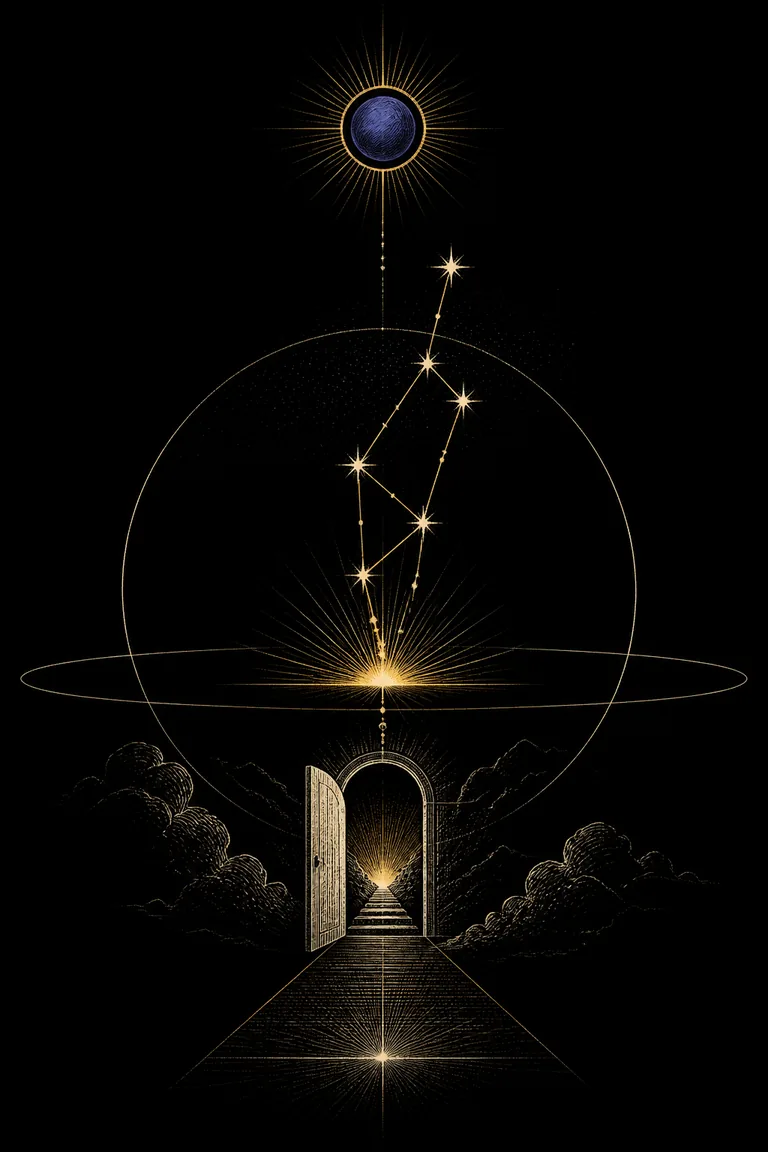
A North Node conjunct Descendant transit occurs when the moving North Node reaches the natal Descendant longitude, placing the South Node on the Ascendant at the same time.
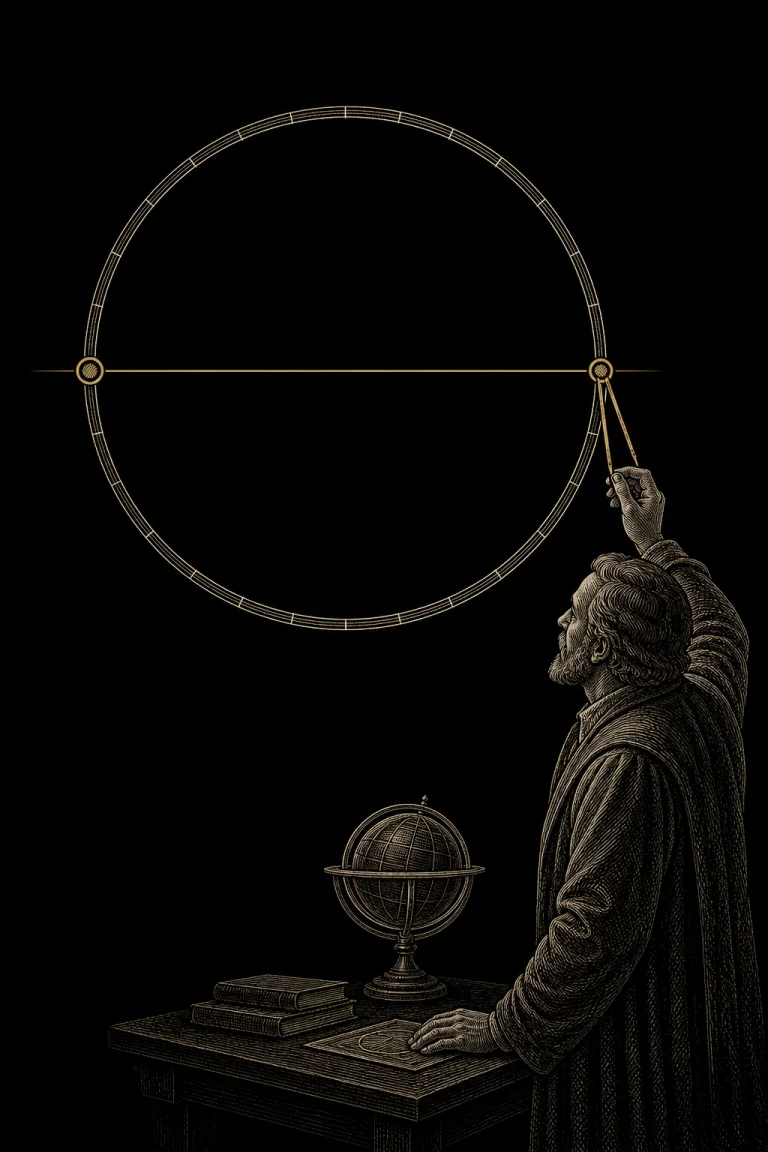
North Node conjunct Descendant transit is a time-sensitive contact between the moving lunar node and the western point of the natal horizon. Because the nodes form one axis, every exact North Node conjunction to the Descendant also places the transiting South Node exactly on the natal Ascendant. Interpret the full horizon axis rather than isolating a single point or promising that a particular person must arrive.
Accurate timing requires a reliable birth time and location, one consistent choice of mean or true node, a stated orb, and a search for every exact pass. The transit can be used to examine how agreements, clients, collaborators, competitors, and close relationships meet personal autonomy. It cannot prove a soulmate, marriage, separation, lawsuit, or another person's intentions.
Take the next insight with you
Explore personalized Astrology guidance in Veritas, available for iOS and Android.
 Scan with your phone
North Node conjunct Descendant transit at a glance
What the conjunction actually measures
The Descendant is the ecliptic longitude setting on the western horizon for a particular moment and location. A conjunction occurs when the moving North Node reaches that longitude within the chosen orb. This is not a visual claim that a physical object sits on the local horizon today. It is a comparison between a transiting longitude and a natal angle. Start with degrees, minutes, node type, and timestamp before adding interpretation.
The South Node is conjunct the Ascendant at the same time
The lunar nodes are always opposite. If the North Node is at the natal Descendant, the South Node is at the natal Ascendant. The event therefore activates one horizon axis with two contacts. North Node language can emphasize developing participation, while South Node language can examine familiar self-protective habits, default presentation, or resources already available. Neither end should be treated as good or bad. The lunar nodes guide explains the axis without turning it into a moral ranking.
Birth time and location determine the angles
The Ascendant and Descendant move quickly as Earth rotates. A small birth-time error can shift both angles enough to change the exact transit date, especially when a narrow orb is used. Verify whether the birth time comes from a record, family memory, an estimate, or rectification. Confirm birthplace, historical time zone, and daylight-saving rules. If the time is uncertain, report a date range or avoid angle-specific timing. The birth chart without birth time guide shows what can still be interpreted reliably.
Mean node and true node can give different dates
The mean node is a smoothed mathematical position. The true node includes short-term oscillation and can move direct briefly even though its overall motion is retrograde. Both are established calculation choices, but they are not interchangeable inside one timing record. Label the chosen node, keep it consistent from the first applying date through the final separating date, and calculate every exact pass shown by that setting. A date copied from another chart is not sufficient evidence.
A reproducible timing protocol
- Audit natal data
Record the birth source, exact time, location, time-zone conversion, house system, and natal Descendant longitude to the minute.
- Choose one node
State mean or true North Node and use that setting for all dates, charts, and notes in the transit study.
- Choose an orb
Use a modest orb, such as one degree for observation, and distinguish entry, exactness, and exit instead of calling the whole period exact.
- Find every exact pass
Scan the full interval for repeated longitude equality. True-node oscillation can produce more than one exact timestamp.
- Confirm the opposite contact
At each exact pass, verify that the South Node is conjunct the natal Ascendant within the same tolerance.
- Record evidence
Separate dated observations, conversations, and decisions from interpretations written before or after the event.
The Descendant is an angle, not the entire seventh house
The Descendant is the cusp point opposite the Ascendant. The seventh house is a sector whose size and contents depend on the house system. A transit can be conjunct the Descendant without describing every seventh-house matter, and a planet can transit the seventh house without being conjunct the angle. The Descendant guide focuses on the angle, while the seventh house guide covers the broader sector. Keep those levels distinct.
Relationship themes without promised relationships
The Descendant can organize encounters where another person has a defined role: partner, collaborator, client, adviser, opponent, negotiator, or witness. During this transit, a useful inquiry is whether an agreement asks for a skill, perspective, or accountability that cannot be developed alone. That does not mean a new person must appear. An existing partnership may revise its terms, a professional may seek better client feedback, or someone may recognize that a role should remain vacant until consent and capacity are clear.
South Node on the Ascendant and familiar autonomy
The Ascendant describes the eastern horizon and one way the chart meets immediate circumstances. South Node contact can invite review of familiar self-presentation, reflexive independence, established coping methods, or overused personal control. Releasing a reflex does not require abandoning identity or boundaries. The practical task may be to keep useful autonomy while making enough room for feedback, negotiation, and shared responsibility. The rising sign guide provides natal context.
Agreements, clients, and open competitors
Descendant symbolism is broader than romance. A contract negotiation, therapeutic alliance, consulting relationship, customer dispute, mediation, or transparent competition can all place another party across a defined boundary. Examine scope, decision rights, payment, confidentiality, deadlines, exit terms, and conflict procedures. Astrology may supply a reflection window, but the actual agreement should be written, reviewed, and understood on ordinary legal and professional terms.
Natal ruler and aspects refine the picture
Identify the Descendant sign, its ruler, the ruler's natal house and condition, and planets closely aspecting the horizon axis. A natal Venus near the Descendant, Saturn square the axis, or Mars ruling the Descendant offers different context, but none erases the transit geometry. Use the aspect guide to define orbs consistently and the transits guide to keep moving contacts separate from natal placements.
Worked timing example
Suppose a verified chart has a Descendant at 14 degrees 20 minutes of a sign. The selected true North Node enters a one-degree orb, reaches 14 degrees 20 minutes, moves away, returns because of short-term oscillation, and reaches the degree again before separating for good. The record should contain both exact timestamps and the simultaneous South Node contacts to the Ascendant. A useful review compares what was proposed, negotiated, accepted, or declined around each pass. It should not select only the date that resembles the preferred story.
How this differs from North Node conjunct Ascendant
With North Node conjunct Ascendant, the North Node meets the eastern horizon and the South Node meets the Descendant. Here the polarity is reversed: the North Node meets the western horizon and the South Node meets the Ascendant. Both concern the same natal axis, but the moving node contacts different endpoints. Preserve that direction rather than merging both searches into a generic relationship transit.
Save a horizon-axis transit record
Use Veritas to keep the birth-data source, Descendant longitude, node setting, orb, every exact pass, simultaneous South Node contact, observations, agreements, and later review in one record.
A grounded reflection practice
Before the first exact pass, write one relationship or agreement that would benefit from clearer terms. Name what you can decide alone, what requires consent, what evidence each party needs, and what would make participation unsafe or unsustainable. At each pass, record only what occurred. After the final separation, compare the record with the initial assumptions. This reduces hindsight editing and makes the transit useful even when no dramatic event occurs.
Responsible limits
North Node conjunct Descendant transit is an interpretive timing framework, not evidence that someone is destined to enter or leave your life. It cannot reveal consent, fidelity, compatibility, legal outcomes, abuse risk, diagnosis, or another person's private motives. Do not use it to pressure contact, remain in danger, sign a contract, or replace legal, medical, mental-health, or financial advice. Use the <a href="/astrology">Astrology journal hub</a> for related calculation guides, and let documented facts and explicit agreements lead consequential choices.