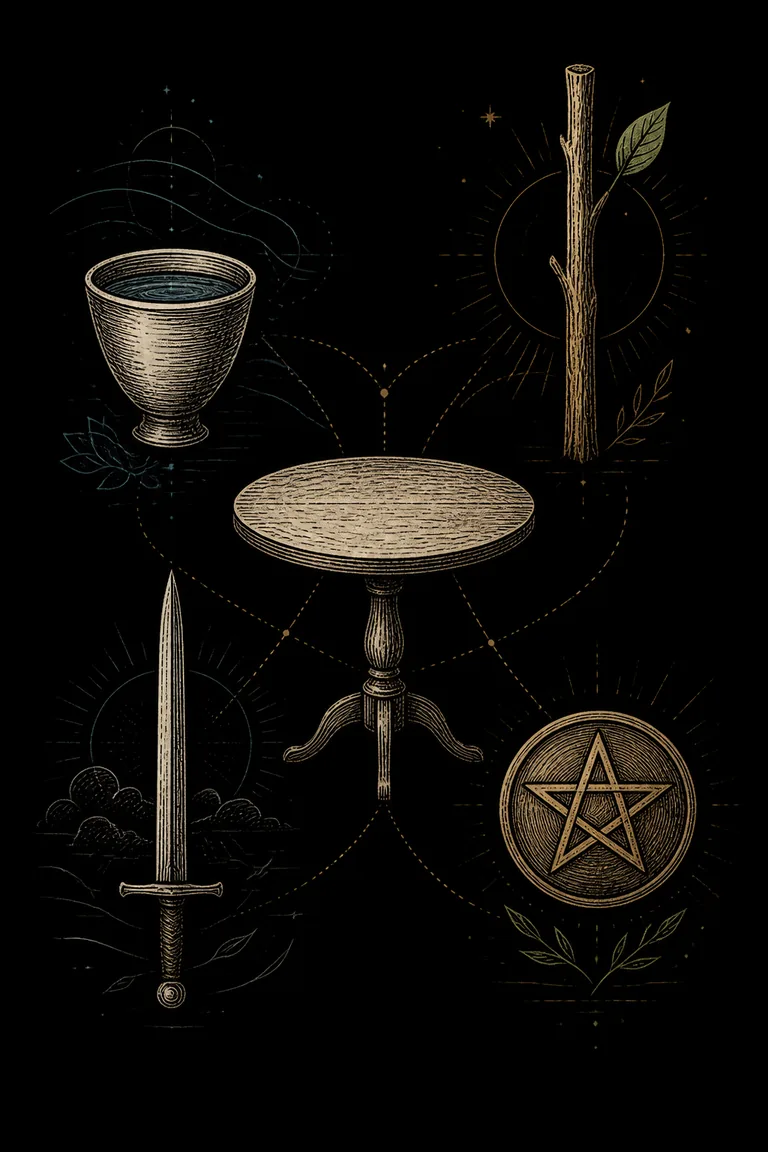
Tarot Journal
Many Tens in a Tarot Reading: What It Means
Many Tens in a Tarot reading can concentrate attention on completion, consequence, transfer, and what begins after a cycle closes, but each suit finishes a different kind of work.
Many Tens in a Tarot reading often show several processes at a point of completion, consequence, or transfer. Cups can complete an emotional or communal arc, Wands can expose the full weight of responsibility, Swords can mark a decisive ending and transition, and Pentacles can show continuity across people or time. Start with the exact count and spread size, then ask what evidence makes each form of closure real. A cluster of Tens does not guarantee marriage, success, loss, inheritance, dismissal, reunion, or a deadline.
A standard 78-card Tarot deck contains four Tens, one in each suit. That fact gives the reading a useful integrity check. Record whether cards came from one complete deck, whether any cards were duplicated, whether the deck was reshuffled between positions, and whether earlier draws were carried forward. Then read suit, position, orientation, counterweights, ownership, and handoff separately. Completion is useful only when the reader can name what has been accepted, what remains owed, and who holds the next responsibility.
Take the next insight with you
Explore personalized Tarot guidance in Veritas, available for iOS and Android.
 Scan with your phone
Many Tens in a Tarot reading at a glance
Count the Tens and keep the denominator visible
Two Tens in a three-card spread occupy two thirds of the reading. Two Tens in a twelve-card spread occupy one sixth. Write the concentration as count over total before assigning meaning. Also note how many cards were available to be drawn. The card-count guide helps separate a deliberate sample from a pattern noticed only after several readings.
A standard deck has only four Tens
There are four Tens in the standard 78-card deck. Five Tens in one unreshuffled spread therefore require an explanation such as duplicate cards, combined decks, reused photographs, or cards carried across separate draws. This is not a mystical exception. It is a method issue. Verify the deck and draw record before interpreting frequency, especially when an app, custom deck, or multi-deck exercise changes the available pool.
Ten is completion with consequences
Ten follows Nine, but it does more than say that something is late in a cycle. It can show the result of accumulation, the cost of carrying a process to its edge, the transfer of what was built, or the condition that makes a new Ace possible. Closure may be satisfying, painful, burdensome, or durable. Ask what is complete in observable terms and what consequence now needs ownership.
Read each suit as a different kind of completion
Use the Minor Arcana guide and the actual imagery in the chosen deck. A repeated rank creates a comparison, not one shared verdict.
Positions decide what is ending or transferring
A Ten in the past can show a completed condition that shaped the question. In the present it can identify a result or burden that already exists. In advice it may ask for acceptance criteria, delegation, formal closure, or succession planning. In an outcome it remains conditional on the actions and constraints elsewhere in the spread. Do not let the rank erase the position label.
Reversed Tens need a declared method
If reversals are part of the reading, choose a model before drawing. A reversed Ten might test incomplete agreement, a load that cannot be sustained, an ending being replayed, or a legacy system that excludes someone. It does not automatically cancel completion or promise recovery. The reversal guide offers several consistent approaches.
Mixed Tens can reveal incompatible closure tests
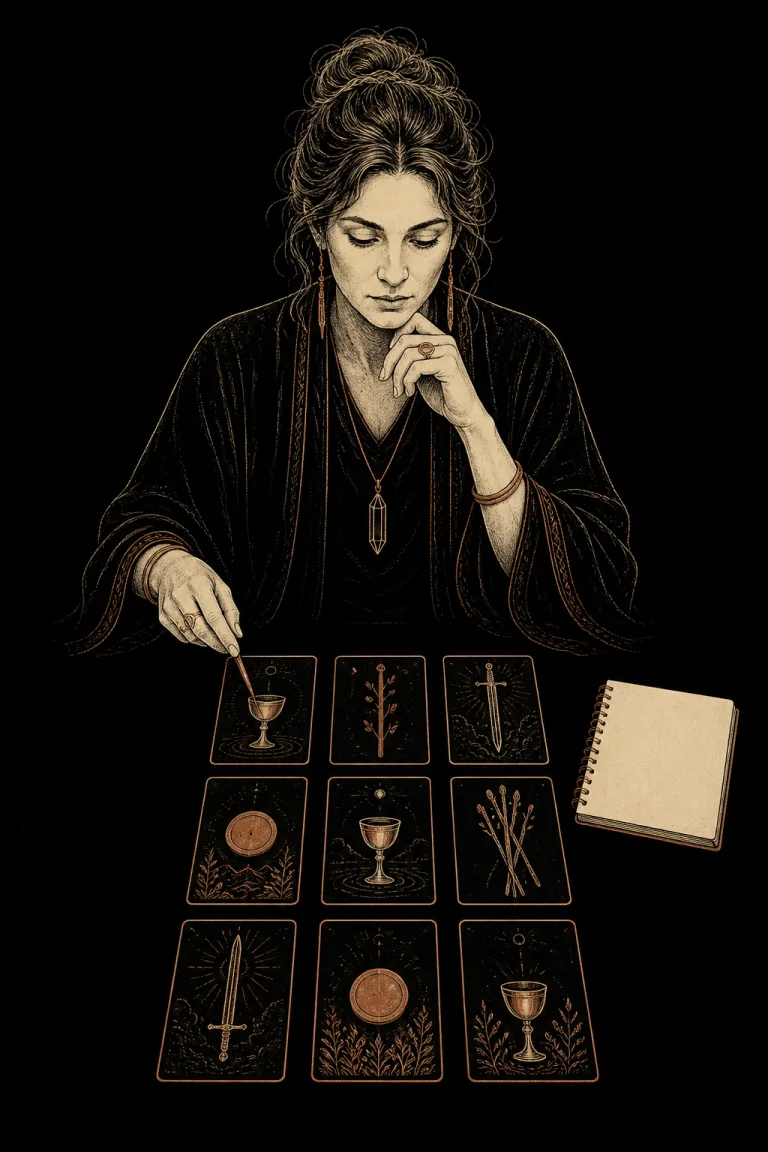
The Ten of Cups beside the Ten of Wands can contrast a desirable shared result with the labor required to maintain it. The Ten of Swords beside the Ten of Pentacles can show that one process must end while records, property, knowledge, or care continue. Read the tension directly. Do not call every Ten positive or every ending negative.
Non-Ten cards are not footnotes
A Two may require agreement about closure. A Four may demand maintenance or rest. A Six may show transfer terms. A Court card may identify the role receiving work. A Major Arcana card can widen the ethical or developmental frame. Use card combinations to study relationships without letting the repeated rank win by majority vote.
A seven-step closure and handoff audit
- Count
Record Tens over total cards and verify that the deck and draw method can produce the observed count.
- Separate
List every Ten by suit, position, orientation, and the exact question it addresses.
- Define completion
State the acceptance evidence for belonging, delivery, ending, or continuity.
- Name consequences
Record cost, grief, relief, workload, maintenance, rights, and people affected.
- Assign the handoff
Identify who accepts, receives, archives, maintains, or closes the work.
- Read counterweights
Use positions and non-Tens to test consent, resources, alternatives, and remaining duties.
- Set the next boundary
Choose one documented closeout action and define what will not be carried into the next cycle.
Worked example: relationship milestone
A relationship spread includes the Ten of Cups in "shared aim," the Ten of Wands in "cost," and Justice in "next step." The reader does not promise marriage or permanence. They ask whether both people define the aim the same way, list the labor required, and use Justice to clarify fair terms and consent. The useful result is an explicit agreement, revision, or refusal.
Worked example: project delivery
A work spread contains the Ten of Wands, Ten of Swords, and Three of Pentacles. The team has reached a delivery limit and one failed approach must stop. They document completed requirements, unresolved defects, owner acceptance, support coverage, and what is deliberately discontinued. Collaboration becomes the handoff mechanism. The cards do not prove approval, compliance, promotion, or failure.
Worked example: family resources
The Ten of Pentacles, Ten of Cups, and Five of Pentacles appear in a family-resource question. The visible wish for continuity is tested against actual access and exclusion. The group reviews title, beneficiary records, maintenance costs, accessibility, and professional advice. Tarot can surface questions, but it cannot establish ownership, inheritance rights, tax treatment, or a financial decision.
False closure is still unfinished work
A process is not complete merely because people are tired, a deadline passed, or someone announced an ending. Check whether required acceptance occurred, affected people were informed, records were preserved, obligations were transferred, and safety or support continues. When closure is disputed, separate the factual status from the symbolic wish to be done.
A handoff needs a receiving owner
Completion can create new work for another person. Name who receives the relationship agreement, delivered project, archived record, care duty, financial asset, or maintenance schedule. Confirm authority, capacity, access, and consent. A beautiful ending image does not make an unfunded or unwanted handoff fair.
Compare many Tens with many Nines
Many Nines owns late-stage readiness, remaining work, capacity, and a closure test. Many Tens owns the evidenced result, consequence, transfer, and next-cycle boundary. A spread containing both ranks may show some areas still being assessed while others are ready for formal closeout. Suit and position decide which is which.
Tarot Tens are not repeating-number claims
Tarot and numerology can support a rank comparison, but several drawn Tens are not the same input as noticing 1010 or reducing a date. A Tarot rank belongs to a deck and spread method. A number sequence belongs to a separate observation and calculation. Neither proves a message, destiny, or deadline.
Keep evidence from the moment of the reading
Save the spread image, question, deck state, draw method, Ten count, total cards, positions, first interpretation, alternatives, completion evidence, outstanding obligations, receiving owner, and review date. A Tarot journal reduces hindsight editing and makes failed closure claims visible.
Save every completion and handoff separately
Use Veritas to record the Ten count and denominator, suits, positions, acceptance evidence, consequences, remaining obligations, receiving owner, one closeout action, and a review date.
A practical journal prompt
Complete: "I drew __ Tens in __ cards from __ deck method. The Cups completion requires evidence of __. The Wands burden needs __ transferred or stopped. The Swords ending is supported by __. The Pentacles continuity depends on __. The most important counterweight is __. The receiving owner is __, and I will verify closeout on __."
Responsible limits
Many Tens in a Tarot reading are a symbolic pattern, not scientific evidence of success, disaster, marriage, separation, inheritance, dismissal, diagnosis, another person's feelings, legal status, financial result, reconciliation, or timing. Visit the <a href="/tarot">Tarot journal hub</a> and use records, consent, qualified guidance, safety procedures, and real acceptance criteria for consequential decisions.