Astrology Journal
North Node Conjunct Juno Transit: Timing and Meaning
North Node conjunct Juno transit occurs when the moving North Node reaches the natal longitude of asteroid 3 Juno, while the South Node simultaneously occupies the opposite longitude.
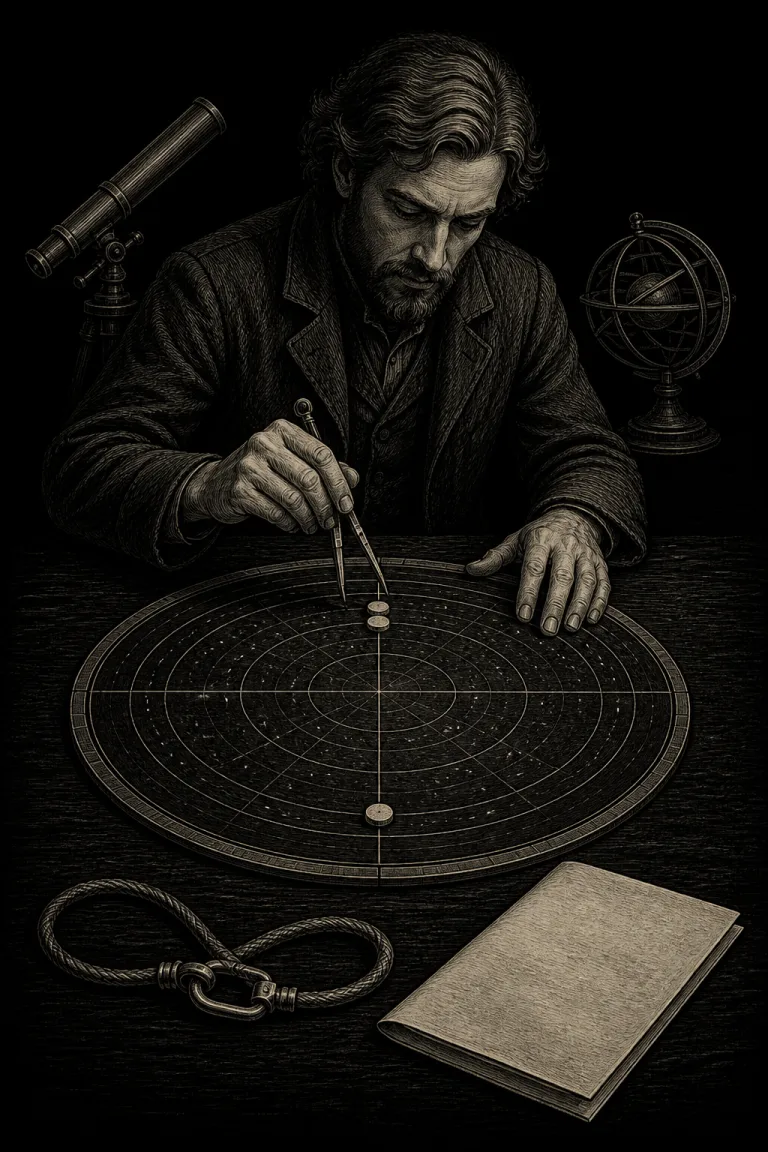
North Node conjunct Juno transit is a temporary longitude contact between the transiting lunar node and natal asteroid 3 Juno. Astrologers may use it to review mutual terms, commitment, representation, reciprocity, loyalty, decision rights, and the agreements that distribute benefits and duties. A reproducible interpretation begins with the correct asteroid, one consistent node model, an explicit orb, every exact pass, and the simultaneous South Node opposition.
This transit does not promise marriage, engagement, reunion, divorce, a soulmate, fidelity, pregnancy, a contract, or a permanent relationship. Treat the symbolism as a prompt to inspect actual terms and behavior, compare it with the natal chart and circumstances, and use consent, direct communication, records, and qualified advice for consequential decisions.
Take the next insight with you
Explore personalized Astrology guidance in Veritas, available for iOS and Android.
 Scan with your phone
North Node conjunct Juno transit at a glance
Confirm which Juno you are using
This article uses asteroid 3 Juno, not a hypothetical point, fixed star, house cusp, or another body with a similar label. Record the object number and natal longitude shown by your software. The Juno guide explains natal sign, house, and aspect questions without reducing a person or relationship to one asteroid.
Mean and true nodes produce different dates
The lunar nodes are calculated intersections rather than physical bodies. A mean node smooths short-term oscillation, while a true node includes it. Exact Juno-contact dates can therefore differ. Choose one model before calculating, label it in your notes, and do not switch models to obtain a preferred date. The node guide supplies the broader axis context.
How to calculate the conjunction
Convert both positions to longitudes from 0 to less than 360 degrees. Let J be natal Juno and N be the transiting North Node. Calculate d = |N - J|, then take the smaller separation min(d, 360 - d). The conjunction is exact when the separation reaches zero and is within range only when it is no larger than the orb you declared in advance.
For example, natal Juno at 7 degrees 18 minutes of a sign and the North Node at 6 degrees 42 minutes of the same sign are 0 degrees 36 minutes apart. That fits a one-degree orb. The date is not reproducible unless the transit table also records time zone, zodiac framework, node model, and source precision.
Applying and separating describe motion
The contact is applying when the selected node is moving toward Juno's natal longitude and separating after it moves away. A true node can briefly change apparent direction, so the same orb may contain multiple exact crossings. Inspect the full ephemeris interval instead of treating one app alert as the entire transit. The transits guide explains this timing language.
Record every exact pass
Create a table with orb entry, every exact contact, direction changes, and final orb exit. Record node model, longitude, time zone, source, rounding, and uncertainty for each row. If the software reports only whole minutes or one daily position, use a finer ephemeris near a suspected crossing. A repeated pass is a timing fact, not proof that an agreement will repeat.
The South Node opposition is simultaneous
When the North Node conjoins natal Juno, the South Node occupies the opposite longitude. Preserve that geometry. Symbolically, the axis can frame new attention to one set of terms alongside inherited expectations, expired roles, or costs that need review. It does not command a person to commit, remain, leave, forgive, or surrender a right.
Birth-time sensitivity depends on context
Juno usually moves only a modest distance during one day, but exact natal position still depends on the date, location convention, ephemeris, and time. Houses and angles can shift much more with an uncertain birth time. If time is unknown, prioritize Juno's longitude and reliable natal aspects, label house uncertainty, and consult the birth-chart-without-time guide.
Read natal Juno before the transit
A transit activates an existing natal configuration rather than replacing it. Record Juno's sign, house confidence, close aspects, and the real agreements already present. Use the aspects guide to distinguish a natal relationship from the temporary nodal contact. Do not infer a partner from the transit alone.
Commitment requires identifiable terms
A commitment is more than intensity or duration. Name the parties, scope, benefits, duties, authority, resources, review date, privacy rules, and exit conditions. Ask whether the terms are explicit, mutual, legal where needed, and supported by behavior. Symbolic Juno language is most useful when it improves that audit instead of decorating an undefined promise.
Reciprocity is not identical exchange
Mutual arrangements do not require each person to contribute the same thing at the same moment. They do require visibility, consent, a proportionate distribution of burdens, and a way to raise concerns. Track who decides, who performs hidden work, who receives the benefit, and who bears downside. Astrology cannot decide what is fair without the people and facts involved.
A practical Juno transit method
- Verify the factors
Record asteroid 3 Juno, natal longitude, zodiac framework, node model, orb, source, and time zone.
- Map the full interval
List orb entry, every exact pass, direction changes, and final separation.
- Preserve the axis
Record the simultaneous South Node opposition and use natal houses only when birth-time accuracy supports them.
- Name the agreement
Identify the actual parties, scope, benefits, duties, decisions, duration, records, and unanswered terms.
- Audit consent and power
Check choice, pressure, representation, hidden work, resources, privacy, consequences, review, and exit conditions.
- Review the evidence
After final separation, compare words with behavior, costs, counterexamples, quiet dates, and any change that should be retained.
Example: a relationship agreement
Suppose two partners are discussing shared housing. A Juno audit can clarify costs, privacy, chores, guests, decision rights, ownership, and an exit plan. Put the terms in ordinary language and allow either person to decline. The transit does not prove that moving together is destined, safe, compatible, or permanent.
Example: a business partnership
Two collaborators may be assigning intellectual property, revenue, credit, access, and liability. Use the interval to inventory contributions and obtain qualified legal or accounting review. Juno symbolism may keep reciprocity visible, but it cannot establish ownership, validate a contract, predict profit, or certify the other party's intentions.
Example: representation and delegated authority
A committee or advocate may speak for a group. Record who authorized that role, which decisions are delegated, how feedback returns, and when the mandate ends. The nodal axis can prompt review of current representation and inherited expectations without proving betrayal, loyalty, legitimacy, or a required handoff.
Juno, Vesta, and Ceres are separate intents
North Node conjunct Vesta focuses sustained attention, privacy, maintenance, and finite fuel. North Node conjunct Ceres focuses care and resource arrangements. This Juno contact focuses mutual terms, representation, benefits, duties, and review. Each natal longitude needs its own calculation.
The seventh house is not a substitute for Juno
With reliable birth data, the seventh house may add context around one-to-one agreements and open counterparts. It remains a separate chart factor. Juno can occupy any house, and a nodal contact to Juno does not become a seventh-house transit unless the actual chart supports that geometry.
Use an evidence log
Before orb entry, write one expected theme and one ordinary alternative explanation. During the interval, record proposals, behavior, decisions, costs, and quiet dates before adding symbolic labels. After final exit, classify entries as supportive, contradictory, ambiguous, or unrelated. A useful log can show that nothing unusual happened.
Track Juno terms and timing clearly
Use Veritas to record node model, natal Juno, orb entry, every exact pass, South Node opposition, parties, terms, benefits, duties, consent, power, behavior, costs, review dates, and exit conditions.
Questions that preserve agency
Ask: Which agreement is actually under review? What has each party explicitly accepted? Where do words and behavior differ? Who carries hidden work or risk? What evidence would support renewal, revision, pause, or exit? These questions preserve agency because the answer comes from people, records, and consequences, not from a predicted relationship script.
Responsible limits
North Node conjunct Juno transit is an astrological timing framework, not scientific proof of marriage, engagement, reunion, divorce, fidelity, compatibility, pregnancy, a soulmate, a valid contract, or future events. Do not use it to pressure commitment, excuse control, invade privacy, ignore abuse, or make legal, financial, medical, employment, or safety decisions. Visit the <a href="/astrology">Astrology journal hub</a> and use consent, records, qualified advice, and direct evidence for consequential choices.