Astrology Journal
North Node Conjunct Vesta Transit: Timing and Meaning
North Node conjunct Vesta transit occurs when the moving North Node reaches the natal longitude of asteroid 4 Vesta, while the South Node simultaneously occupies the opposite longitude.
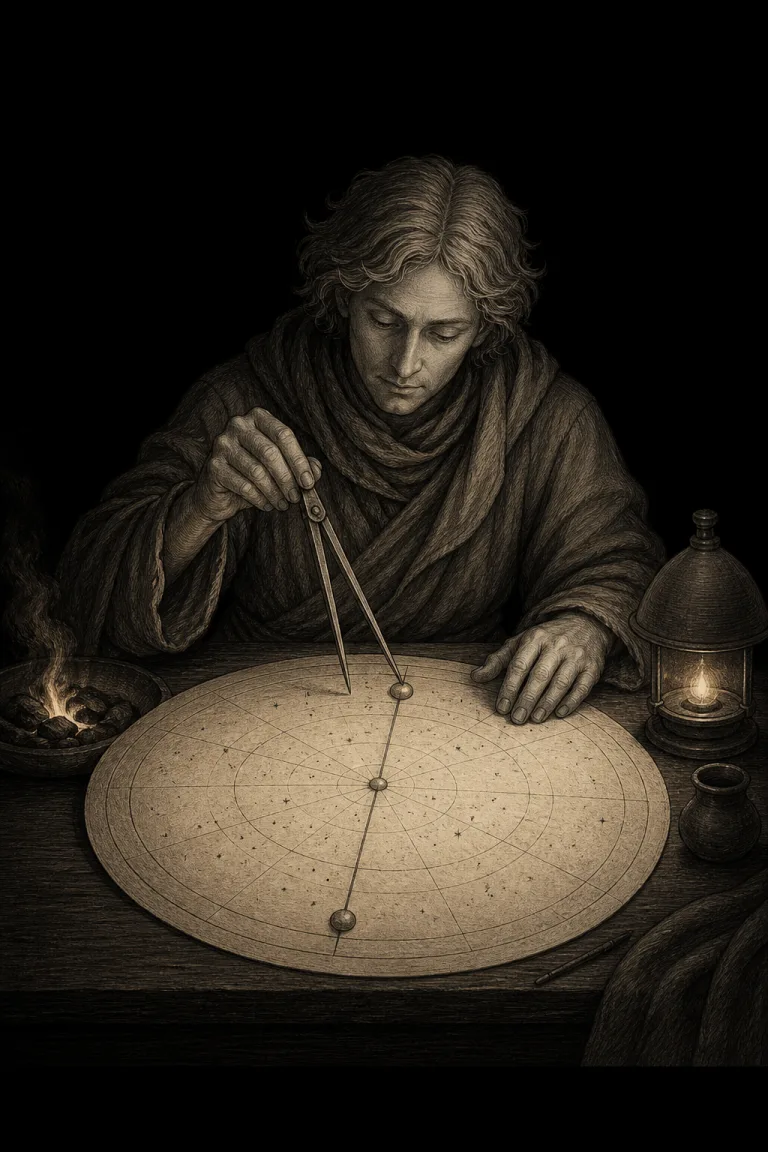
North Node conjunct Vesta transit is a temporary longitude contact between the transiting lunar node and natal asteroid 4 Vesta. Astrologers may use it to review concentration, continuity, vocation, privacy, resource allocation, and the cost of tending one priority. A reproducible interpretation begins with the correct asteroid, one consistent node model, an explicit orb, every exact pass, and the simultaneous South Node opposition.
This transit does not prove a calling, sacred status, celibacy, purity, healing, promotion, destined service, or a permanent identity. Treat symbolism as a structured question, compare it with the natal chart and observable circumstances, and use direct evidence for work, health, relationship, financial, legal, and safety decisions.
Take the next insight with you
Explore personalized Astrology guidance in Veritas, available for iOS and Android.
 Scan with your phone
North Node conjunct Vesta transit at a glance
Confirm which Vesta you are using
This article uses asteroid 4 Vesta, not a hypothetical point, house cusp, fixed star, or name asteroid. Record the object number and natal longitude shown by your software. The Vesta guide explains its natal use through sign, house, and aspects without turning one symbol into a complete vocation or personality.
Mean and true nodes are different calculations
The lunar nodes are calculated intersections rather than physical bodies. A mean node smooths short-term oscillation, while a true node includes it. Their exact Vesta-contact dates can differ. Choose one model before calculation, label it in your notes, and do not switch models to manufacture a preferred date. The node guide provides the broader axis context.
How to calculate the conjunction
Convert both positions to longitudes from 0 to less than 360 degrees. Let V be natal Vesta and N be the transiting North Node. Calculate d = |N - V|, then use the smaller separation min(d, 360 - d). The conjunction is exact when that separation reaches zero and is within range only when it is no larger than your declared orb.
For example, natal Vesta at 18 degrees 12 minutes of a sign and a North Node at 18 degrees 42 minutes of the same sign are 0 degrees 30 minutes apart. That is inside a one-degree orb. A transit table still needs time zone and node-model labels so another reader can reproduce it.
Applying and separating describe motion
The contact is applying when the chosen node model is moving toward the exact natal longitude and separating after it moves away. Because the true node can briefly change apparent direction, an orb may contain more than one exact crossing. Inspect the ephemeris across the full interval rather than assuming a single date. The transits guide explains timing language.
Record every exact pass
Create a table with orb entry, each exact contact, and final orb exit. For every row, record node model, longitude, apparent direction, time zone, source, and uncertainty. If software rounds positions, use a finer ephemeris near each crossing. A single notification is not a complete transit history.
The South Node opposition happens at the same time
When the North Node conjoins natal Vesta, the South Node occupies the opposite longitude. Preserve that geometry. Symbolically, the axis can frame what receives renewed attention alongside what is released, delegated, interrupted, or kept from consuming the same finite fuel. It does not prove that a person or duty must be abandoned.
Birth-time sensitivity depends on context
Vesta usually moves little during one day, so a modest birth-time error may change its longitude less than it changes the angles or house cusps. Houses can still be unreliable without an accurate time. If the time is unknown, prioritize the asteroid longitude and well-established natal aspects, and consult the birth-chart-without-time guide.
Read natal Vesta before the transit
A transit activates an existing natal configuration rather than replacing it. Record Vesta's sign, house confidence, close natal aspects, and current circumstances. Use the aspects guide to distinguish a natal aspect from the temporary nodal contact. Avoid reading the transit from a keyword list alone.
Focus is not the same as depletion
Concentration can support craft when scope, time, recovery, authority, and stopping conditions are explicit. The same pattern can become depletion when a role expands without consent, recognition, resources, or a handoff. Ask what is being tended, what fuels it, what is excluded, who benefits, who decides, and what evidence would justify continuing.
A practical Vesta transit method
- Verify the factors
Record asteroid 4 Vesta, natal longitude, zodiac framework, node model, orb, source, and time zone.
- Map the full interval
List orb entry, every exact pass, direction changes, and final separation.
- Preserve the axis
Record the simultaneous South Node opposition and the natal houses only if birth time supports them.
- Define the focus
Name the actual practice, duty, project, privacy need, or maintenance task under review.
- Audit fuel and boundaries
Measure time, money, attention, skill, recovery, consent, authority, alternatives, and stopping conditions.
- Review evidence
After final separation, compare outcomes, costs, counterexamples, quiet dates, and what should continue, change, or end.
Example: a demanding craft project
Suppose the interval overlaps a long technical project. The Vesta question can examine protected focus, maintenance, quality standards, interruption, and sustainable hours. Track output and recovery before changing the arrangement. The transit does not prove mastery, recognition, funding, or that overwork is meaningful.
Example: service without clear scope
A volunteer or care role may expand during the same period. Write what was requested, who consented, which decisions belong to you, what support exists, and when the role will be reviewed. Vesta symbolism can organize the audit, but it cannot assign moral duty, diagnose burnout, or replace employment, medical, safeguarding, or legal guidance.
Example: privacy and shared attention
A household may need protected work time and shared care time. Test a written schedule, define interruption rules, and review whether costs are distributed fairly. The nodal axis can prompt comparison between concentration and participation without proving that solitude or togetherness is inherently correct.
Vesta, Pallas, and Ceres are separate intents
North Node conjunct Pallas focuses strategy, pattern recognition, and mediation. North Node conjunct Ceres focuses care and resource arrangements. This Vesta contact focuses sustained attention, continuity, privacy, maintenance, and finite fuel. One event may involve all three, but each natal longitude needs its own dates and evidence.
House context can localize the question
With reliable birth data, Vesta's natal house can suggest where to look for the focus audit. The sixth house may foreground routines and service, while the tenth house may foreground visible responsibility. A house does not guarantee an event, and uncertain cusps should be labeled rather than forced.
Track Vesta focus and fuel clearly
Use Veritas to record node model, natal Vesta, orb entry, every exact pass, South Node opposition, focus, fuel, boundaries, consent, costs, outcomes, counterexamples, and final review.
Use an evidence log
Before orb entry, write one expected theme and one ordinary alternative explanation. During the interval, record dates and observable events before adding symbolic labels. After final exit, classify entries as supportive, contradictory, ambiguous, or quiet. A useful log can show that nothing unusual occurred.
Responsible limits
North Node conjunct Vesta transit is an astrological timing framework, not scientific proof of destiny, sacred duty, purity, celibacy, healing, promotion, vocation, compatibility, or future events. Do not use it to impose service, ignore exhaustion, stop treatment, violate privacy, or make financial, employment, legal, or safety decisions. Visit the <a href="/astrology">Astrology journal hub</a> and use consent, records, qualified advice, and direct evidence for consequential choices.