Astrology Journal
North Node Conjunct Persephone Transit: Timing and Meaning
North Node conjunct Persephone transit is an optional symbolic timing technique for a moving lunar node reaching natal asteroid 399 Persephone. Reproducible use requires one node model, every exact pass, the full nodal axis, and firm limits around transition, absence, return, and consent.
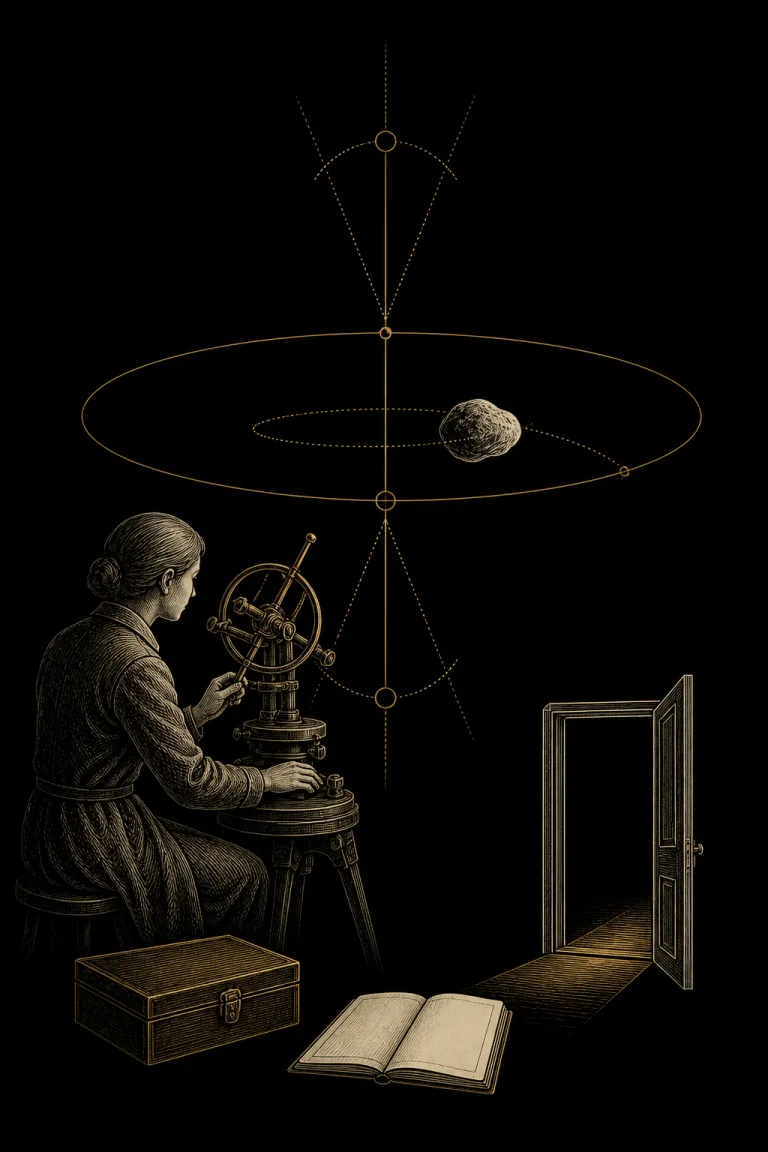
North Node conjunct Persephone transit occurs when the chosen transiting North Node reaches the natal zodiacal longitude of physical asteroid 399 Persephone within a declared orb. Astrologers may use it to review a threshold, divided obligation, seasonal rhythm, temporary absence, return process, or negotiation between two contexts. It cannot predict disappearance, abduction, bereavement, reunion, pregnancy, trauma, or another person's choice.
Calculate before interpreting. Confirm asteroid number 399, choose mean or true node, choose tropical or a named sidereal zodiac, state the ephemeris and orb, and search widely enough to capture every exact pass. The South Node is simultaneously opposite natal Persephone. Treat the timing as one axis and a reflective hypothesis, not a destined descent-and-return story.
Take the next insight with you
Explore personalized Astrology guidance in Veritas, available for iOS and Android.
 Scan with your phone
North Node conjunct Persephone transit at a glance
Verify physical asteroid 399 Persephone
NASA/JPL identifies 399 Persephone, designation A895 DD, as a main-belt asteroid. Record the number because the name can otherwise be confused with the mythic figure, a literary character, a product, or a generic descent archetype. The Persephone in astrology guide covers natal symbolism; this page owns the moving-node timing method.
Choose mean or true node before searching
The mean node is a smoothed mathematical position. The true node includes short-period variation and can briefly reverse direction. Exact dates may differ. Select one model before looking for events and keep it through the full interval. Switching models afterward can make a preferred story easier to fit and the calculation impossible to reproduce.
Declare the zodiac and ayanamsha
Tropical and sidereal longitude are separate coordinate conventions. Sidereal work also needs a named ayanamsha. Do not mix a tropical natal asteroid with a sidereal moving node or change conventions to obtain a desired date. Save the software, ephemeris, zodiac, ayanamsha if applicable, time standard, coordinates, and natal data source.
Calculate angular distance and choose an orb
Compare the moving North Node longitude with natal Persephone around the 360-degree circle. Use the shorter separation and refine the time when the difference reaches zero within numerical tolerance. Choose the orb before reviewing events. A narrow orb supports timing discipline. A wider symbolic window does not increase causal power or make a loose association more reliable.
Record every exact pass
True-node oscillation and coarse sampling may produce or hide multiple crossings. Search before and after the first candidate, refine every zero crossing, and record applying, exact, and separating phases. Do not retain only the pass nearest a move, absence, reunion, seasonal event, or family conversation. Multiple passes are repeated observations under one model, not escalating promises.
Preserve the South Node opposition
When the North Node conjoins natal Persephone, the South Node occupies the opposite longitude. Interpret both contacts as one geometry. A new way of crossing between roles or places may reveal an older schedule, obligation, attachment, or avoidance pattern. The axis does not prove karma, a former life, forced release, fate, or that someone will leave or return.
Birth-time uncertainty limits houses and angles
Asteroid longitude usually changes less with a small birth-time error than the Ascendant, Midheaven, houses, or Moon, but source quality still matters. With an unknown time, calculate Persephone across the plausible date window and report the range. Do not attach a precise house or event claim that the data cannot support. See birth chart without a birth time.
Use the myth as a question, not a biography
Persephone stories vary across periods and sources, but modern astrologers often borrow themes of thresholds, divided worlds, seasonal movement, absence, return, power, and negotiated roles. Those associations are interpretive conventions, not astronomical properties. Do not map a mythic plot onto someone's life, assign family roles, or assume that suffering is meaningful or required.
Distinguish chosen transition from coercion
A job rotation, school term, travel plan, care schedule, relocation, relationship boundary, and forced displacement are not interchangeable. Identify who chose the transition, what alternatives existed, what power differences matter, and whether consent can be withdrawn. Astrology cannot convert pressure into agreement or determine that a harmful situation is part of a destined cycle.
Return requires conditions, not symbolism alone
If the timing prompts a return question, define the destination, date range, permission, practical conditions, changed circumstances, and fallback. Returning to a workplace, home, project, community, or relationship may be possible, conditional, unsafe, or unwanted. The contact cannot promise reconciliation, reinstatement, recovery, renewed access, or acceptance by another person.
A six-step Persephone transit method
- Verify Persephone
Confirm physical asteroid 399 Persephone and save its object number and natal data source.
- Freeze settings
Choose node model, zodiac, ayanamsha if used, ephemeris, time standard, coordinates, and orb.
- Find every pass
Search the full interval and record applying, exact, and separating phases without cherry-picking a date.
- Preserve the axis
Record the simultaneous South Node opposition and interpret both points under one model.
- Name one threshold
Define the actual transition, divided role, absence, or return process and the people affected.
- Review conditions
Check choice, consent, authority, schedule, resources, evidence, fallback, stop conditions, and outcome.
Worked example: rotating between two teams
A specialist sees the first exact pass near a planned rotation. Instead of predicting promotion, they document which team owns priorities, how time is divided, who approves work, what access changes, how credit is recorded, and when the arrangement ends. The South Node opposition prompts review of an old habit of carrying two full workloads. The transit does not guarantee recognition or sustainability.
Worked example: returning to a shared project
A contributor considers returning to a project after an absence. They verify the invitation, current scope, authorship, compensation, access, conduct expectations, exit route, and what has changed since departure. They ask once through an appropriate channel and accept the answer. The contact cannot prove that they are wanted, forgiven, owed a role, or destined to resume.
Worked example: a seasonal care schedule
A family reviews a recurring care schedule near the transit. A grounded approach records capacity, consent, professional advice, transport, respite, cost, emergencies, and review dates. The mythic name is not used to assign one person permanent sacrifice or another person permanent authority. Medical, safeguarding, employment, and legal questions require qualified guidance.
Use the wider chart without stacking certainty
Natal Moon, Saturn, houses, progressions, or other transits may add symbolic context only when calculated independently. Several symbols repeating transition or return do not become scientific proof. The transits guide keeps natal and moving factors distinct, while the aspects guide supports consistent geometry.
Compare Persephone with Aphrodite and Ceres
North Node conjunct Aphrodite owns asteroid 1388 and questions of aesthetic presence, pleasure, image rights, and value exchange. North Node conjunct Ceres focuses on care, provision, allocation, and limits. Persephone stays narrower: thresholds, divided contexts, temporary absence, and conditional return.
Avoid retrospective date fitting
After a move, return, breakup, reunion, bereavement, or family event, it is easy to widen the orb, switch node models, or select one pass. Preserve settings and the full interval before reviewing events. Record comparable periods when nothing notable happened and ordinary causes such as schedules, contracts, seasons, health, budgets, or other people's choices.
Save the complete Persephone transit record
Use Veritas to log asteroid 399, node model, zodiac, orb, every exact pass, South Node opposition, threshold or return question, consent, authority, schedule, evidence, fallback, stop condition, and review date.
A practical journal prompt
Complete: "The actual threshold I am reviewing is __. Choice and authority belong to __. The transition or return conditions are __. The schedule, resources, and fallback are __. The strongest counterevidence is __. I will stop, revise, or seek qualified help when __." Add every exact pass and one ordinary alternative explanation.
Responsible limits
North Node conjunct Persephone transit is a symbolic timing framework, not scientific evidence of disappearance, return, coercion, trauma, bereavement, fertility, pregnancy, abuse, illness, reunion, separation, custody, safety, or future events. Visit the <a href="/astrology">Astrology journal hub</a>, preserve settings and every pass, and use direct agreements, documented consent, qualified care, legal guidance where needed, and ordinary safety checks.