Tarot Journal
Tarot Card Symbolism: How to Read Visual Details
Tarot card symbolism becomes useful when you separate what is visibly present from what you associate with it, then test that meaning against the deck, spread position, and real question.

Tarot card symbolism is the language of repeated visual details: figures, gestures, tools, landscapes, colors, directions, animals, weather, and spatial relationships. These details can focus a reading, but they do not form one universal code with a single fixed translation.
A reliable approach moves in stages. Observe first, name possible associations second, check the deck and spread context third, and keep a competing interpretation available. This makes symbolism a disciplined reading aid instead of a reason to force every bird, cup, mountain, or color into a prediction.
Take the next insight with you
Explore personalized Tarot guidance in Veritas, available for iOS and Android.
 Scan with your phone
Tarot card symbolism at a glance
What is a symbol in Tarot?
A symbol is a visible feature that can carry meaning beyond its literal presence. A key may suggest access, custody, permission, secrecy, or responsibility. Which meaning matters depends on who holds it, whether a lock is visible, what the figure is doing, and what the spread asks. The beginner Tarot guide treats image, position, and question as a working sentence rather than reading one object in isolation.
Symbol, motif, and correspondence
A symbol is one meaningful detail in a specific image. A motif is a repeated pattern such as a road, threshold, exchange, fall, or ascent. A correspondence deliberately links a card with another system, such as an element, planet, letter, or number. These layers can overlap, but they are not interchangeable. A red cloak seen in one deck is image evidence. A general theory about red is an association. A Golden Dawn planetary attribution is a source-specific correspondence. Labeling the layer prevents accidental certainty.
A five-pass symbolism method
- Inventory
List visible nouns and actions without interpreting them: one lamp, a narrow path, a raised hand, two facing figures.
- Describe relationships
Note distance, direction, possession, barriers, imbalance, repetition, and what appears to change.
- Offer two meanings
For each important detail, propose at least two plausible functions instead of choosing the first familiar keyword.
- Apply the grammar
Read the detail through the card title, spread position, neighboring cards, and exact question.
- Test and review
Write a rival reading, choose a proportionate action or observation, and review what later evidence supported.
Worked example: a lamp beside a winding path
Imagine a card showing one lamp beside a path that disappears behind a hill. In a position called What information is available now?, the lamp might mean limited but usable visibility. The bend might mean the next stage cannot yet be inspected. A rival reading is that the path simply marks steady progress. A grounded conclusion would be to decide with the evidence inside the current pool of light and set a check-in point, not to claim that a secret guide will appear.
How to read color without a fixed dictionary
Color meaning depends on palette, contrast, culture, printing, and deck design. Ask where a color appears, what it distinguishes, and whether it repeats. A bright yellow sky may create exposure or warmth; a small yellow object in a dark scene may function as attention or access. Check the creator's guidebook before importing a universal meaning. Color blindness, screen settings, and faded cards can also change what a reader perceives.
Direction, posture, and gaze
A figure facing another card can create engagement; a turned body may suggest departure, protection, refusal, or simple composition. Raised and lowered objects can alter agency. Before saying left means the past or right means the future, verify whether that rule belongs to the spread or deck. Direction is strongest when it connects two cards through a visible relationship, as explained in the card combinations guide.
Numbers and repeated objects
Count what the image actually shows, then ask what the count does. Three vessels arranged around people may organize exchange; three vessels scattered after an accident may organize loss. Rank, suit, and deck tradition matter more than an isolated number keyword. Use the card scene first and add a numerical layer only if it improves the reading.
Animals, plants, tools, and buildings
Identify the object accurately before interpreting it. A dog and wolf, cultivated rose and wild flower, tower and ordinary house, or hammer and staff carry different practical functions. If identification is uncertain, describe shape and behavior rather than inventing a species. Then ask whether the detail is active, decorative, protective, threatened, contained, or ignored.
Use the deck as the primary source
The same card title can contain different characters, landscapes, and cultural references across decks. Read the printed image in front of you and consult the creator's stated sources. The guide to Tarot and mythology is useful when a card deliberately invokes a named story, but resemblance alone does not prove identity or origin.
Symbolism across a spread
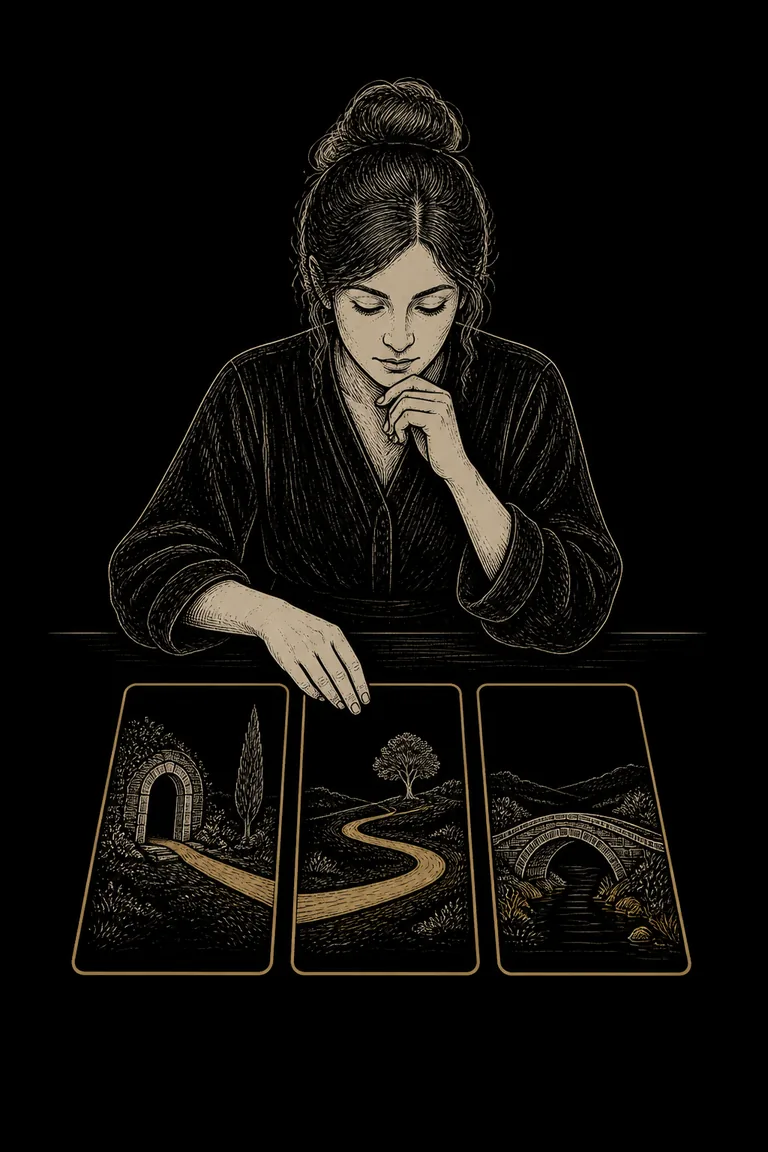
Look for a change rather than collecting keywords. Water may move from contained to spilling, figures from isolated to cooperative, or architecture from closed to open. State the sequence in plain language before attaching a theme. The Tarot storytelling method helps distinguish visible scene changes from the narrative a reader builds around them.
Build a traceable symbol journal
Use Veritas to save the visible detail, two possible meanings, deck source, spread role, rival reading, practical check, and later result.
Questions that keep symbolism useful
Ask what the detail permits, restricts, protects, exchanges, reveals, or leaves unresolved. Ask what would change the interpretation. Ask whether the symbol points to an action you can take or only a story you enjoy. For high-quality prompts, use the guide to questions to ask Tarot and keep the answer centered on agency.
Journal protocol for learning symbols
Draw one card, record five visible facts, select one relationship, and write two meanings. Add the card position and one ordinary explanation. Revisit the note after a defined interval. Over time, a Tarot journal reveals which associations remain useful across contexts and which appear because of mood, expectation, or favorite stories.
Common mistakes
Common errors include using a symbol dictionary before looking at the card, assigning one fixed meaning across every culture and deck, treating color as a prediction, overlooking scale and relationship, identifying plants or animals without evidence, and letting one dramatic detail erase the spread position. Another mistake is finding a symbol only after an outcome and then calling the match inevitable.
Limits and responsible use
Tarot symbolism is an interpretive practice, not a validated method for discovering facts, diagnoses, motives, guilt, ancestry, spiritual status, or future events. Images can support reflection and creative comparison, but they cannot replace direct conversation, records, medical care, legal advice, financial analysis, or safety planning. Prefer interpretations that remain specific, reversible, and open to correction.