Astrology Journal
North Node Conjunct Vertex Transit: Timing and Meaning
A North Node conjunct Vertex transit occurs when the moving North Node reaches the natal Vertex longitude, placing the South Node on the Anti-Vertex at the same time.
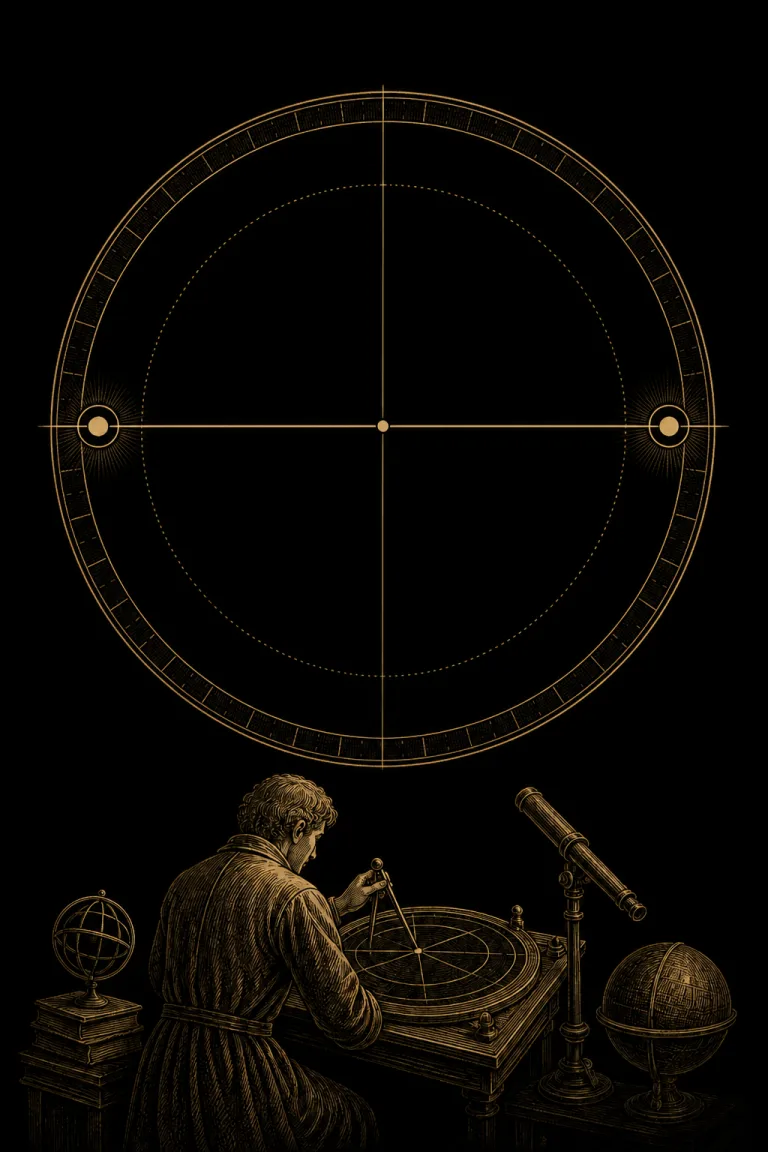
North Node conjunct Vertex transit is a time-sensitive contact between the moving lunar node and a calculated point near the western side of the natal chart. Because the nodes form one axis, every exact North Node conjunction to the Vertex also places the transiting South Node exactly on the natal Anti-Vertex. Read the full axis rather than reducing the contact to a promised encounter.
Reliable timing requires a recorded birth time and location, a verified Vertex longitude, one consistent mean or true node setting, a stated orb, and a search for every exact pass. The transit can organize reflection on encounters, invitations, selection, reciprocity, and choice. It cannot certify a soulmate, destined meeting, contract, reunion, separation, or permanent relationship.
Take the next insight with you
Explore personalized Astrology guidance in Veritas, available for iOS and Android.
 Scan with your phone
North Node conjunct Vertex transit at a glance
What the conjunction actually measures
The Vertex is a calculated intersection involving the ecliptic and the prime vertical, commonly found on the western side of a chart. A conjunction occurs when the moving North Node reaches the natal Vertex longitude within the chosen orb. This is a coordinate comparison, not a physical body arriving at a gate of fate. Record the natal degree and minute, node type, timestamp, orb, house system, software, and time standard before interpreting it.
The South Node reaches the Anti-Vertex simultaneously
The Anti-Vertex is exactly opposite the Vertex. The lunar nodes are also opposite. When the North Node reaches the Vertex, the South Node reaches the Anti-Vertex at the same moment. North Node language can frame developing participation or unfamiliar selection. South Node language can examine familiar self-positioning or automatic responses. Neither endpoint is good or bad. The lunar nodes guide explains the axis without treating one side as reward and the other as punishment.
Birth time and place matter
The Vertex depends strongly on local time and geography. A modest birth-time error can shift its longitude enough to change the exact transit date, especially when a narrow orb is used. Verify whether the time comes from an official record, family memory, estimate, or rectification. Confirm the birthplace and historical time-zone conversion. If the time is uncertain, publish a range or avoid exact Vertex timing. The unknown birth time guide identifies factors that remain more stable.
Use a verified Vertex, not a house cusp substitute
The Vertex is not the Descendant, seventh-house cusp, or a planet. Software should list it as a separate calculated point, often with the Anti-Vertex opposite. Confirm the displayed longitude and chart location. The Vertex guide covers its calculation, signs, houses, synastry, and natal interpretation. House placement can add context, but it does not replace the exact Vertex degree used for transit timing.
Mean and true node can produce different dates
The mean node is smoothed. The true node includes short-period oscillation and can briefly move direct despite its long-term retrograde motion. Both settings are used in astrology, but mixing them makes the record impossible to reproduce. Choose one setting and keep it through the applying, exact, and separating phases. If comparing both, create two labeled timelines and resist selecting whichever timestamp supports the preferred story.
A reproducible timing protocol
- Audit natal data
Record the birth source, exact time, birthplace, historical time-zone conversion, software, and natal Vertex longitude to the minute.
- Choose one node
State mean or true North Node and retain that setting for the full observation interval.
- Set an orb
Use a modest observation orb, such as one degree, and distinguish orb entry and exit from exact longitude equality.
- Find every pass
Search the complete interval. True-node oscillation can create more than one exact timestamp near the same natal degree.
- Confirm the opposite point
At every pass, verify that the South Node is conjunct the natal Anti-Vertex within the same tolerance.
- Separate observation from story
Keep dated encounters, invitations, decisions, refusals, and agreements apart from interpretations written before or after them.
Encounters are not automatically destined
Vertex traditions often emphasize consequential encounters, but consequence is judged later and depends on context, choice, and evidence. During the transit, record who initiated contact, the actual purpose, available alternatives, authority, duration, and what changed afterward. An intense first impression does not prove permanence or cosmic assignment. Selective memory can elevate one dramatic meeting while ignoring ordinary contacts that occurred in the same window.
Selection includes invitations and refusals
The transit can frame a review of how you enter situations selected by other people or systems, such as an invitation, introduction, interview, referral, assignment, or public request. Selection does not remove agency. Ask what is being offered, who set the terms, whether refusal is safe, what information is missing, and what exit exists. A declined invitation is still valid evidence. Astrology should never be used to pressure someone to accept contact because it appears meaningful.
Consent and reciprocity remain ordinary requirements
No transit overrides consent, privacy, professional boundaries, or another person's independent decisions. If a relationship or collaboration develops, use explicit agreements about communication, money, exclusivity, confidentiality, workload, and exit. The synastry guide can organize chart comparison, but neither synastry nor a Vertex contact can certify compatibility, safety, honesty, or obligation.
Watch projection at both ends of the axis
A new person or opportunity can become a screen for qualities you hope to meet, while familiar self-protective habits may shape the response. Treat that as a reflection hypothesis, not a diagnosis. List what was actually said and done, what you inferred, and what remains unknown. South Node on the Anti-Vertex does not mean you must erase yourself, surrender agency, or repeat a past role. The full axis needs participation and self-positioning.
Natal rulers and aspects refine context
Note the Vertex sign, house, its traditional ruler if used, and planets closely aspecting the Vertex axis. A natal Saturn square, Venus conjunction, or Mercury trine can change the questions worth asking, but not the transit geometry. Use the aspect guide for consistent orbs and the transits guide to keep moving contacts distinct from natal placements.
Worked timing example
Suppose a verified chart has the Vertex at 14 degrees 20 minutes of a sign. The selected true North Node enters a one-degree orb, reaches 14 degrees 20 minutes, moves away, then returns during a short oscillation for a second exact pass before final separation. Record both timestamps and both South Node conjunctions to the Anti-Vertex. Log invitations, contacts, boundaries, and decisions around each pass without promoting the most dramatic event or discarding a quiet pass. Review outcomes only after the full interval.
How this differs from North Node conjunct Descendant
North Node conjunct Descendant times a contact to the natal horizon angle and simultaneously places the South Node on the Ascendant. North Node conjunct Vertex uses a separate calculated axis and places the South Node on the Anti-Vertex. The points may fall near one another in some charts, but their longitudes and exact dates must be calculated independently. Do not merge both into one generic relationship transit.
Natal Vertex meaning is not the same as a transit
The natal Vertex is a fixed chart point. A nodal transit is a temporary longitude contact. Natal sign, house, and aspects provide context; the moving node provides timing. Keep these layers separate so a broad natal description does not become a prediction for one week. Likewise, a transit can pass without a memorable meeting. Timing is an observation window, not a guarantee that symbolism will appear as an external event.
Save a Vertex-axis transit record
Use Veritas to keep the birth-data source, Vertex longitude, node setting, orb, every exact pass, simultaneous Anti-Vertex contact, observations, consent conditions, decisions, and later review together.
A grounded reflection practice
Before orb entry, define what makes an invitation workable: purpose, authority, time, cost, consent, privacy, and exit. During each pass, record contacts and choices without labeling anyone destined. After final separation, compare expectations with evidence. Which invitations developed, which were declined, which boundaries helped, and which interpretations were projections? This produces a useful audit even when nothing dramatic occurred.
Responsible limits
North Node conjunct Vertex transit is an interpretive timing framework, not evidence that a person, meeting, relationship, job, contract, or event is destined. It cannot establish consent, safety, compatibility, truthfulness, permanence, diagnosis, or another person's motives. Do not use it to contact someone against their wishes, ignore risk, sign an agreement, leave a relationship, or make financial commitments. Visit the <a href="/astrology">Astrology journal hub</a>, and let verified data, direct communication, written terms, qualified advice, and immediate safety needs lead consequential choices.