Tarot Journal
Tarot and Psychology: A Grounded Reflection Method
Tarot can support psychological self-reflection by making associations visible, but cards are not diagnostic tests, therapy, mind reading, or proof of an unconscious truth.
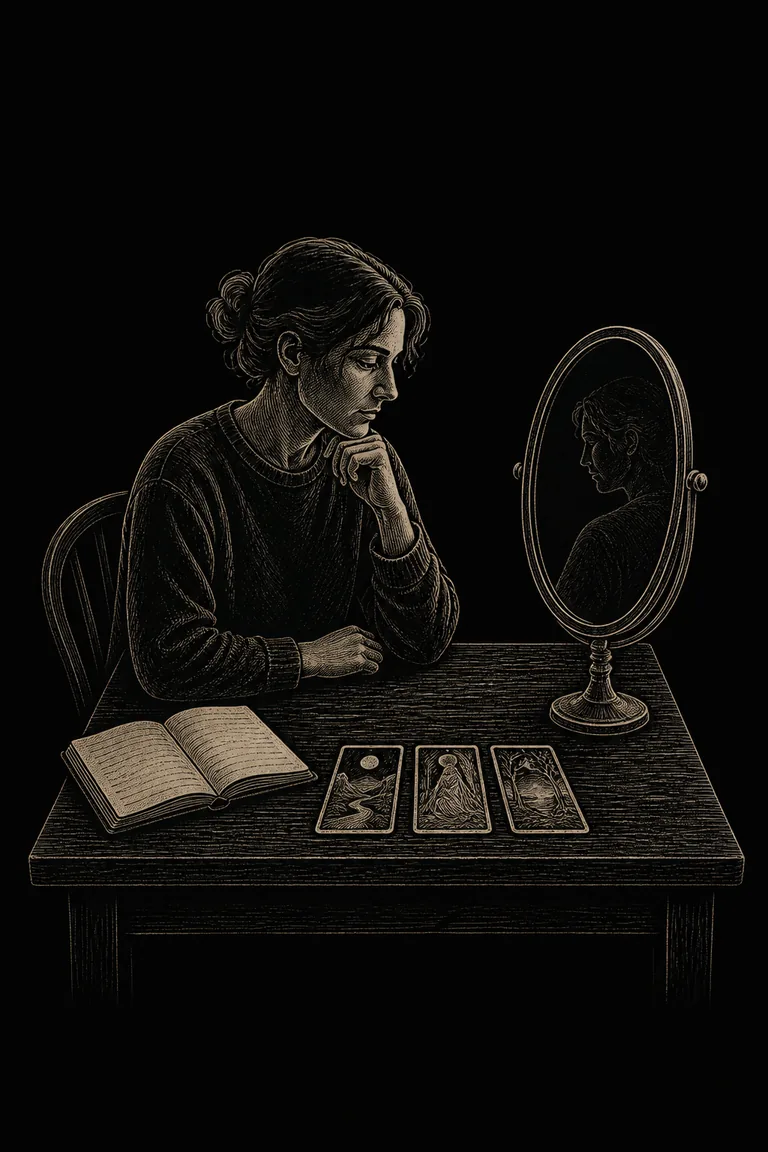
Tarot and psychology overlap most usefully when a card becomes a structured prompt. The image can help a reader notice an emotion, assumption, conflict, or possible response that was difficult to name. The resulting interpretation is a hypothesis about personal experience, not a clinical finding or a fact about someone else.
A grounded method separates what is printed on the card from the association it evokes, tests another explanation, chooses one small action, and reviews what happened. This keeps symbolic reflection useful without borrowing the authority of psychotherapy or psychological assessment.
Take the next insight with you
Explore personalized Tarot guidance in Veritas, available for iOS and Android.
 Scan with your phone
Tarot and psychology at a glance
What psychological Tarot practice can do
A card can slow attention and give a vague concern a visible shape. A closed gate may evoke exclusion, protection, delay, or privacy. Each association suggests a different question. The value comes from noticing which meaning appeared, why it may fit, and what evidence supports it. This resembles reflective writing more than measurement. A Tarot journal helps preserve the difference between the image, the first association, and the later conclusion.
What it cannot establish
A card cannot determine whether someone has depression, trauma, a personality disorder, neurodivergence, repressed memories, dangerous intent, or a particular attachment style. It cannot show what a partner secretly thinks or whether a therapist, medication, diagnosis, or treatment is right. Those claims require direct conversation, validated assessment, clinical context, and qualified judgment. Symbolic language should not be used to make a guess sound medical.
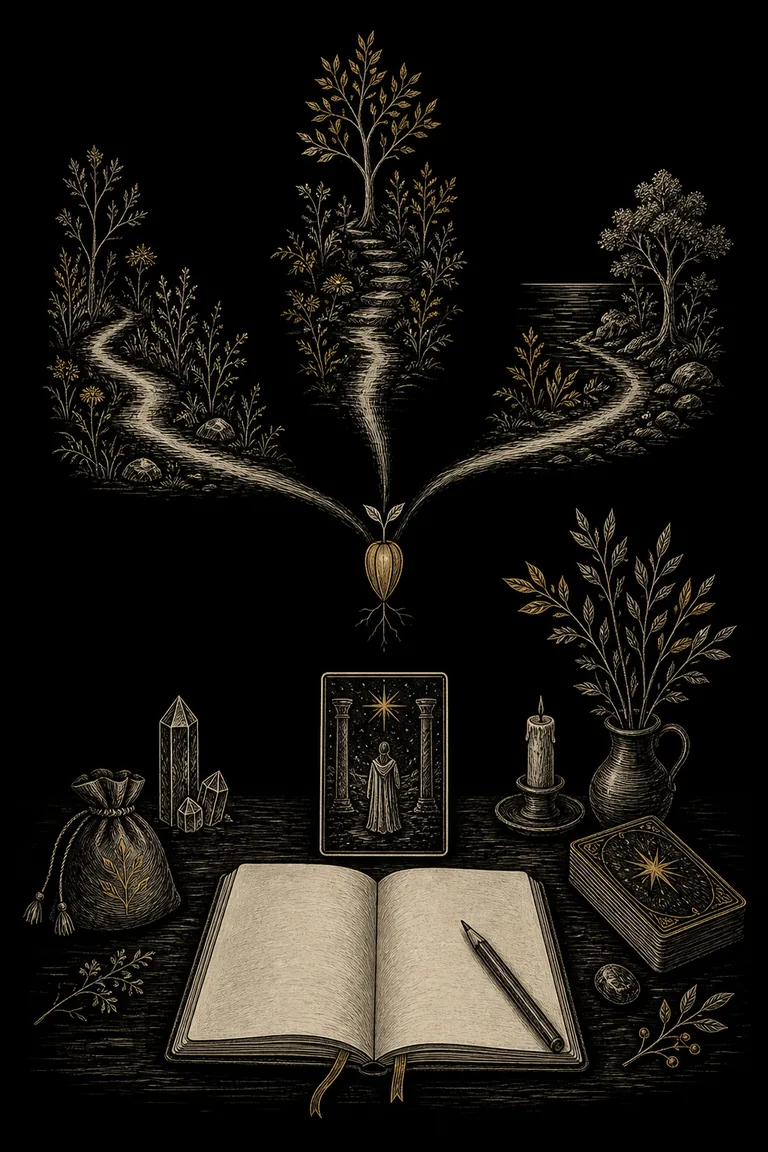
A six-step self-reflection method
- Set a narrow question
Ask about your current response, need, assumption, or next choice. Avoid diagnosing yourself or reading another person's mind.
- Record visible evidence
Describe figures, objects, posture, direction, distance, color, action, and spread position before interpretation.
- Name the association
Complete the sentence, This image reminds me of, and keep the answer in first-person language.
- Form a modest hypothesis
Use may, could, or I wonder whether. State what ordinary evidence would support or weaken the idea.
- Build a fair alternative
Explain the same card through circumstances, habit, fatigue, missing information, or another plausible emotional reading.
- Choose and review one action
Select a safe, reversible step and a review date. Judge the reading by what it clarified, not by how dramatic it sounded.
Worked example: Eight of Swords in a decision reading
Suppose the question is, What assumption is narrowing my choice at work? The visible image shows a bound figure, surrounding swords, and limited but not absent space. The first association might be, I am waiting for permission that nobody explicitly withheld. A rival explanation is that real policy and budget constraints exist. The next action is not to resign or declare a psychological block. It is to list the actual rules, ask one decision-maker a specific question, and review which constraint was real.
Projection is a possibility, not a diagnosis
Readers often use projection to describe seeing personal concerns in an ambiguous image. That ordinary interpretive process can be informative, because different people notice different details. Tarot is not a validated projective test. Even formal projective techniques have defined administration, training, scoring, and contested evidence. In Tarot practice, simply say that the image elicited an association and then test it against context.
Jung, archetypes, and historical accuracy
Jungian writers and later Tarot authors have connected cards with archetypes, shadow, individuation, and active imagination. Carl Jung did not create Tarot, and a modern archetypal reading should not be presented as one fixed system personally authorized by him. Archetype can be a useful comparative lens for recurring human situations, but it does not prove that every card has one universal unconscious meaning. The Rider-Waite-Smith versus Thoth guide shows why later deck systems and theories should not be collapsed into one origin story.
Ask questions that preserve agency
Useful prompts include, What am I feeling but not yet naming? What evidence am I emphasizing? What need belongs to me? What boundary can I state directly? What would a less flattering explanation be? What safe experiment would produce new information? The guide to questions to ask Tarot offers more first-person formats. Avoid prompts that announce a disorder, recover a memory, certify abuse, or assign hidden motives.
Intuition and confirmation bias
A fast impression can contain pattern recognition, emotion, prior knowledge, hope, and fear at once. Calling it intuition does not identify which ingredient is correct. Record the impression before the outcome, add a competing explanation, and define a miss condition. The Tarot intuition guide and self-reading guide show how to keep a compelling interpretation open to correction.
Keep reflection separate from certainty
Use Veritas to save the card evidence, personal association, modest hypothesis, alternative explanation, consent boundary, small action, and later result.
Reading with a therapist, coach, or group
If cards are used in a professional or group setting, the participant should know what the exercise is, choose whether to take part, and remain free to reject any interpretation. Scope matters. A licensed therapist may integrate imagery within their competence and treatment plan. A Tarot reader or coach should not imply a clinical license, diagnose a participant, solicit unnecessary trauma disclosure, or discourage appropriate care.
When to stop the reading
Stop if repeated pulls increase panic, compulsive checking, dissociation, paranoia, self-blame, or pressure to disclose more than feels safe. Put the cards away, return to the immediate environment, contact a trusted person, or seek qualified help. If there is immediate danger or risk of harm, use local emergency or crisis support. A spread is not a risk assessment or safety plan.
Common mistakes
Common mistakes include calling every difficult card shadow work, treating a court card as another person's personality diagnosis, using archetypes as fixed gender roles, repeating a pull until anxiety receives a preferred answer, confusing emotional intensity with recovered truth, and describing ordinary uncertainty as resistance. Another error is joining cards into a persuasive story without testing how each connector works. The Tarot storytelling and card combinations guides provide an auditable structure.
Limits and responsible use
Tarot is a symbolic reflective practice, not a scientifically validated psychological test or treatment. It cannot diagnose a condition, recover verified memories, measure personality, determine capacity, reveal another person's mind, assess imminent risk, or replace medical, mental health, legal, safeguarding, or emergency expertise. Use cards to generate questions, then let consent, direct evidence, professional standards, and real-world outcomes decide what follows.