Tarot Journal
Tarot Light and Shadow Symbolism: An Evidence-First Guide
Tarot light and shadow symbolism becomes more reliable when you identify the visible light source, direction, obstruction, and contrast before assigning a meaning to brightness or darkness.
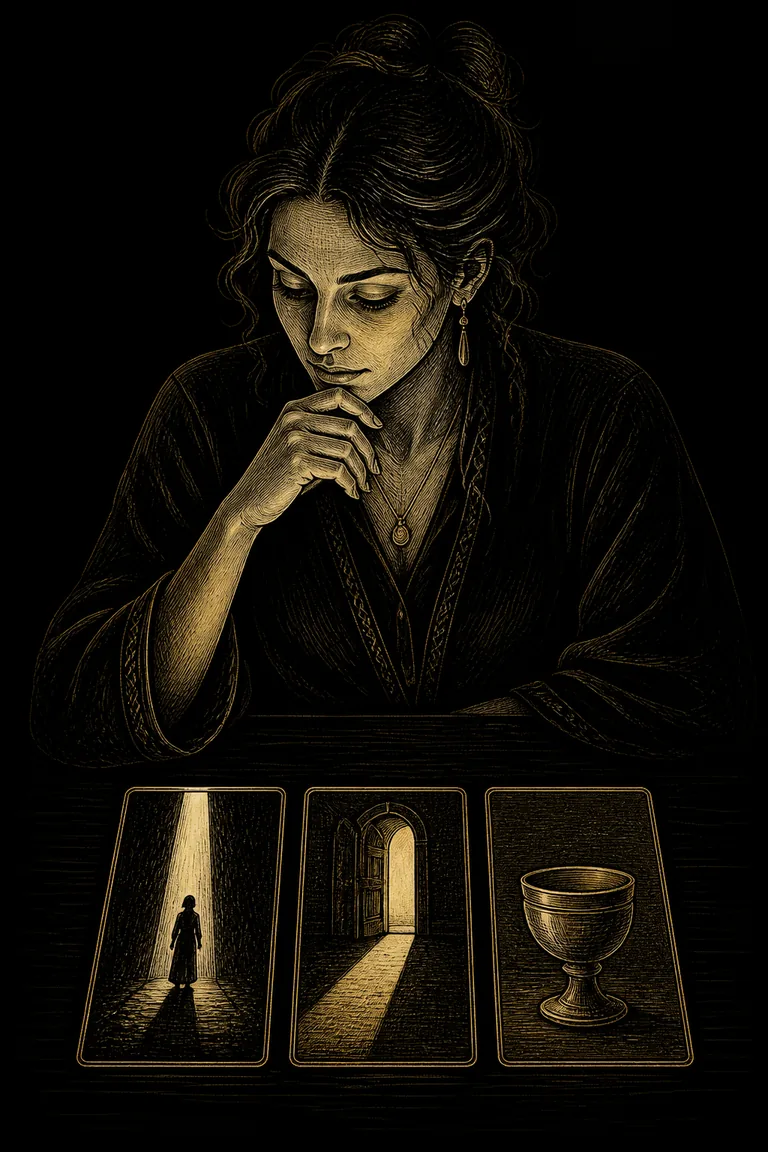
Light and shadow in Tarot are visual conditions, not automatic moral labels. A lamp, window, sun, fire, opening, or unseen source can reveal one part of a scene while leaving another less visible. Cast shadows can show direction and distance. Deep contrast can guide attention. None of these features proves goodness, danger, truth, deception, protection, or a future outcome.
A grounded reading begins with the lighting evidence: what appears to emit light, where it falls, what blocks it, and whether the deck reproduction is clear enough to support the observation. Then compare at least two possible scene functions with the card title, figures, objects, architecture, deck lineage, spread position, and known facts. This keeps illumination meaningful without turning dark areas into fear or bright areas into certainty.
Take the next insight with you
Explore personalized Tarot guidance in Veritas, available for iOS and Android.
 Scan with your phone
Tarot light and shadow symbolism at a glance
Start with a light-source inventory
List every source the artwork actually shows or strongly implies. It may be a sun, moon, flame, lamp, window, doorway, halo-like glow, reflection, or diffuse ambient light. If no source is visible, write "source outside the frame" rather than inventing one. Note whether several sources conflict. In stylized decks, illumination may be compositional rather than physically consistent, which is useful information about emphasis but not about literal weather or time.
Direction, reach, and falloff
Trace where the light travels and where it weakens. A narrow beam may isolate a figure, object, or route. Broad even light may make several elements equally available. Light that stops at a wall, curtain, threshold, or body can clarify a boundary. These are visible relationships. They do not establish who deserves attention, whether an opportunity will arrive, or whether something hidden is harmful.
Cast shadow versus form shadow
A cast shadow falls from an object onto another surface and can indicate direction, spacing, and obstruction. Form shadow is the darker side of a three-dimensional figure or object. The distinction matters because a long cast shadow may organize a route across the card, while form shadow may simply give a face or vessel volume. Printing, scanning, and hatching can blur the difference, so label uncertain observations as tentative.
Silhouette and partial visibility
A silhouette preserves outline while removing internal detail. It can shift attention from identity to role, movement, distance, or scale. Partial visibility may invite caution because the reader has less evidence, but it does not prove secrecy or threat. Ask what remains readable: direction, posture, carried object, surrounding terrain, and relation to a doorway or horizon. Do not fill missing detail with a dramatic story.
Contrast directs attention
The brightest light against the deepest dark often becomes the first focal point. Record that visual priority before calling it spiritual importance. High contrast can stage revelation, conflict, urgency, theater, or simple legibility at card size. Low contrast can create continuity, quiet, distance, fog, or a limited printing palette. Attention is not the same as approval, and subtlety is not the same as weakness.
A six-pass lighting method
- Check the reproduction
Confirm the image is large and clear enough to distinguish intentional shadow from faded ink, compression, glare, or scan damage.
- Map the sources
Name visible sources and mark any source that must be outside the frame or is physically inconsistent.
- Trace direction
Follow illuminated surfaces, cast shadows, blocked areas, reflections, and the edge between visible and less visible space.
- Describe the focal order
Record which element the contrast makes you notice first, second, and last without assigning moral value.
- Offer two functions
Propose at least two ways the lighting could organize this particular scene and look for support or contradiction.
- State the limit
Phrase the result as visual interpretation, not proof of truth, danger, character, diagnosis, supernatural presence, or future events.
Worked example: a figure in a narrow beam
Imagine one standing figure lit from above while the surrounding room remains dark. The beam may isolate a task, make the figure available for inspection, or create a theatrical focal point. It might also reflect a skylight shown elsewhere in the deck. Check posture, gaze, nearby tools, and whether the light reveals an exit or only the figure. The image does not prove divine selection, exposure of guilt, rescue, or safety.
Worked example: a long doorway shadow
An open doorway casts a long shape across the floor toward a seated person. One function is to connect outside and inside space. Another is to mark a boundary the person has not crossed. A third is ordinary late-day lighting. The Tarot architecture guide can clarify access and thresholds, while posture and gaze show whether the figure engages with the opening. The shadow alone predicts no visitor or departure.
Worked example: an evenly lit vessel
A vessel sits in diffuse light with almost no cast shadow. The even treatment may make material, shape, and contents easier to compare with other cards. It may also flatten depth because of the deck artist's style. If nearby cards use sharp directional light, this visual quiet can matter as contrast. It still does not guarantee clarity, honesty, abundance, or a favorable answer.
Lighting and color have different jobs
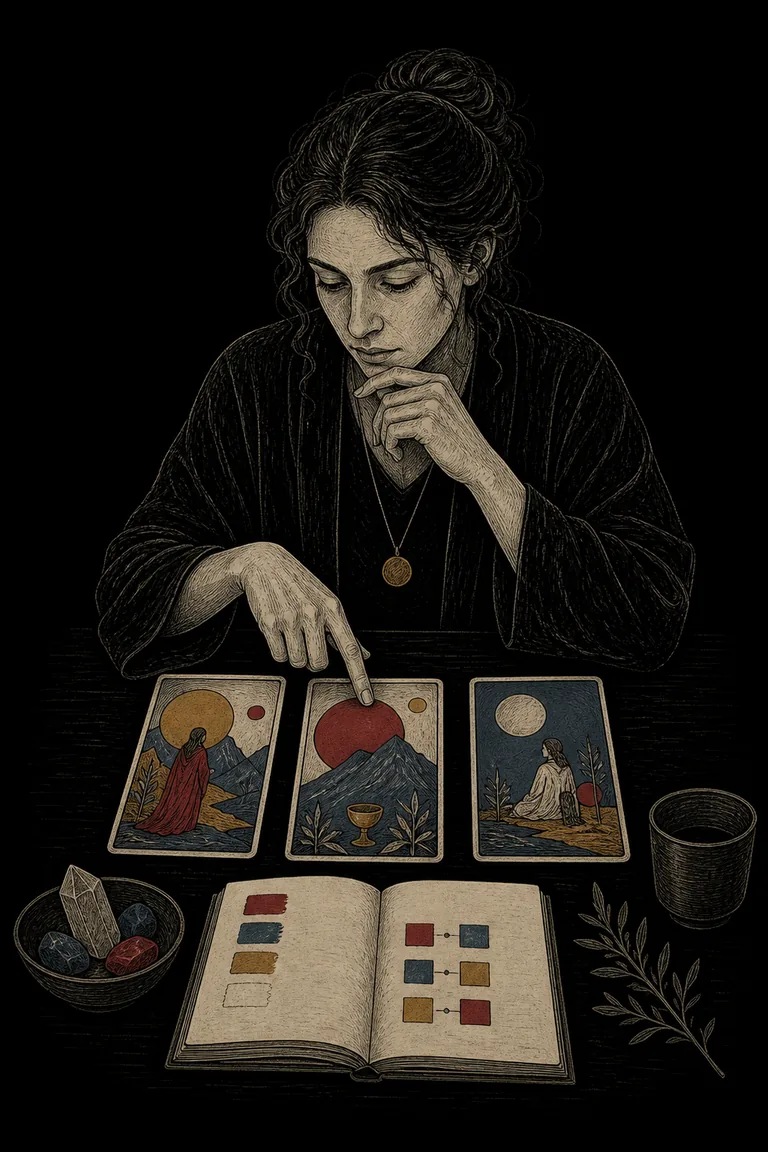
Lighting describes value, visibility, direction, and shadow. Color describes hue relationships within a particular deck. A red area can be dark, bright, muted, or evenly lit, so do not count hue and brightness as independent confirmation without checking how they interact. The Tarot color symbolism guide provides a deck-specific palette method.
Lighting, gaze, and expression
A face in shadow may simply be turned away from the source. It does not prove concealed emotion. The gaze guide maps direction, while the facial expression guide records visible feature configuration. If darkness removes those details, reduce the confidence of both channels instead of inventing them.
Read lighting patterns across a spread
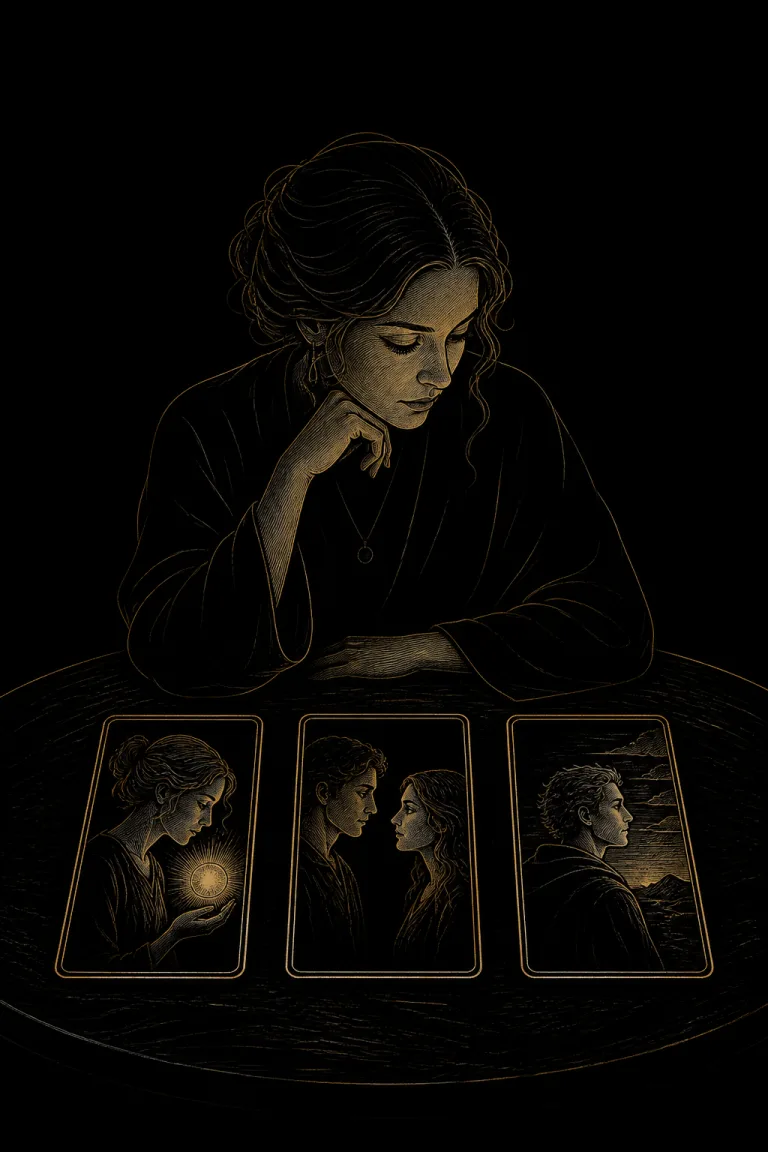
Across several cards, record whether light becomes narrower, broader, warmer, dimmer, more directional, or simply different because another artist or suit convention is involved. Compare the sequence with assigned positions and the card combination method. A movement from dark imagery to bright imagery may support increasing visibility in the reading, but it cannot guarantee improvement or a happy ending.
Deck lineage, printing, and accessibility
Older engravings, modern borderless decks, phone photographs, foil, matte lamination, and dark-mode screens change perceived contrast. Some readers distinguish low-value differences less easily, and glare can erase detail. Compare an official scan when possible, zoom without sharpening artifacts, and use descriptions that do not depend on sight alone. The broader Tarot card symbolism guide helps rank stronger scene evidence.
Save a lighting-evidence record
Use Veritas to record the card and deck, visible source, direction, cast and form shadows, focal order, blocked details, two scene functions, supporting evidence, contradiction, spread position, confidence, and later review.
A journal protocol for light and shadow
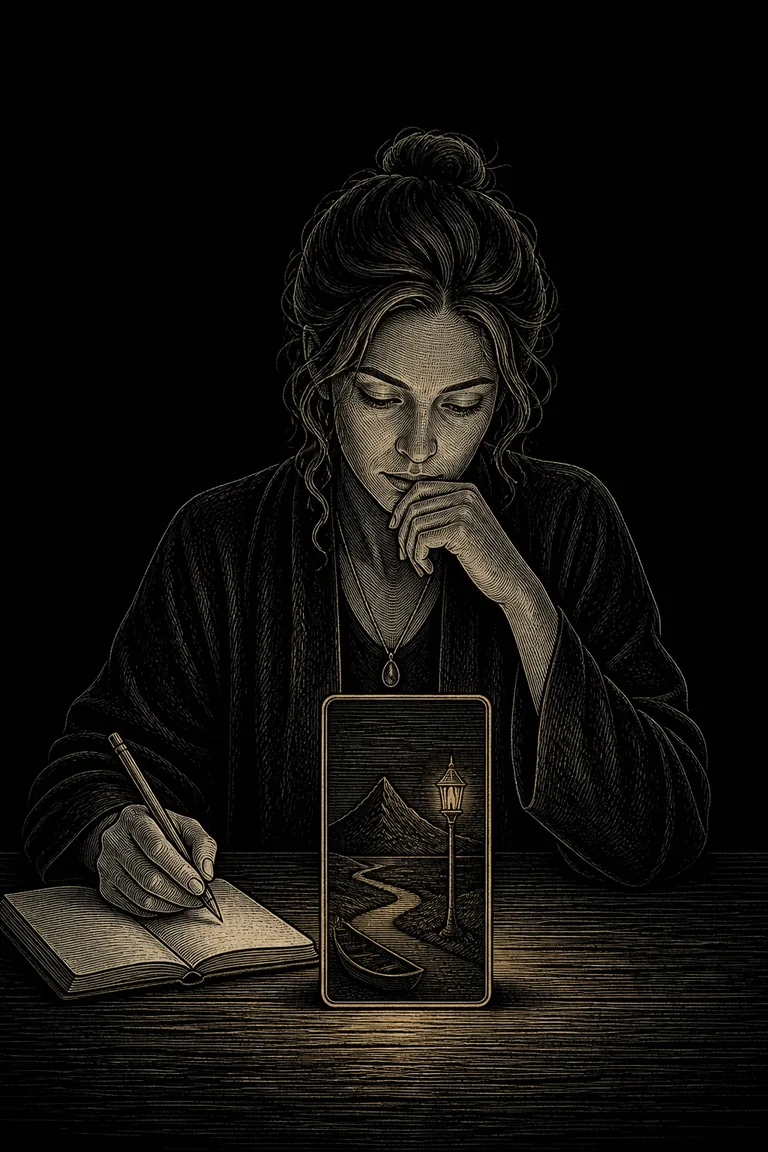
Choose one card and make a value-only sketch using three tones: light, middle, and dark. Label the source and the objects that interrupt it. Write two possible functions and one reason each could be wrong. After reading the guidebook and spread context, revise only what the evidence changes. A Tarot journal makes it easier to compare whether your lighting vocabulary remains consistent across decks.
Common light and shadow mistakes
Common errors include treating all bright areas as positive, treating every shadow as a secret, inventing a source, confusing dark color with low illumination, ignoring cast-shadow direction, reading reproduction damage as symbolism, double-counting a hidden face as deception, and turning a visual sequence into a guaranteed timeline. Another mistake is claiming that a glow proves spiritual protection or authority.
Limits and responsible use
Tarot lighting symbolism is an interpretive tool, not a way to detect lies, diagnose mental or physical conditions, identify danger, establish consent, recover hidden facts, or predict outcomes. Do not use light or shadow imagery to accuse someone or replace medical, legal, financial, safety, or mental health guidance. Consequential decisions require direct evidence and qualified support.