Tarot Journal
Tarot Weather Symbolism: An Evidence-First Guide
Tarot weather symbolism becomes useful when you describe visible atmospheric conditions, test how they change the scene, and refuse to turn painted rain, wind, fog, or snow into a literal forecast.
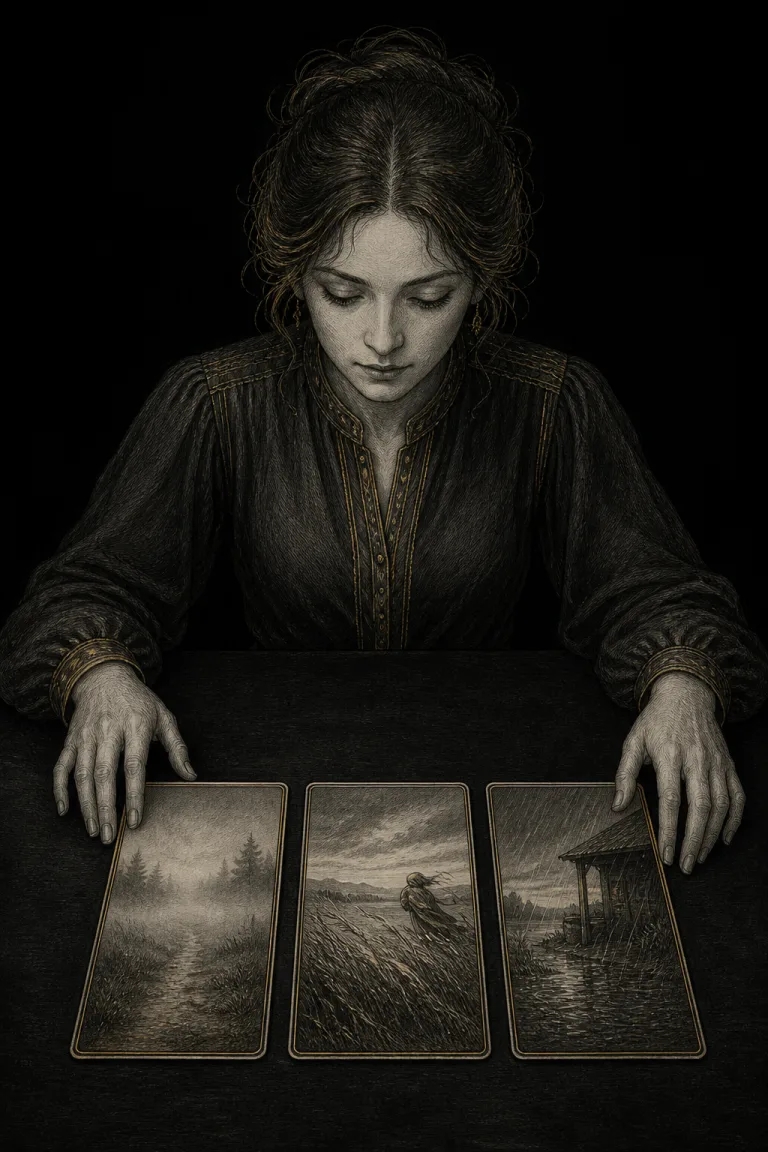
Weather in Tarot is part of the pictured environment. Rain can alter visibility and footing. Wind can show direction through fabric, smoke, trees, or waves. Fog can reduce available information. Snow can cover detail and change movement. These effects may shape a card's atmosphere, but they do not automatically mean sadness, conflict, confusion, purity, delay, or a coming event.
A grounded reading starts with what the image actually supports: precipitation, air movement, cloud cover, visibility, surface conditions, and the responses of figures or objects. Then compare at least two scene functions with the deck's visual language, card title, landscape, lighting, spread position, and the question. This preserves symbolic richness without using an illustrated sky as meteorology or fate.
Take the next insight with you
Explore personalized Tarot guidance in Veritas, available for iOS and Android.
 Scan with your phone
Tarot weather symbolism at a glance
Begin with an atmosphere inventory
Name only conditions visible in the card or strongly implied by their effects. Rain needs drops, wet surfaces, runoff, umbrellas, or another clear cue. Wind may be visible only through bent grass, moving cloth, angled smoke, waves, or a figure bracing. Fog should reduce contrast or obscure distance. Dark clouds alone do not prove a storm, and a pale ground is not necessarily snow. Mark uncertain identification as tentative.
Separate weather from mood
A rainy scene can feel somber because of palette, posture, and cultural association, yet the same rain can also water a field, erase tracks, make travel harder, or simply establish place. Mood is the combined effect of many visual channels. Do not use one cloud or drop to diagnose a person's emotions. Compare the weather with the facial expression guide, posture, gaze, and the actions shown.
Rain and surface change
Rain changes surfaces before it changes symbolism. A path may become reflective, muddy, slippery, or difficult to distinguish. A vessel may fill. A roof may become relevant. A figure may continue, stop, cover something, or seek shelter. Possible functions include nourishment, interruption, exposure, cleaning, concealment, or ordinary setting. Choose among them by tracing what the water touches and what the scene does in response.
Wind is read through effects
Wind itself is usually invisible. Read the evidence it leaves in banners, hair, branches, waves, dust, smoke, and body angle. Check whether those cues agree on direction. A single flowing cloak may be stylized motion rather than weather. When several independent elements lean the same way, wind becomes a stronger observation. It can affect pace or stability without proving resistance, change, inspiration, or news.
Fog, haze, and reduced visibility
Fog reduces detail with distance, softens edges, and may hide part of a route. That supports a limited-information reading more directly than a claim of deception. Haze may also indicate heat, smoke, distance, printing style, or a faded reproduction. Ask exactly what remains visible and what has become uncertain. Reduced visibility calls for lower confidence, not a more dramatic story.
Snow, ice, and cold cues
Snow can cover boundaries and slow movement while also preserving tracks. Ice can create reflection, rigidity, or unsafe footing if the artwork clearly shows it. Bare trees, layered clothing, visible breath, and pale ground may support a cold setting, but no single cue is decisive across all decks. Cold imagery does not establish emotional coldness, loneliness, illness, scarcity, or a calendar date.
Storms and lightning
A storm combines several conditions, such as heavy cloud, strong wind, rain, rough water, and reduced visibility. Lightning is a brief source of illumination as well as an atmospheric event. Identify whether it strikes something, lights a route, divides the sky, or simply decorates the background. A storm can increase practical pressure in the scene, but it cannot prove disaster, revelation, punishment, or sudden external change.
A six-pass weather method
- Verify the condition
List the visible cues and separate direct evidence from a guess based on color or mood.
- Trace its effects
Record what changes about ground, visibility, movement, shelter, objects, figures, and sound implied by the scene.
- Locate the response
Note whether anyone adapts, ignores, uses, resists, or remains protected from the condition.
- Compare two functions
Offer at least two interpretations that fit the same evidence and name what would favor each one.
- Check deck context
Compare nearby cards and the artist's conventions so recurring rain or cloud does not become false confirmation.
- State the boundary
Phrase the conclusion as scene interpretation, never a weather forecast, diagnosis, accusation, or guaranteed event.
Worked example: fog over a path
Imagine a path visible in the foreground but disappearing into fog. The strongest observation is uneven information across distance. One function is to focus the next step because the far route cannot yet be assessed. Another is to create depth and quiet in the artist's composition. Check the traveler's posture, nearby markers, and whether the terrain remains passable. The fog does not prove that someone is hiding facts.
Worked example: wind across an open field
Grass, a cloak, and low clouds all move from right to left while a figure leans forward. The consistent direction supports strong wind. It may make progress require adjustment, or it may show the figure moving with the current rather than against it. Compare feet, destination, and carried objects. The image cannot tell you that opposition will appear in life or that change is inevitable.
Worked example: rain beside a shelter
A small roof stands beside a flooded path while a figure remains outside. Possible functions include a shelter that is available but not yet used, a structure too damaged to help, or a pause before entry. The architecture guide helps assess access, while gesture and gaze show visible engagement. Rain alone cannot establish refusal, rescue, or exclusion.
Weather, landscape, and light are related but distinct
Landscape describes terrain and spatial conditions. Weather describes the atmosphere acting within that place. Lighting describes visibility, direction, contrast, and shadow. Fog can affect both weather and visibility, while lightning can become a temporary light source. Use the light and shadow guide to avoid counting the same visual evidence twice.
Patterns across a spread
Across several cards, track whether atmospheric conditions repeat, intensify, clear, or differ because the cards come from separate suits or artistic conventions. Pair the observation with assigned positions and the card combination method. A sequence from fog to clear sky can support increasing visibility as a reading theme, but it does not guarantee resolution or specify when facts will emerge.
Deck reproduction and accessibility
Small screens, dark printing, foil glare, compression, and faded scans can erase rain lines or turn texture into apparent snow. Compare an official image when possible and zoom without inventing detail. Readers who cannot rely on fine visual distinctions can use accurate alt text or a guidebook description. The broader Tarot symbolism guide helps rank evidence that survives reproduction.
Keep an atmosphere evidence note
Use Veritas to record the card and deck, visible weather cues, affected surfaces, movement and visibility changes, figure responses, two competing functions, contradictions, spread position, confidence, and what later review changed.
A focused journal exercise
Choose three cards from one deck: one with fog or haze, one with visible wind effects, and one with rain or wet ground. Describe each without emotional words. Then write two scene functions and one disconfirming cue for each. Check the guidebook only after the first pass. A Tarot journal makes it easier to see whether your weather vocabulary remains stable across repeated readings.
Common mistakes
Common errors include calling every dark cloud a storm, treating rain as sadness, using wind as automatic change, reading fog as deception, confusing snow with blank paper or faded ink, ignoring shelter, mixing weather with season, and predicting real weather from a card. Another mistake is double-counting rain, gray color, and low contrast as three independent warnings when they are one integrated design choice.
Limits and responsible use
Tarot weather symbolism is an interpretive practice, not meteorology, diagnosis, risk assessment, lie detection, or proof of future events. Do not use storm, cold, fog, or lightning imagery to make medical, safety, legal, financial, or mental health claims. Check an actual forecast for weather decisions and use direct evidence and qualified support for consequential choices.