Tarot Journal
Tarot and Alchemy: History, Symbols, and Reading Method
Tarot and alchemy can share a language of materials, separation, combination, and transformation, but their connection is a later interpretive framework rather than one ancient universal code.
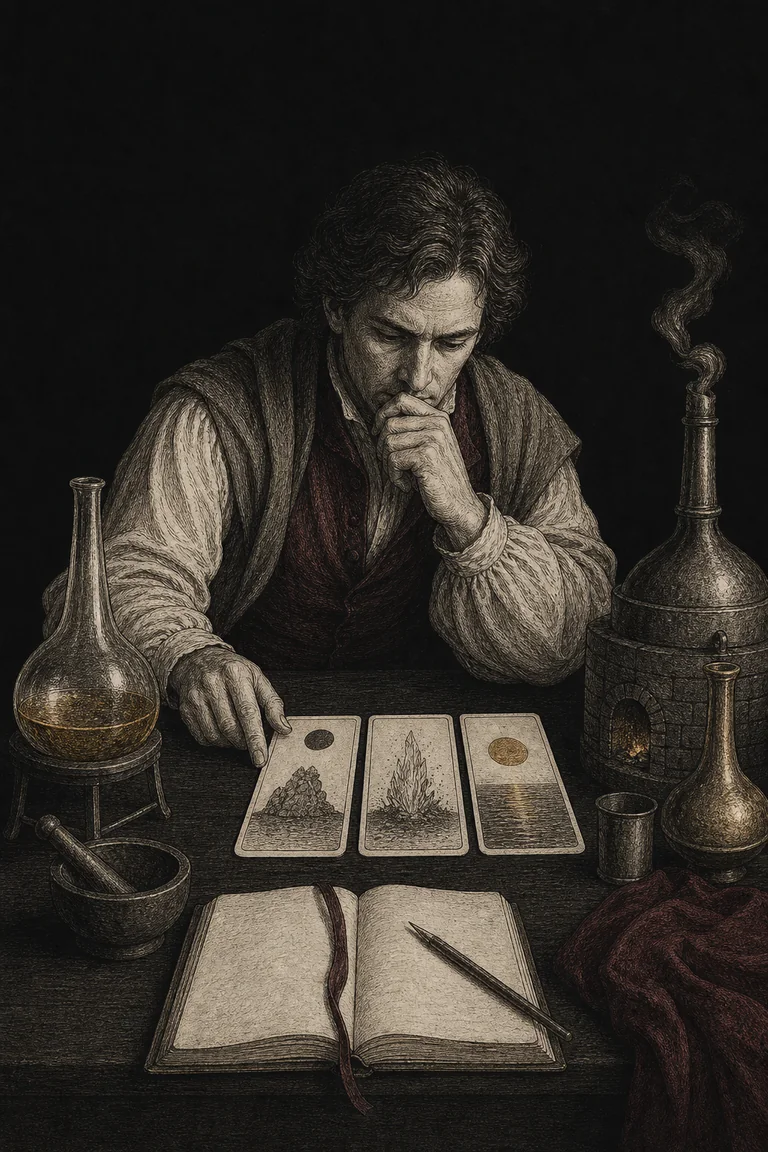
Tarot and alchemy meet in modern reading practice through images of vessels, fire, dissolution, union, death, and renewal. These motifs can make change easier to describe, especially when a spread shows both breakdown and reconstruction. They do not prove that the earliest Tarot makers designed the cards as an alchemical manual.
A grounded approach names the source tradition, reads the printed card first, and uses alchemical language as one optional lens. It does not force every trump into a laboratory stage or assume that a dramatic symbol predicts literal destruction, purification, marriage, illness, or spiritual advancement.
Take the next insight with you
Explore personalized Tarot guidance in Veritas, available for iOS and Android.
 Scan with your phone
Tarot and alchemy at a glance
Is Tarot historically an alchemical book?
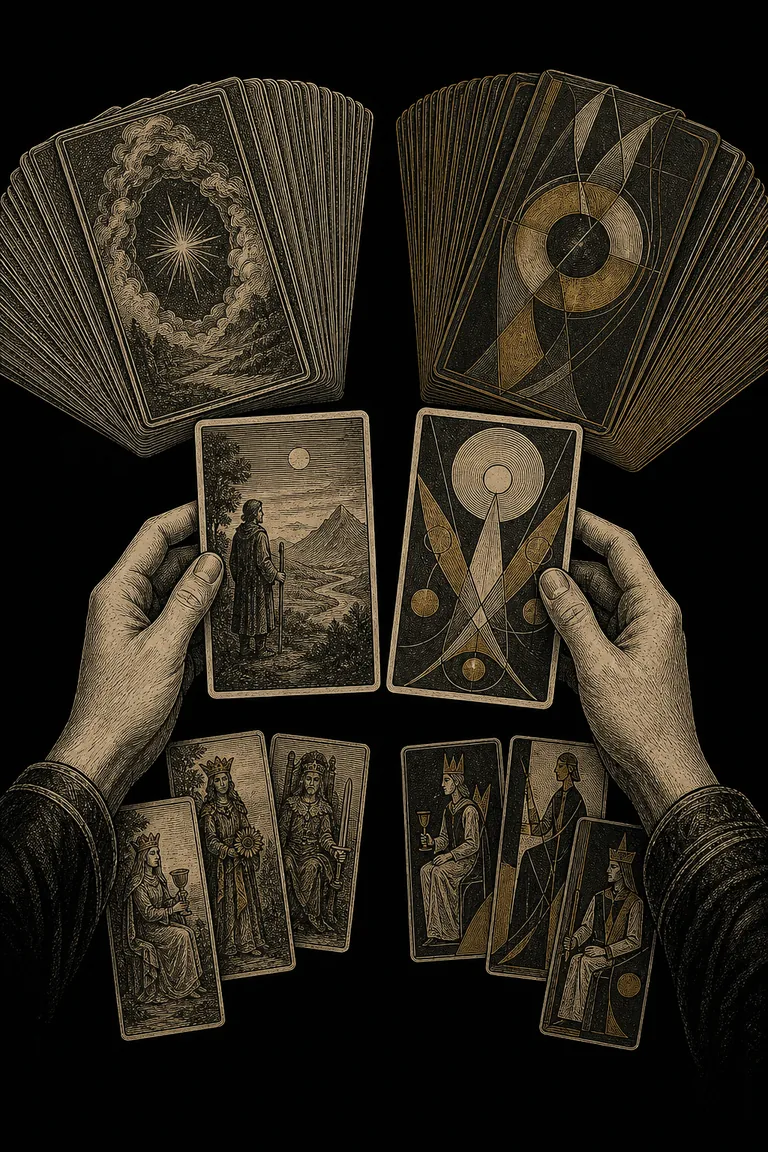
The surviving history does not support a simple claim that Tarot was created as a coded alchemical sequence. Early packs belong to the history of card play and Renaissance imagery. Explicit occult systems linking Tarot with astrology, Kabbalah, ritual magic, and alchemical ideas became influential much later. The nineteenth-century Hermetic Order of the Golden Dawn is central to that synthesis. Compare documented deck lineages in the Rider-Waite-Smith versus Thoth guide before treating a modern correspondence table as ancient fact.
Laboratory alchemy and symbolic alchemy
Historical alchemy included practical work with substances as well as philosophical, medical, religious, and allegorical writing. Modern Tarot readers often borrow the allegorical language while leaving the laboratory context behind. That can be useful if it is labeled. Saying that a spread resembles separation and recombination is a metaphor; saying that a card has always encoded one fixed alchemical operation is a historical claim that needs evidence.
Four things to observe before naming a stage
These questions keep interpretation close to the image. Cups may suggest containment or mixing, Swords division, Wands heat or activation, and Pentacles material form, but the Tarot suits do not form a universal alchemical recipe. Position and context decide whether a vessel protects, restricts, leaks, or combines.
A four-stage reading method
- Record visible evidence
Write the card, position, orientation, figures, objects, actions, colors, and neighboring relationships without interpretation.
- Name one process
Choose one plain verb such as separate, soften, combine, test, contain, or finish.
- Add one sourced analogy
If useful, connect that process to a declared alchemical stage or author without calling it universal.
- Build a rival reading
Interpret the same evidence without alchemy and compare which version better answers the question.
Worked example: Tower, Temperance, and Eight of Pentacles
In positions for unstable condition, response, and next practice, The Tower may show a structure failing under pressure, Temperance controlled transfer and proportion, and the Eight of Pentacles repeated material work. An alchemical lens describes breakdown followed by careful recombination and testing. A plain rival reading says that a faulty system needs redesign and skilled iteration. Both point toward observable repair; neither proves a destined initiation or sudden catastrophe.
Blackening, whitening, yellowing, and reddening
Some later summaries organize the work as nigredo, albedo, citrinitas, and rubedo: dark decomposition, clarification, dawning integration, and a completed red phase. Historical texts do not all use one identical sequence, number of stages, or psychological meaning. If you use these four terms, treat them as a chosen study map. Do not label every difficult card nigredo or every red card rubedo.
Elements, planets, and deck systems
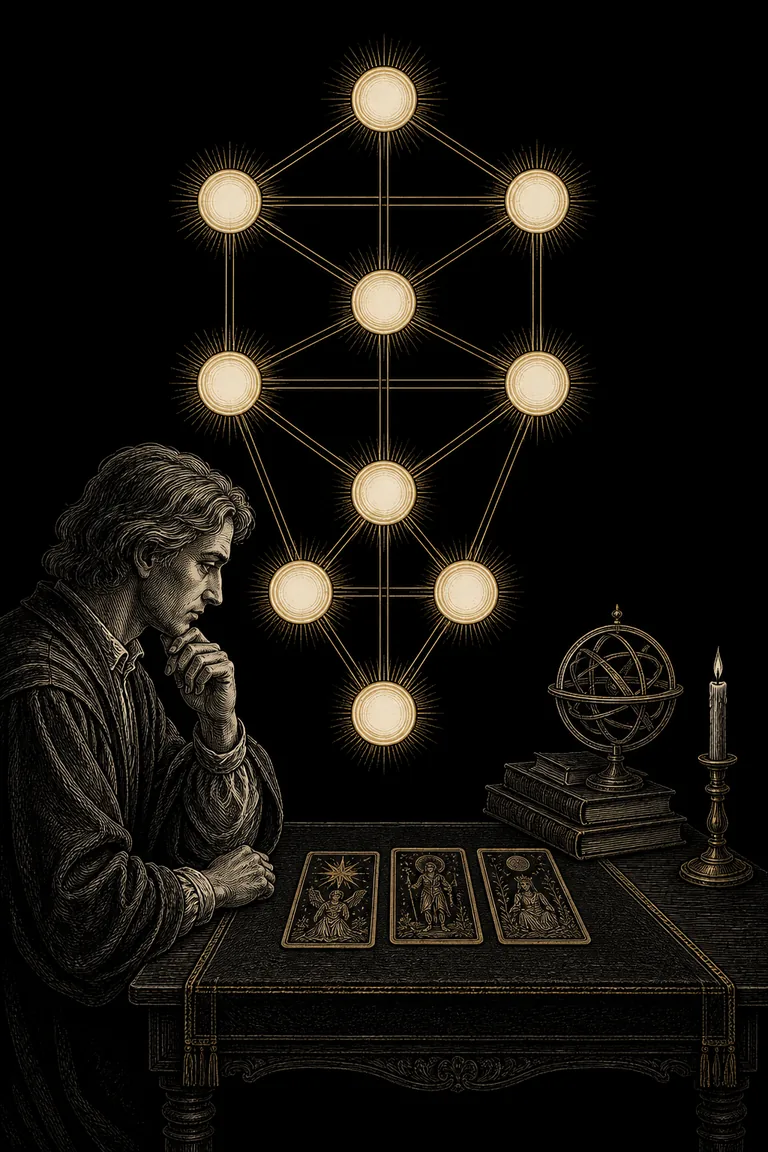
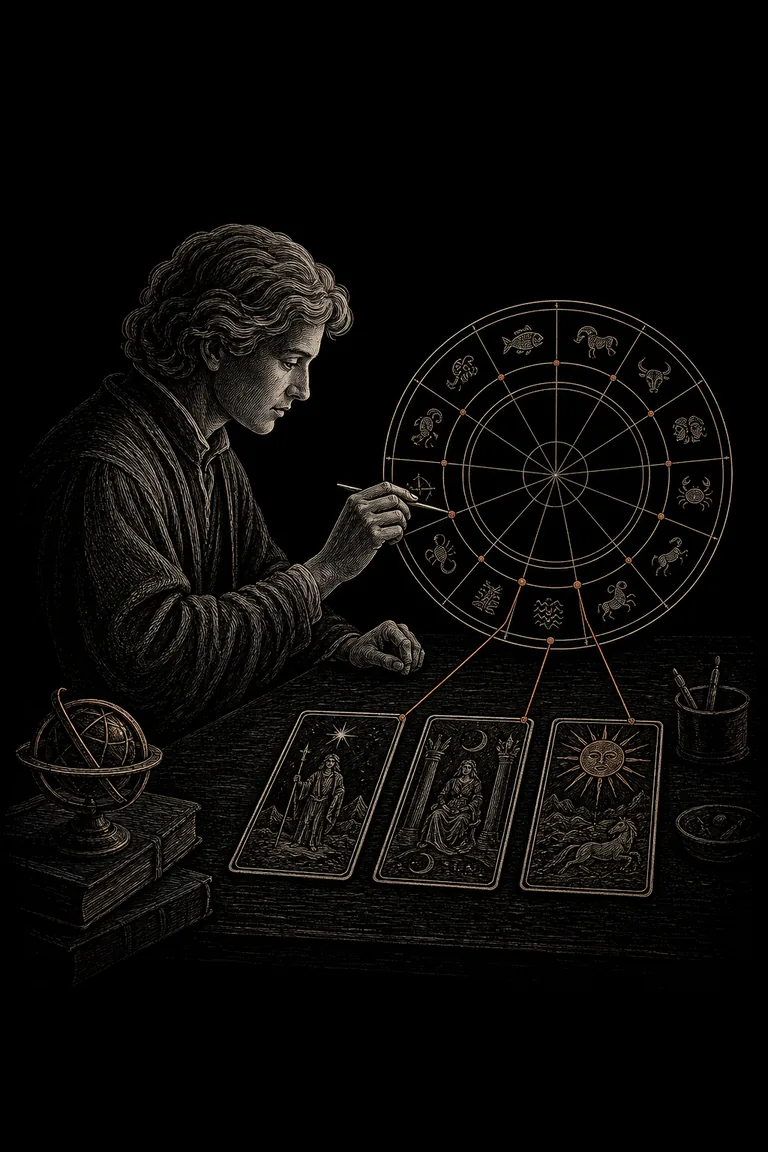
Western esoteric systems may connect elements, planets, metals, colors, Hebrew letters, and paths. Those layers are source-dependent. Tarot astrology correspondences, Tarot and Kabbalah, and elemental dignities each have their own rules. Adding all of them at once can create false precision. Choose the smallest layer that changes the reading in a testable way.
Rider-Waite-Smith and Thoth are not interchangeable
Arthur Edward Waite wrote extensively about mysticism and alchemy, while Pamela Colman Smith created the Rider-Waite-Smith images. Aleister Crowley made alchemical and Hermetic language more explicit in the Thoth system developed with Frieda Harris. Shared Golden Dawn ancestry does not make their titles, imagery, or emphases identical. Declare the deck and consult the Rider-Waite-Smith versus Thoth guide before transferring a correspondence.
Keep the transformation claim auditable
Use Veritas to save the deck, spread position, visible card evidence, chosen alchemical source, process verb, rival reading, practical action, and later result.
How to combine cards without inventing a secret sequence
A spread becomes more coherent when each card changes the state created by the previous one. State that connector directly: pressure separates, separation exposes, exposure allows measured recombination. If the order does not support transformation, do not rearrange it. The Tarot card combinations guide offers a card-first grammar that works without hidden correspondences.
Journal and review
In a Tarot journal, separate observation, source, analogy, practical claim, and result. Set a review date. Ask whether the reading identified a real process, whether the proposed container or action helped, and whether the rival reading explained events more simply. A useful symbol should improve attention and choices, not become impossible to disconfirm.
Common mistakes
Common mistakes include calling Tarot an ancient Egyptian alchemical book, matching twenty-two trumps to any twenty-two-image sequence by number alone, treating colors as universal codes, mixing several correspondence tables, equating discomfort with necessary purification, and announcing that suffering guarantees transformation. Another mistake is using spiritual language to excuse unsafe relationships, coercive groups, or avoidable harm.
Limits and responsible use
Tarot and alchemy form a symbolic interpretive practice, not a scientifically validated diagnostic or predictive method. Cards cannot prove spiritual advancement, reveal another person's thoughts, justify exposure to danger, diagnose illness, identify substances, or replace medical, legal, financial, safety, historical, or mental health expertise. Let primary sources, direct evidence, consent, and qualified advice override the analogy.