Tarot Journal
Tarot and Kabbalah: Tree of Life Correspondences
Tarot and Kabbalah connect most clearly inside the Western Hermetic Qabalah tradition, where ten Sephiroth, twenty-two paths, four worlds, and elemental suits form a study map rather than a universal rule.
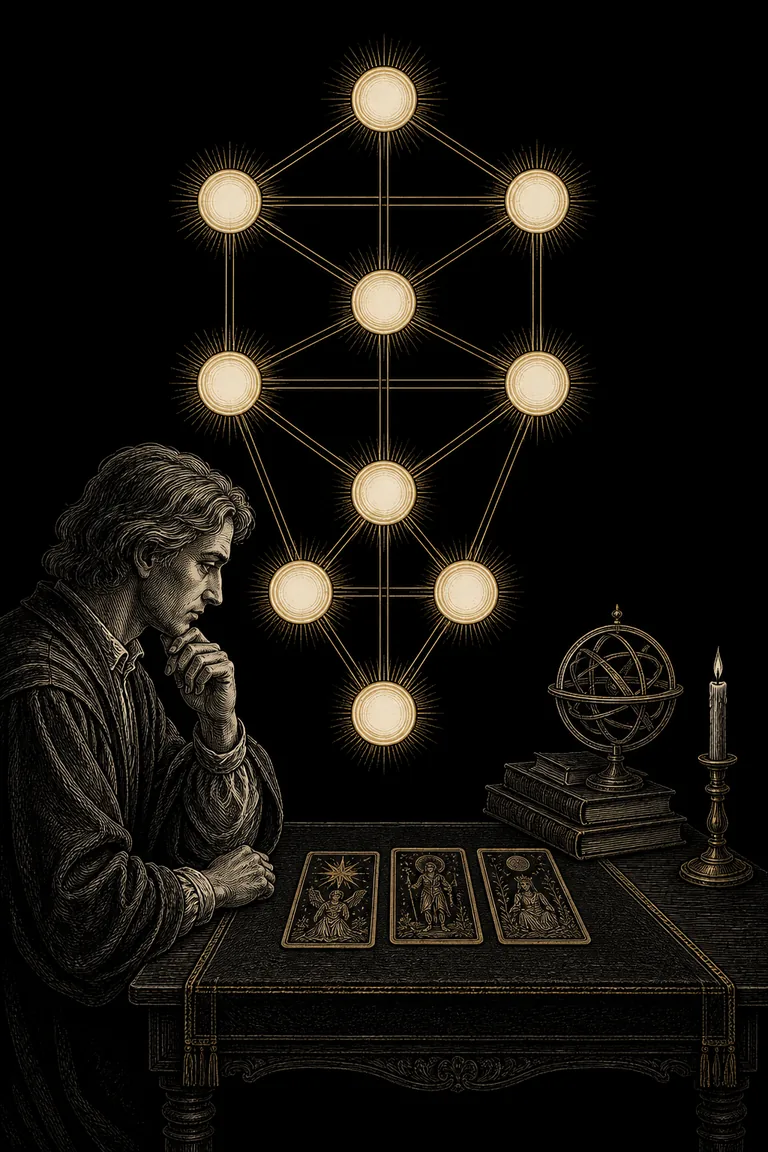
The connection between Tarot and Kabbalah is a historical esoteric correspondence system, not an original feature of the earliest playing cards and not one teaching shared by every Jewish or Tarot tradition. The familiar map used with Golden Dawn, Rider-Waite-Smith, and Thoth study is better named Hermetic Qabalah: a Western synthesis that places the deck on the Tree of Life.
Used carefully, the map can explain why numbered cards, suits, courts, planets, signs, and Hebrew letters appear in one network. It should add a declared symbolic layer after you have read the card image, spread position, question, and surrounding cards. It cannot turn a correspondence into hidden evidence or make one lineage the only correct way to read Tarot.
Take the next insight with you
Explore personalized Tarot guidance in Veritas, available for iOS and Android.
 Scan with your phone
Kabbalah, Qabalah, and Tarot terminology
Kabbalah usually refers to Jewish mystical traditions with their own religious, textual, and historical contexts. Qabalah is a common spelling for later Christian and Hermetic adaptations. Modern occult Tarot usually draws from Hermetic Qabalah, especially the system developed by the Hermetic Order of the Golden Dawn. Naming that lineage prevents a nineteenth-century synthesis from being presented as timeless or universal Jewish doctrine.
The Tree of Life as a Tarot map
The Tree is useful because it keeps cards in relationship. An Ace is not simply a stronger Ten, and a Major Arcana path is not another numbered sphere. The system distinguishes source, development, form, and outcome. Exact labels and path assignments can vary, so record the table and deck you are using instead of silently combining incompatible versions.
Four suits and the Four Worlds
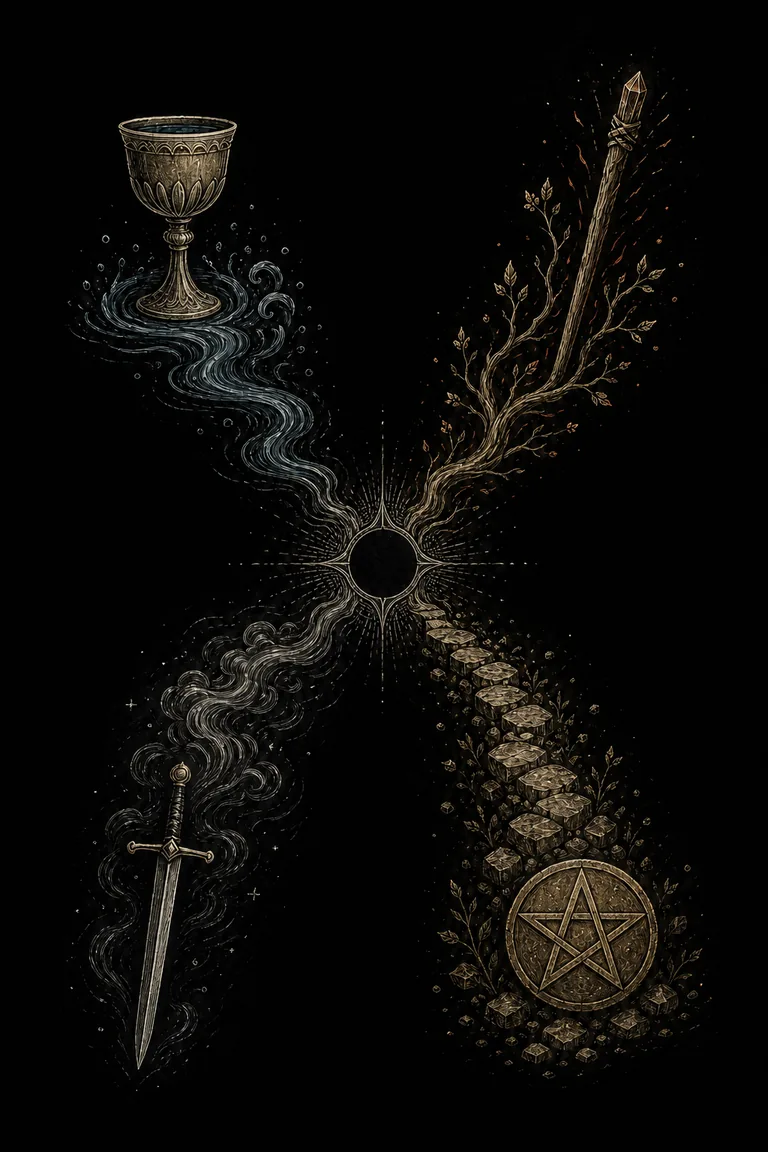
A common Golden Dawn-derived scheme pairs Wands with Fire and Atziluth, Cups with Water and Briah, Swords with Air and Yetzirah, and Pentacles or Disks with Earth and Assiah. These pairings can distinguish initiative, relationship, thought, and material implementation. They do not mean that Fire is morally better than Earth or that a suit predicts a literal event by itself. For suit foundations, compare the dedicated guide to Tarot suit meanings.
Numbered Minor Arcana and the ten Sephiroth
The numbered cards are often studied as the meeting of a Sephirah and a suit. All Fours, for example, share a structural position while Wands, Cups, Swords, and Pentacles express that position through different elements. This offers a comparative method across the Minor Arcana. It is most useful when the number pattern clarifies the scene, not when it replaces the card artwork or established meaning.
Court cards and elemental levels
Golden Dawn and Thoth court names do not align perfectly with Rider-Waite-Smith titles. A King, Knight, Queen, Prince, Page, or Princess must be translated through the declared deck before assigning a world or element. Start with the printed title and role, then consult the deck-specific table. The Tarot court cards guide provides a safer base than assuming every Knight or King occupies the same level.
Major Arcana and the twenty-two paths
Hermetic systems place the twenty-two Major Arcana on paths between Sephiroth and associate them with Hebrew letters and astrological factors. The broad architecture is stable within that lineage, but famous sequence differences remain. Strength and Justice may exchange numbers, and Thoth uses Adjustment, Lust, and Aeon where other decks use Justice, Strength, and Judgement. Study the Major Arcana first, then add the path as context.
Rider-Waite-Smith, Thoth, and Golden Dawn differences
Rider-Waite-Smith imagery carries many Hermetic ideas but often foregrounds readable scenes. Thoth makes astrological, elemental, and Qabalistic structure more explicit. Golden Dawn tables are a source system rather than a single mass-market deck. The practical comparison in Rider-Waite-Smith vs Thoth Tarot can help you avoid moving a title, rank, or path from one deck into another without adjustment.
A five-step method for using the correspondences
- Declare the source
Name the deck, table, and Hermetic lineage before interpretation.
- Read the card first
Record the image, title, orientation, spread position, and nearby cards.
- Choose one layer
Use suit-world, Sephirah, court level, or Major path only if it helps the question.
- Write the added claim
State exactly what the correspondence changes or sharpens.
- Build an alternative
Check whether the reading still works without the Qabalistic layer.
Worked example: Four of Pentacles
Suppose the Four of Pentacles appears in a position called "what maintains the problem." The visible image suggests holding, controlled access, and limited movement. Four adds structure; Pentacles and Assiah emphasize material practice. A useful synthesis is "a resource rule that once protected stability now restricts circulation." The correspondence supports an audit of budgets, permissions, or ownership. It does not prove greed, poverty, betrayal, or a future loss.
Keep the symbolic layer auditable
Use Veritas to save the deck, source table, visible evidence, chosen Qabalistic layer, alternative reading, and the ordinary facts that would support or challenge it.
How this differs from astrology correspondences
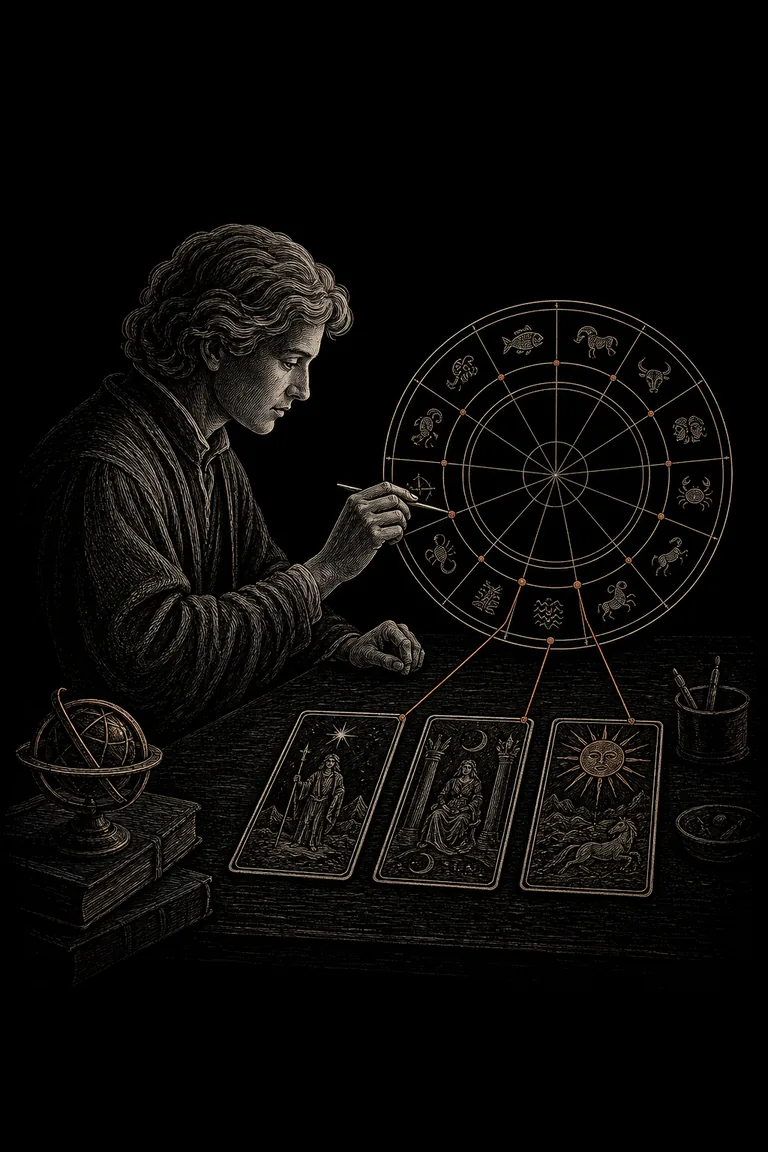
The Qabalistic Tree organizes the whole deck through spheres, paths, worlds, and letters. Tarot and astrology correspondences focus on planets, zodiac signs, elements, and decans. The systems overlap inside Golden Dawn practice, but they answer different study questions. Avoid stuffing every path, planet, decan, element, and number into a reading when one clear layer is enough.
Common mistakes
Common errors include presenting Hermetic Qabalah as identical to Jewish Kabbalah, using a diagram from an unknown source, mixing court hierarchies, treating path assignments as historical facts about medieval Tarot, and overriding the spread with memorized correspondences. Another error is complexity for its own sake. If the added layer cannot change a question, action, or testable interpretation, it may not belong in that reading.
Limits and responsible use
Tarot and Hermetic Qabalah are symbolic interpretive traditions, not scientifically validated ways to discover hidden facts. They cannot reveal another person's thoughts, establish consent, diagnose illness, identify danger, guarantee spiritual rank, or replace medical, legal, financial, safety, or mental health support. Respect living Jewish traditions, name the Western source you use, and let evidence override symbolism.