Tarot Journal
Tarot Direction Symbolism: An Evidence-First Guide
Tarot direction symbolism follows where figures, objects, paths, and forces are oriented, then checks what they face, approach, leave, cross, or cannot reach.
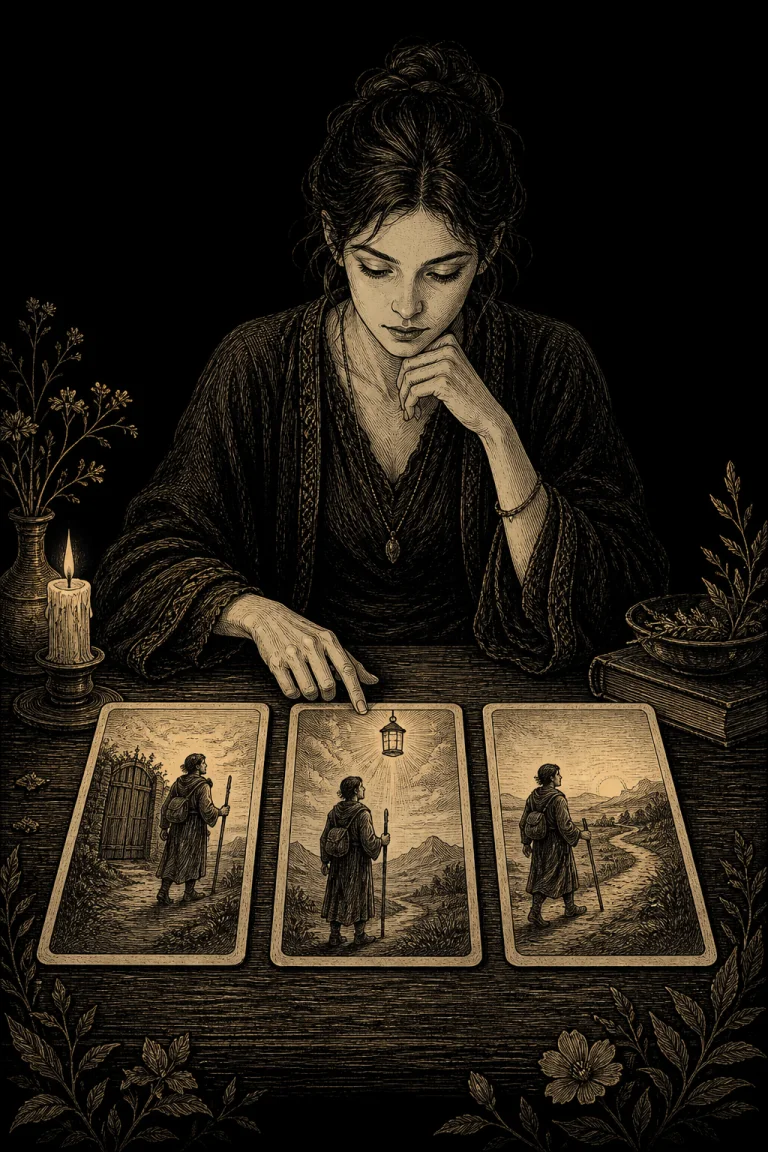
Tarot direction symbolism concerns a visible relationship between something oriented and something else in the image. A figure may face a gate, turn away from a group, lift a tool, descend a stair, follow a path into the card, or meet another card across a spread. Direction can organize attention and action, but left, right, up, or down does not carry one universal meaning across every deck.
Start with endpoints rather than a dictionary. Name what is oriented, where it points or faces, what lies along that route, and whether the connection is open, blocked, crossed, or uncertain. Then compare the deck baseline and test at least two scene functions. This keeps a useful visual cue from becoming an unsupported claim about time, morality, emotion, or destiny.
Take the next insight with you
Explore personalized Tarot guidance in Veritas, available for iOS and Android.
 Scan with your phone
Tarot direction symbolism at a glance
Direction is a relationship, not a fixed keyword
A figure facing right is only a figure facing the right side of this printed image until a target and context are identified. The same orientation could face an open road, another figure, a wall, empty space, or the next card in a deliberate spread layout. Direction becomes interpretable when the oriented subject, route, target, and boundary can be described together. Mirrored editions, reading order, and cultural conventions may change the effect, so right does not automatically mean future and left does not automatically mean past.
Keep direction separate from gaze, movement, and composition
Gaze symbolism follows depicted eyes or face orientation. Movement symbolism asks what action or change is visibly underway. Composition maps the full frame and its visual path. Direction asks how one oriented element relates to an endpoint. A seated figure may face a door without moving toward it. A river may move past a person whose gaze points elsewhere. Record each layer separately before combining them.
Build a direction inventory
- Name the subject
Identify the figure, face, hand, tool, path, animal, light, current, or repeated line that has a readable orientation.
- Name the target
Record what lies along the direction: an object, person, opening, boundary, card edge, neighboring card, or uncertain empty area.
- Trace the route
Describe whether the relation is direct, curved, rising, descending, inward, outward, interrupted, crossed, or visually ambiguous.
- Check access
Note gates, walls, gaps, hands, bridges, distance, scale, and whether the subject can actually reach or affect the target.
- Compare the deck
Inspect several cards for the artist's normal figure orientation, reading flow, mirrored motifs, and repeated directional conventions.
- Test two functions
Write one practical scene function and one symbolic possibility, then use spread context and ordinary evidence to decide whether either is useful.
Left and right depend on the printed scene
Readers often map left to past and right to future because many Western timelines and texts run that way. That convention can be tested, but it is not a property of every image or culture. First ask whose left is meant: the printed figure's, the viewer's, or the spread's. Check whether the deck has been mirrored in reproduction and whether figures consistently face a narrative sequence. Use past and future only when the spread position or deck system establishes that timeline.
Upward and downward directions need concrete endpoints
An upward hand may reach for a shelf, shelter a face, release a bird, or indicate a visible light. A descending road may lead home, into a valley, toward water, or simply follow perspective. Upward does not always mean improvement, spirit, ambition, or success. Downward does not always mean decline, materiality, depression, or failure. Name the endpoint, effort, support, and consequence shown in the card before adding an abstract vertical metaphor.
Inward, outward, entering, and leaving
Paths and bodies can orient toward the center of a scene, toward an opening, or beyond the frame. This may support gathering, dispersal, entry, departure, exchange, exposure, or protection. Yet a cropped route may not reveal whether someone is arriving or leaving. Architecture and posture may show an opening without showing permission. Describe the visible side of the threshold and avoid converting an uncertain route into reunion, escape, abandonment, or invitation.
Crossing lines can redirect or interrupt
A staff across a path, a bridge over water, crossed tools, intersecting gazes, or a diagonal cutting through a group can alter the directional relation. The crossing may connect two areas, block movement, divide tasks, stabilize a structure, or create visual emphasis. Inspect contact points and usable openings. A crossed line is not automatically conflict, and a parallel line is not automatically agreement. Line symbolism helps classify the mark without claiming an event.
Worked example: traveler, gate, and lantern
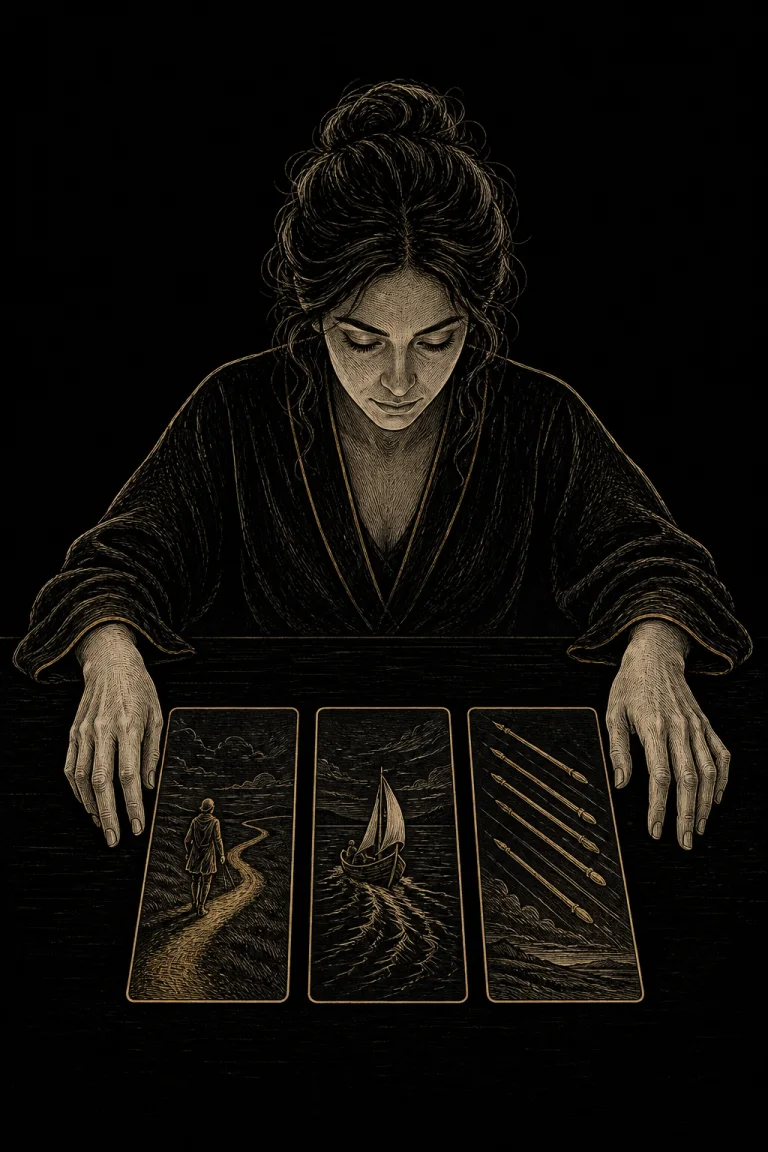
Imagine three cards with the same traveler. In the first, the body faces a shut gate while the head turns toward an open path. In the second, body and path align toward a distant lantern, but a stream interrupts the route. In the third, the traveler faces away from the lantern while carrying a lit lamp. One reading compares divided attention, a chosen aim with a practical barrier, and reliance on a portable resource. Another reading is that the artist varies poses for clarity. Neither version establishes when anyone will travel or what choice another person will make.
Worked spread: directions between cards
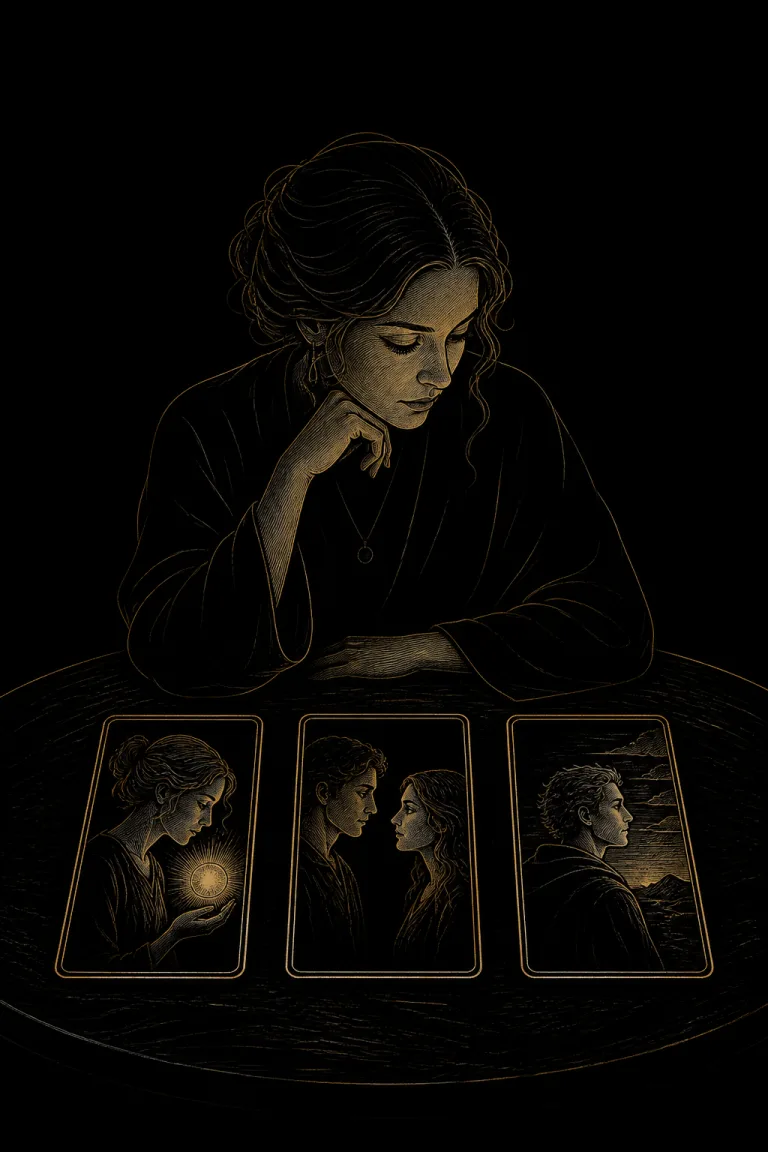
Suppose the left card's figure faces the center, the center card's path continues toward the right card, and the right card's figure turns outward. A possible connector is reception, passage, and independent continuation. A rival explanation is that each card follows its own printed composition. Use the card combination method to require repeated targets, routes, colors, objects, or actions. Do not treat figures facing each other as proof of mutual feelings or figures facing apart as proof of separation.
Reversals and mirrored editions
Turning a card upside down changes vertical orientation, but it does not automatically change a printed departure into an arrival or reverse the figure's original left-right relation. Decide how reversals work before shuffling and describe the upright scene first. The reversed Tarot guide offers consistent options. If an edition mirrors artwork, compare it with the source before treating its direction as intentional.
Deck baselines and reading layouts
Scenic decks may direct figures across several cards, while pip, collage, geometric, or highly symmetrical decks may provide few stable endpoints. Some readers deliberately place cards so inward-facing figures emphasize the center; others never use cross-card orientation. State the layout rule before the draw. A visual pattern noticed only after the interpretation is easier to fit selectively than a rule recorded in advance.
Accessibility when direction is unclear
Use large cues such as face and torso orientation, open paths, doorways, strong diagonals, repeated hands, and reliable image descriptions. Fine eye direction or faint lines may remain uncertain. You can read the card through title, action, object, color, and spread position instead. Magnification can support inspection, but inventing a target or declaring an ambiguous turn definite does not improve the reading.
Save a direction evidence map
Use Veritas to log the oriented subject, target, route, barrier, access, deck baseline, spread rule, two possible functions, uncertainty, and what later supported or challenged the interpretation.
A practical journal protocol
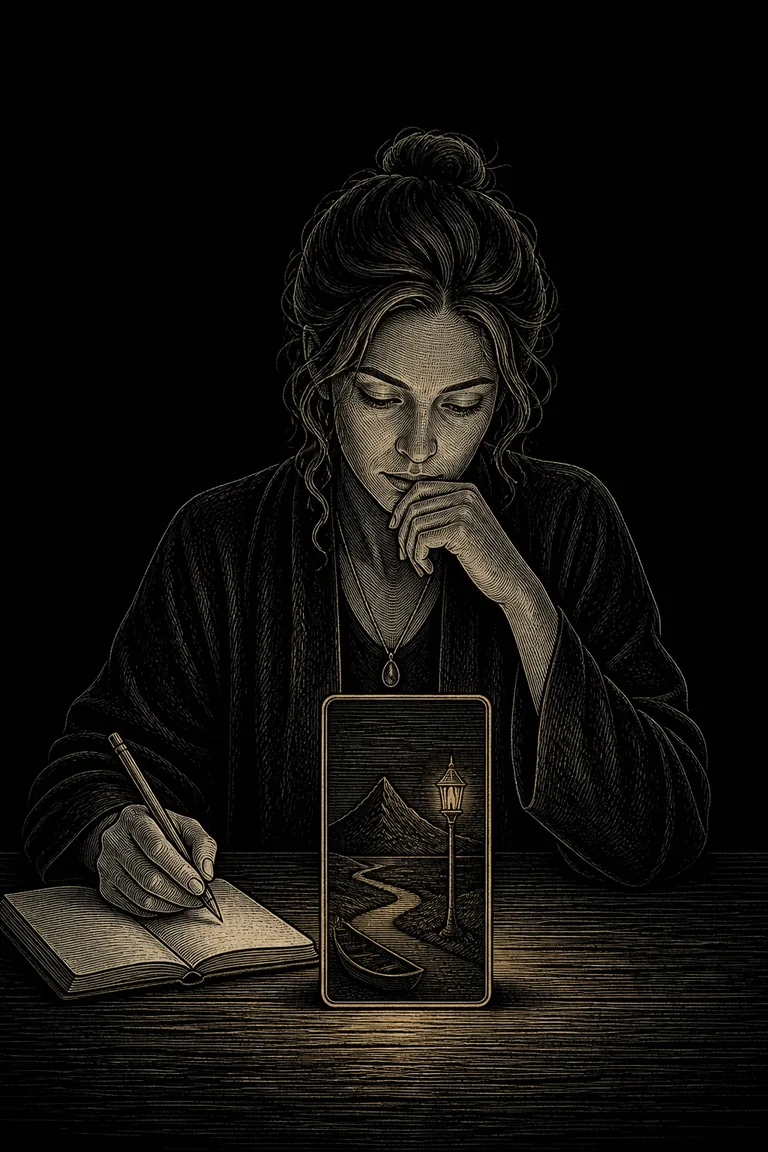
Choose one scenic card and draw a simple map outside the artwork: subject, target, route, and barrier. Write the neutral observation before any meaning. Compare two other cards from the same deck to learn whether that orientation is ordinary. Then place the card beside one neighbor and record whether a real repeated endpoint creates a useful connection. A Tarot journal helps separate deck grammar from a memorable exception.
Common mistakes and responsible limits
Common mistakes include making left and right universal, confusing gaze with motion, ignoring barriers, treating inward figures as agreement, reading outward figures as rejection, and assigning timelines after the event. Tarot direction symbolism is an interpretive visual method, not mind reading, location tracking, proof of consent, diagnosis, or a way to predict travel, contact, timing, safety, or behavior. Use direct communication, documented facts, qualified advice, and appropriate safety procedures for consequential decisions. Visit the <a href="/tarot">Tarot journal hub</a> and card symbolism guide for related methods.