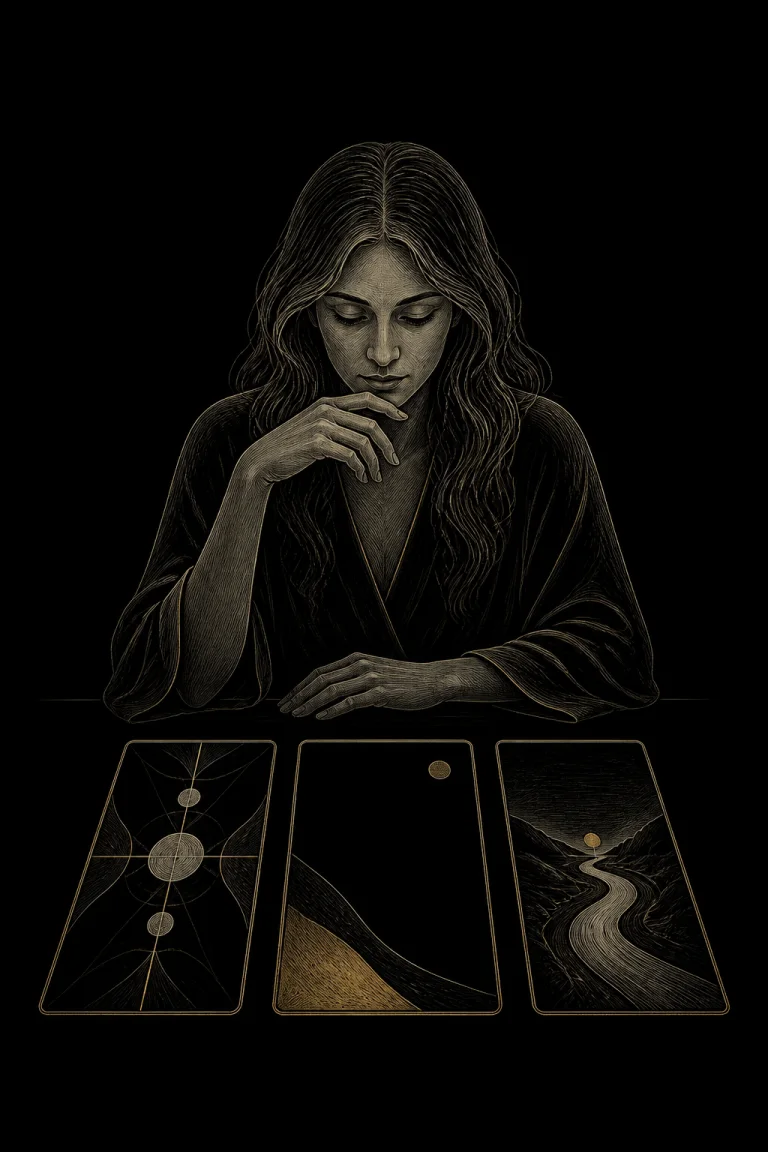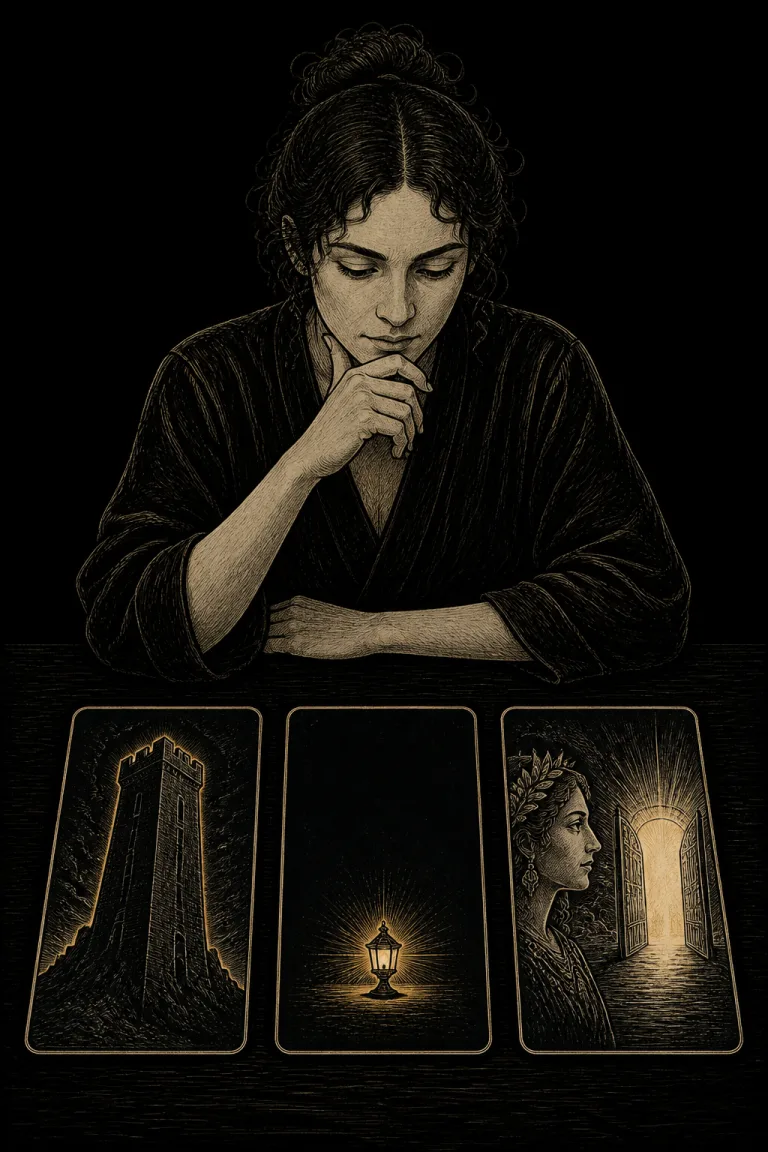
Tarot Journal
Tarot Negative Space Symbolism: An Evidence-First Guide
Tarot negative space symbolism examines the unoccupied areas around and between forms, then tests how those areas create separation, access, emphasis, or room to move.
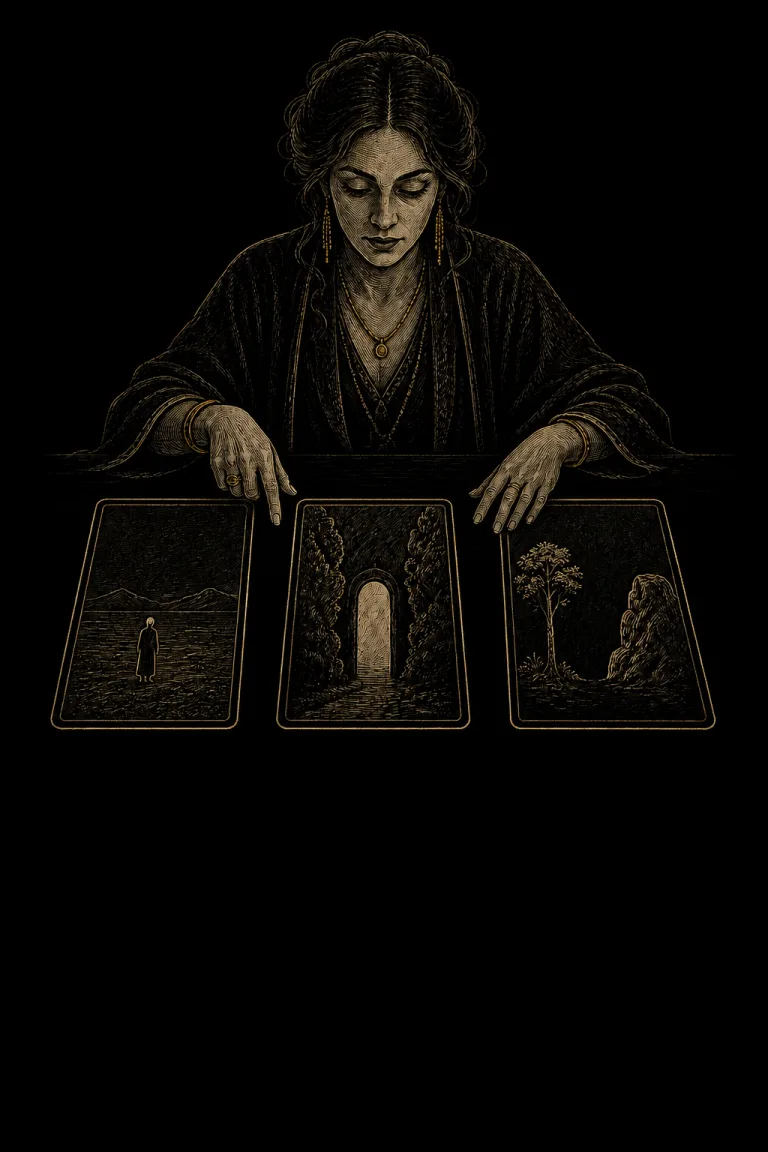
Tarot negative space symbolism begins with what the artist leaves unoccupied. A broad sky around one figure, a gap between two hands, the opening inside an arch, or a quiet margin beside a crowded group can organize the image as strongly as any object. The open area has visible boundaries and a design function, but it is not automatically loneliness, freedom, absence, or spiritual protection.
Map occupied and unoccupied regions before assigning meaning. Trace the edges that define each gap, compare similar cards from the same deck, and test at least two scene functions. Negative space can separate, expose, connect, frame, conceal, or preserve movement. It cannot independently prove another person is distant, an opportunity is open, something is missing, or an event will occur.
Take the next insight with you
Explore personalized Tarot guidance in Veritas, available for iOS and Android.
 Scan with your phone
Tarot negative space symbolism at a glance
Negative space is an area with boundaries
Negative space is the unoccupied region around, between, or inside depicted forms. It may be black paper, sky, floor, mist, water, or a lightly detailed field. What matters is the relationship between the open area and the forms that define it. Draw its outline without naming objects. A gap between two cups may form a narrow column; an arch may enclose a tall rounded void. This contour is evidence before it becomes a symbol.
Keep open area separate from literal absence
An artist may leave an area quiet to improve legibility, direct the eye, preserve atmosphere, or fit a printing style. A blank chair does not prove someone left. An open road does not guarantee access. Card symbolism connects visible details with possible meanings; negative-space analysis first asks how the unoccupied region operates in the picture. Literal claims require evidence outside the card.
Build a figure-ground inventory
- Mark positive forms
List the figures, objects, structures, lines, and landscape masses that occupy the frame without interpreting them.
- Trace open regions
Outline the largest unoccupied field, then the smaller gaps between or inside forms. Note whether each is open to an edge or enclosed.
- Name the defining edges
Record which bodies, objects, borders, shadows, or architectural forms create each contour.
- Test passage
Ask whether sight, movement, light, or contact could pass through the area, and identify any visible barrier.
- Compare the deck
Sample similar cards to learn whether broad black fields, empty skies, or generous margins are normal design grammar.
- Write two functions
Pair one design explanation with one scene-based symbolic possibility, then state what evidence would distinguish them.
Open fields can isolate or make room
A large quiet field around one figure reduces competition and can make the figure easy to see. In the scene, the same field might permit movement, create exposure, establish distance, or show a sparse environment. Do not choose among those functions from area alone. Check posture, route, shelter, light, and action. A person standing in open ground may be isolated, waiting, observing, or simply shown clearly by the artist.
Gaps can separate and connect at once
The gap between two figures records separation, but it may also be the route across which they look, speak, offer, or travel. Measure the gap relative to the card and identify what occupies it, such as a table, river, beam, threshold, or nothing visible. The distance guide addresses proximity and routes. Negative space focuses on the contour and permeability of the area between endpoints.
Enclosed voids create openings and containers
An arch, ring, cup handle, crossed arms, or cluster of branches can enclose an empty shape. Ask whether the void functions as an opening, protected pocket, frame, handle, obstruction, or accidental by-product of overlapping forms. Shape symbolism describes the positive geometry and negative contour. Avoid calling every circle completion or every doorway opportunity without checking whether passage is actually shown.
Margins affect pressure and breathing room
Space between a subject and the card edge can make the subject feel contained, exposed, crowded, or easy to inspect. A figure nearly touching a border has less visible room in that direction, but this does not prove real-world restriction. Cropping, edition size, and reproduction can alter margins. Compare the original deck image when possible and use composition symbolism for the whole-frame arrangement.
Negative space can carry visual weight
A quiet region may attract attention when its contour is sharp, its value contrasts with the surroundings, or it isolates a small landmark. Yet negative space and visual weight are different questions. This article maps unoccupied regions and their functions. The visual weight guide asks which area wins attention and which variables create that pull. A large open field can be visually quiet or dominant depending on its boundaries and contrast.
Contrast makes a void legible
A pale opening inside dark architecture is easier to detect than a low-contrast gap. Trace the edge and name the compared values before deciding the opening is important. The contrast guide helps separate light-dark, warm-cool, sharp-soft, and dense-sparse differences. Strong contrast can mark access, danger, emphasis, or simply print legibility.
Worked example: field, doorway, and margin
Imagine three cards from one deck. The first places a small traveler inside a broad plain field. The open area isolates the traveler and leaves several possible routes, but mountains still limit the horizon. The second shows dense walls around a doorway-shaped void; the opening offers visible passage, though the destination is hidden. The third places a tree and boulder on opposite sides with a clean margin between them. That margin separates the forms and lets the eye compare them. Possible functions include exposure, access, and distinction, while rival explanations include legibility and the deck's normal sparse style. None predicts departure, permission, or reunion.
Negative space across a spread
Lay out the spread before comparing empty regions. Open fields may align into a visual corridor, enclosed gaps may repeat, or dense cards may surround one quiet image. Treat that pattern as evidence about the spread's visual organization, not as an instruction. Use the card combinations method to connect the pattern with assigned positions and the question. A white margin created by card spacing belongs to the physical layout, not automatically to any one card.
Reversals change openings and support
Reversal exchanges top and bottom. An opening above a figure moves below, a broad sky becomes a lower field, and an enclosed void may appear to drain or support depending on your method. Left-right relations usually remain unchanged from the viewer's perspective. Describe the upright map first and choose a reversal rule in advance. The reversed Tarot guide offers consistent approaches without inventing a negative meaning for every inverted space.
Accessibility and reproduction quality
Low vision, screen size, glare, cropped previews, and dark printing can change which gaps remain visible. Use broad contours, occupied-unoccupied contrast, and reliable image descriptions. Magnification may reveal that an apparent blank contains texture or a faint object. Record the version studied. A useful method allows two readers to trace different contours and compare the visible edges rather than insisting on one intuitive answer.
Save a negative-space map
Use Veritas to record positive forms, open regions, defining edges, passage, deck baseline, two possible functions, uncertainty, and what later evidence supported or challenged the reading.
A practical journal protocol
Photocopy or sketch one card as simple black shapes. Shade the occupied forms and leave unoccupied regions clear. Label the largest field, one gap, one enclosed void, and one margin. For each, write what defines the boundary and whether movement, sight, or contact can pass. Compare two cards with similar subjects, then write one design function and one symbolic possibility. A Tarot journal makes deck baselines and changing observations easier to audit.
Common mistakes and responsible limits
Common mistakes include treating every blank as loss, ignoring faint background detail, confusing a gap with permission, overlooking printing crops, assuming more space means freedom, and reading physical card spacing as depicted space. Tarot negative space symbolism is an interpretive visual method, not evidence of absence, safety, emotional distance, opportunity, diagnosis, another person's intentions, or a future event. Visit the <a href="/tarot">Tarot journal hub</a>, and use direct observation, communication, records, and qualified advice for consequential choices.