Tarot Journal
Water Symbolism in Tarot: A Visual Reading Guide
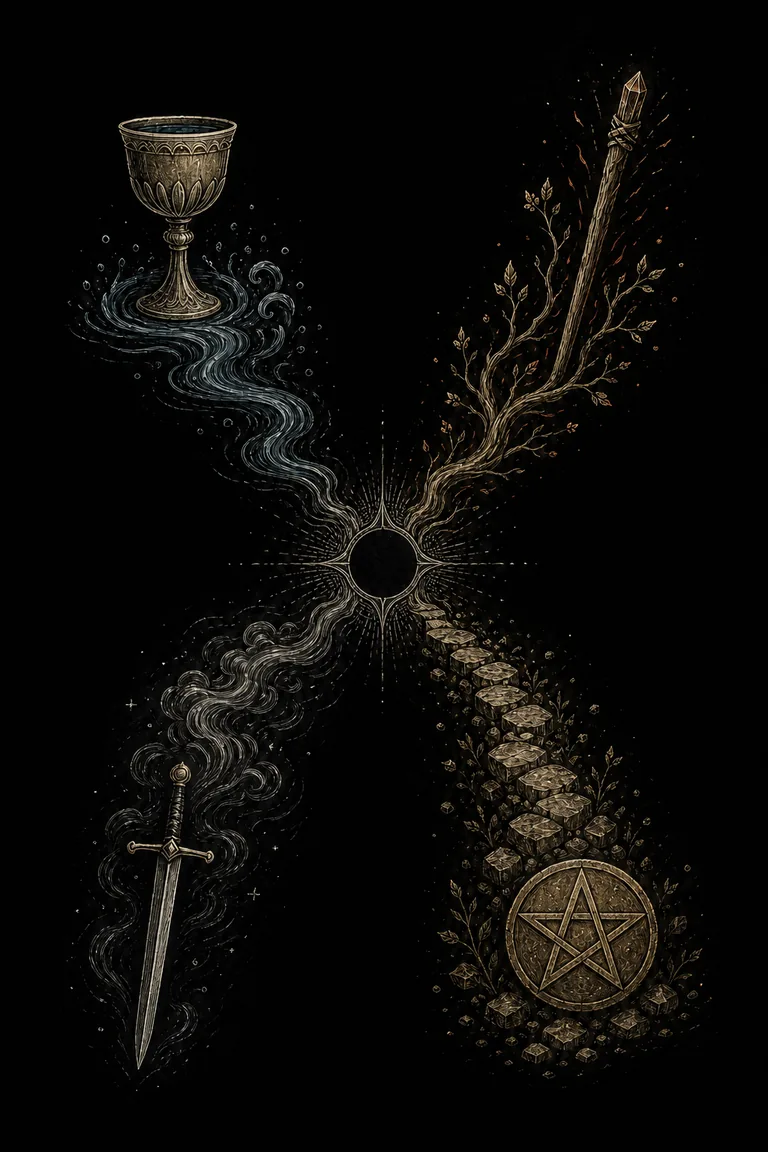
Water symbolism in Tarot begins with what the image actually shows: the form of water, its movement, boundaries, source, destination, accessibility, and relationship to figures and objects.

Water symbolism in Tarot is often reduced to emotion, intuition, or the suit of Cups. Those associations can be useful, but the picture usually offers more precise evidence. A still pool, a flooded road, a distant sea, rain collected in a vessel, and water poured between two containers create different relationships even before a traditional meaning is added.
Start with observable features. Name the water form, trace its boundary and direction, identify who can reach or cross it, and compare how the same deck depicts water elsewhere. Then connect that scene function to the question. Water alone cannot prove love, healing, pregnancy, travel, danger, tears, psychic ability, or a future event.
Take the next insight with you
Explore personalized Tarot guidance in Veritas, available for iOS and Android.
 Scan with your phone
Water symbolism in Tarot at a glance
First identify the kind of water
A sea has a horizon and large scale. A river has banks and a directional course. A well has depth, an opening, and controlled access. A pool may be still and bounded. Rain falls through the whole scene, while a tear belongs to one face. Describe the form before choosing an association. The landscape method helps distinguish terrain from the water occupying or crossing it.
Still water and moving water provide different evidence
Still water can preserve a reflection, reveal depth, or mark a pause in visible movement. Flowing water has a route, speed, direction, and obstacles. Turbulence may make crossing or seeing beneath the surface harder, but it does not automatically mean emotional chaos. Use the movement guide to trace actual flow and resistance before interpreting change.
Boundaries determine access
Banks, shorelines, walls, dams, bridges, and vessel rims define where water can go and who can reach it. A figure beside a river is not necessarily crossing it. A bridge may provide access without showing anyone use it. Record the available route, barrier, and current position separately. This prevents a pictured distance from becoming a claim about emotional availability or future travel.
Source and destination matter
Look for where water appears to begin and where it goes. A stream leaving a spring, water poured from one vessel to another, and rain draining into the ground each organize exchange differently. If the source or destination is outside the frame, state that it is unknown. Do not invent a hidden giver, recipient, motive, or outcome to complete the scene.
Containers change the relationship
A cup, jar, basin, channel, or fountain makes water measurable or usable in a specific way. Note whether the container is full, empty, leaking, offered, guarded, carried, or set down. The object symbolism guide owns the vessel as a tool; this method owns the visible water and how containment changes its movement and access.
Water is not the same as the suit of Cups
The Tarot suits guide explains Cups as one part of the Minor Arcana structure. Depicted water can appear in any suit or Major Arcana card. A Sword card with a river still contains water evidence, while a Cup shown empty may contain none. Keep the card system and the pictured scene as two layers that can support, complicate, or contradict each other.
A six-step water reading method
- Name the form
Identify sea, river, rain, pool, well, tear, stream, fountain, or contained water without interpreting it.
- Trace state and movement
Record stillness, flow, fall, turbulence, direction, speed cues, reflection, and visibility.
- Map boundaries
Mark banks, shores, rims, channels, crossings, barriers, and openings.
- Check access
Identify who can touch, carry, drink, cross, avoid, pour, receive, or observe the water.
- Compare the deck
Review at least five cards to learn the deck's usual water treatment and repeated conventions.
- Write a bounded meaning
Connect the visible relation to the spread position while naming what the image cannot establish.
Worked example: a river with an unused bridge
Imagine a figure standing on one bank while a narrow bridge appears farther upstream. The river separates the current position from the opposite bank, but the bridge shows one available route. A grounded reading can distinguish immediate separation from possible access that requires a change of position. It does not prove reconciliation, travel, courage, or a delayed yes.
Worked example: water poured between vessels
Suppose one figure pours a visible stream from a raised vessel into a lower one. Record the source, receiver, direction, control, spill risk, and whether both containers remain supported. In a resource question, the image may prompt review of transfer and capacity. It cannot tell you that generosity is sincere, that a relationship is balanced, or that money will arrive.
Weather can alter water without owning its meaning
Rain, snow, fog, drought, and storms affect visibility and accumulation. Separate atmospheric evidence from the water already present. The weather guide can describe the condition, while this method follows where water collects, moves, or becomes inaccessible. Neither layer is a literal forecast.
Compare water across a spread
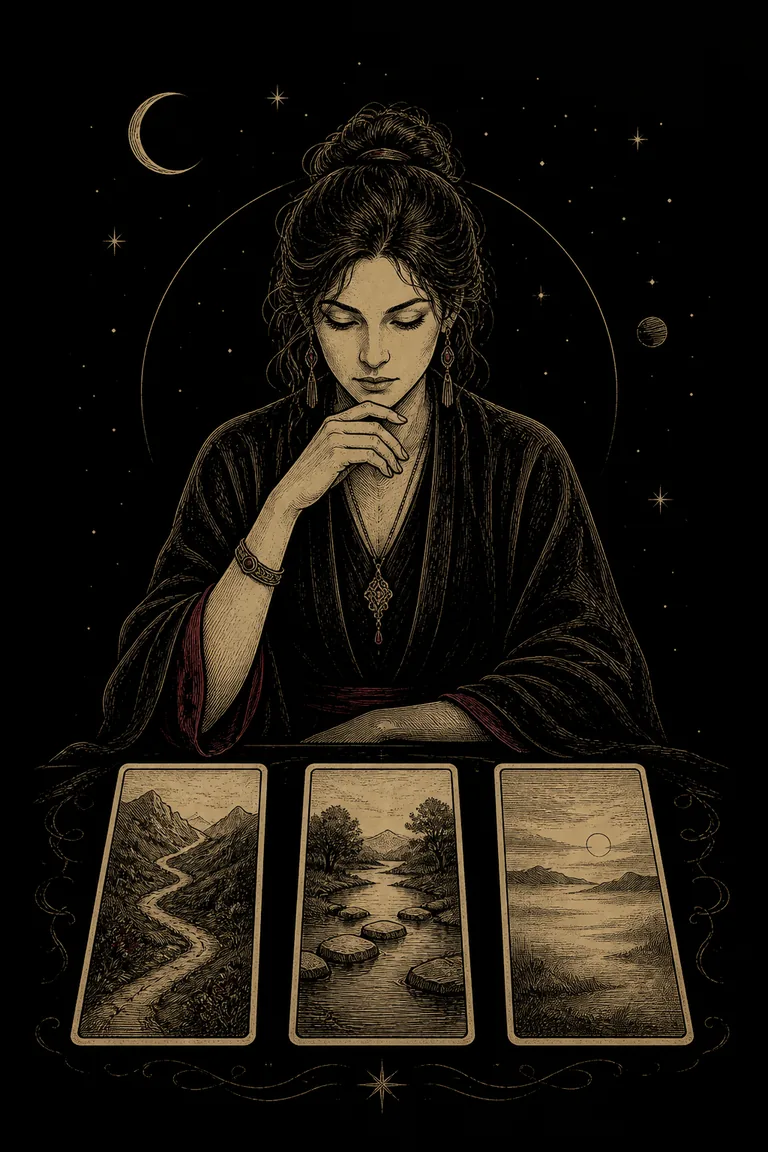
Across several cards, compare one stable feature at a time. A contained cup, an open sea, and a crossed river may show increasing scale but decreasing direct control. If spread positions support a sequence, describe how access or containment changes. The card combinations guide helps preserve both the shared water motif and the important differences.
Reversals do not make water flow literally upward
When a card is reversed, preserve the printed scene as evidence. Decide whether your reversal method changes access, expression, emphasis, or reading direction. A reversed vessel can prompt a spill or containment question, but it does not automatically predict loss, emotional blockage, or danger.
Deck baselines and accessibility
Lay out five to ten cards from one deck and record water form, scale, movement, boundary, and access. This reveals whether blue areas always indicate water, whether repeated waves are decorative, and whether one unusual crossing deserves attention. On small or low-contrast images, use an official scan, guidebook description, magnification, or neutral assistance. Alt text should describe the visible relation before its interpretation.
Save a water evidence map
Use Veritas to record water form, movement, boundary, source, destination, access, containers, crossings, deck baseline, spread role, alternative explanations, and what later evidence changed.
A practical Tarot journal exercise
Choose six cards that depict water. For each one, write two sentences: the first names only form, movement, boundary, and access; the second connects one of those facts to the card position. Add one conventional association only after the visual record is complete. A Tarot journal makes the deck's water vocabulary testable instead of automatic.
Responsible limits
Water symbolism in Tarot is a visual interpretation method, not evidence of pregnancy, fertility, illness, healing, drowning, travel, tears, love, deception, psychic power, or another person's feelings. Visit the <a href="/tarot">Tarot journal hub</a>, compare the full card and deck, and let direct communication, reliable records, qualified advice, and immediate safety needs lead consequential choices.