
Tarot Age Symbolism: An Evidence-First Guide
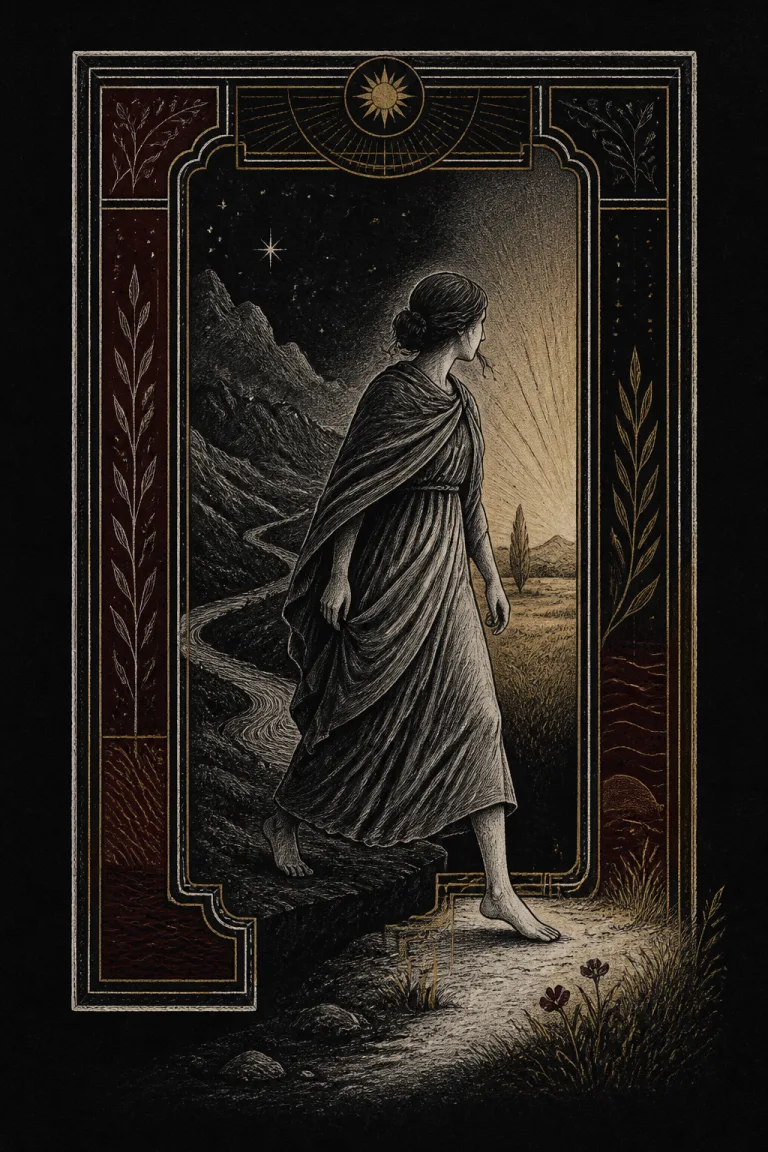
An evidence-first method for reading represented life stages, generations, care, authority, growth, and succession without guessing exact age or destiny.
Read the guideTarot Journal
Thoughtful guides to Tarot card meanings, spreads, questions, and reading practice. Built for curiosity, reflection, and a steadier relationship with your intuition.
VERITAS JOURNAL
FIELD NOTES · 00
Journal atlas
Five considered paths through Tarot, plus a search across every published guide.
Complete index
Showing 37–48 of 202 considered guides.
An evidence-first method for reading represented life stages, generations, care, authority, growth, and succession without guessing exact age or destiny.
Read the guideAn evidence-first method for reading implied bells, voices, instruments, rhythm, interruption, and silence without inventing exact speech or messages.
Read the guideAn evidence-first method for comparing value, color, scale, edge, texture, direction, spacing, and access without forcing a binary meaning.
Read the guideAn evidence-first method for reading repeated motifs through count, location, interval, variation, interruption, and edition-specific baselines.
Read the guideAn evidence-first method for reading card borders through containment, access, interruption, overlap, crop, and edition-specific visual rules.
Read the guideAn evidence-first method for reading circles, triangles, quadrilaterals, organic forms, and negative shapes through their visible scene function.
Read the guideAn evidence-first method for reading drawn and implied lines through source, quality, endpoints, interruption, contact, repetition, and scene function.
Read the guideAn evidence-first method for mapping the frame, focal point, groups, empty areas, depth, and visual path before interpreting the whole image.
Read the guideAn evidence-first method for reading surface and substance through condition, contact, resistance, permeability, maintenance, and scene function.
Read the guideAn evidence-first method for reading relative size, visual hierarchy, perspective, distance, and distortion without turning prominence into a prediction.
Read the guideAn evidence-first method for reading tools, vessels, barriers, and ordinary objects through function, access, condition, and scene context.
Read the guideAn evidence-first method for reading depicted motion, route, pace, and control without turning visual direction into a fixed timeline or prediction.
Read the guideExplore the journal